3 minute read
Meet the Authors
Key Takeaways
-
Women in the SAP ecosystem should view unconventional career paths as unique strengths, leveraging diverse experiences to lead authentically and empathetically in tech roles.
-
Fostering curiosity is essential for effective ERP adoption; leaders must assess cognitive load and prioritize open-ended communication to address resistance to new technologies.
-
Networking shouldn't just focus on upward connections; building intentional relationships with diverse and early-career professionals can unlock innovative solutions and enhance enterprise influence.
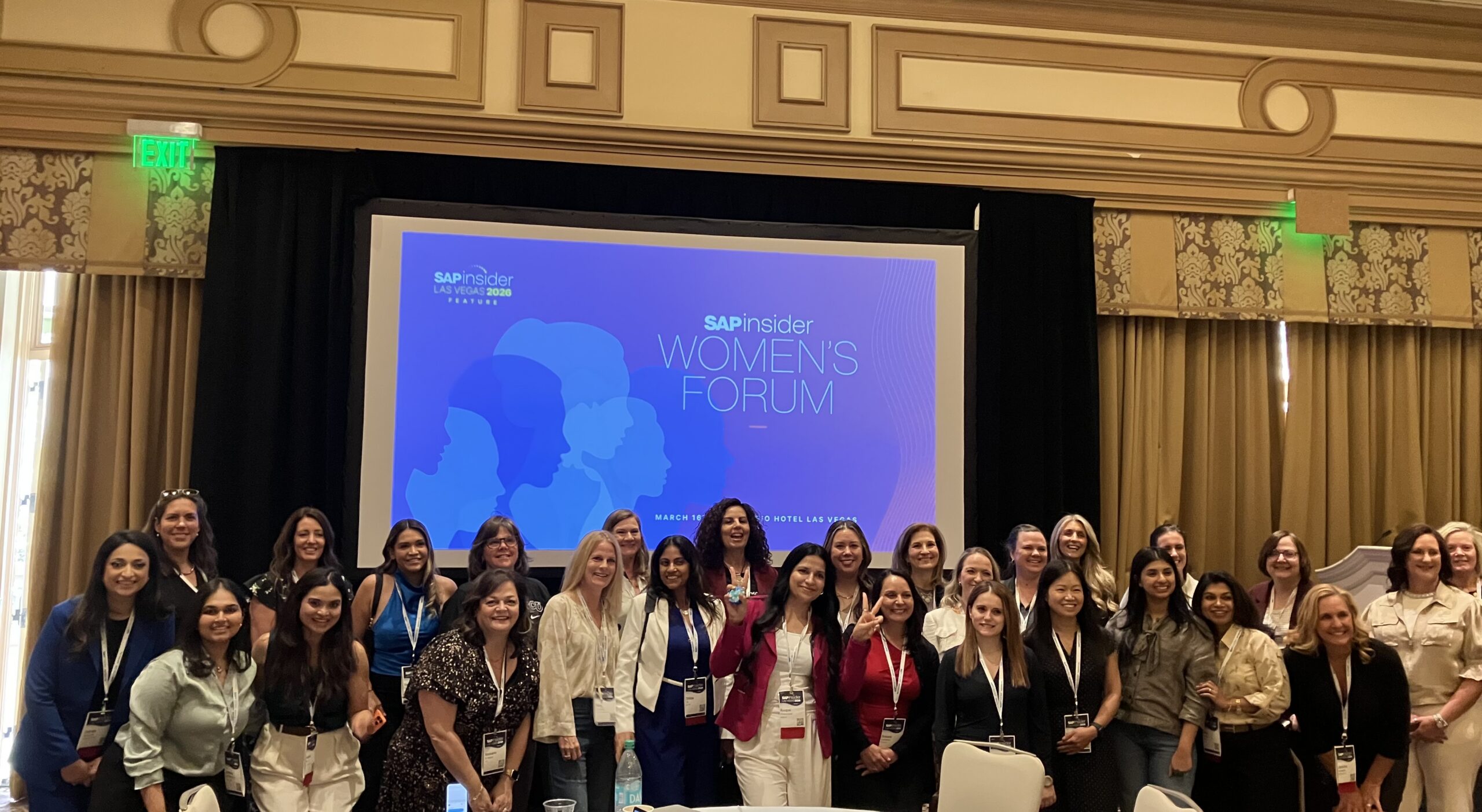
The SAPinsider 2026 Conference in Las Vegas began with an insightful session led by Women leaders in the SAP space. These leaders shared their thoughts on dismantling personal barriers, managing cognitive overload, and building intentional networks. Through candid discussions, attendees uncovered actionable strategies for turning adversity into an asset and leading authentically in the enterprise tech space.
Overcoming Internal Barriers
During the opening ice breaker, panelist Rashmi Kumari, Principal Solutions Advisor at SAP Americas, shared how she turned skeptical male clients into loyal customers by proving her technical expertise on complex SAP BTP projects. “Today I have made a brand where the same customers who would put me to test come back again and again asking for me by my name,” she noted.
Similarly, Asha Vartak, Director of Cybersecurity and Risk Management at Bayer recounted building a cross-cultural team for a digital sovereignty initiative by valuing problem-solving passion over traditional technical resumes. “All I wanted was someone who has the passion to make a difference, to learn and solve problems,” Vartak explained illustrating her thought behind building a cross-cultural team within her organization.
Explore related questions
The panel—which also included Katie Mevis, Head of SAP Americas Demand Management Office, SAP and Zaineb Muneeb, Manager of Information Systems Development – SAP at Norfolk Southern—agreed that professionals must stop putting up their own internal barriers to success.
As Mevis emphasized, “I think sometimes we put our own adversity in front of us and we assume that something is a negative. I do think we need to stop putting up our own barriers on ourselves.”
Rewiring for Curiosity
In her Bridge the Gap keynote, Jennifer Edwards, Keynote Speaker & Co-Author of Bridge the Gap, addressed how cognitive overload from daily schedules and office politics eliminates our brain’s capacity to absorb new information.
She explained that human brains naturally resist new ideas and quickly default to rigid judgment, especially when under stress. To gain true leadership influence, Edwards advised, “The goal, instead of judgment, is to lean in and get really curious.”
Edwards illustrated this idea with real-world examples that were shared by the audience. A key lesson, while influencing a person, she noted was to sincerely speak to the opposite party in a language that comes from a place of sincerity. “For example, instead of starting a question with what or why, start with a non-threatening phrase such as ‘tell me about…’” she noted. This helps open the channels of communication and get the message through to the other person.
Building Intentional Networks
To close the session, Katie Mevis shared prescriptive social media strategies, introducing the 40-40-20 rule for building and posting on social media. She suggested that professionals dedicate 40% of their posts or profiles to their role, 40% to industry insights, and 20% to personal stories. This balance helps enterprise tech leaders build an authentic and approachable digital presence without sounding overly promotional.
Beyond digital platforms, Mevis and the panel stressed the critical importance of human-to-human connection. They agreed that leaders should block off 30 minutes weekly to intentionally cultivate relationships, particularly by engaging with early talent and diverse voices rather than just networking upward.
What This Means for SAPinsiders
The session provided some key lessons for women and men in the enterprise ecosystem:
- Women in the tech space should reframe unconventional paths as unique value. Women in the SAP ecosystem often view career gaps or non-technical backgrounds as liabilities, but these experiences cultivate the exact adaptability needed for complex enterprise transformations. For instance, Mevis shared how she viewed her eight-year gap to raise children as an insurmountable barrier, only to realize later that leaning into her unique journey allowed her to lead authentically. These examples highlight that women who may have a non-traditional degree or took a career break, should use that unique perspective to build deeper empathy with business users navigating complex SAP deployments.
- Engineer curiosity to drive ERP adoption. Rolling out new SAP architectures requires immense change management, but stakeholders cannot absorb new workflows if their brains are already at full capacity. Edwards highlighted that when professionals are overwhelmed by office politics or schedule demands, their brains biologically resist perceptual curiosity and default to rigid judgment. Additionally, a stress-induced chemical hijack severely diminishes a leader’s problem-solving creativity and can leave a lingering negative impact for up to 26 hours. Thus, before pitching a new tech roadmap or process change, SAPinsiders must assess the cognitive load of their stakeholders. Instead of simply forcing more recommendations into a full cup, prioritize psychological safety and ask curious, open-ended questions to create the mental capacity required for them to embrace new enterprise technologies.
- Cultivate a 360-degree enterprise influence. Navigating the SAP landscape requires moving beyond the traditional strategy of only networking upward with executives. For example, building a successful digital sovereignty project from scratch taught Vartak the power of recruiting lateral talent based on their passion for problem-solving rather than their formal cybersecurity resumes. Mevis echoed this by emphasizing that some of the most valuable insights come from early talent and cross-departmental peers, rather than just those in the C-suite. SAPinsiders should audit their current professional network and diversify their mentorship pool. They must also block out intentional time each week to connect with junior team members or colleagues in different SAP modules to broaden the business context and uncover unconventional solutions to technical roadblocks.
More Resources
See All Related Content
Business Planning and Consolidation Benefits for UsersAs SAP customers transition from legacy tools like BPC to unified cloud-based platforms for planning and consolidation, finance teams are experiencing enhanced agility and real-time insights, prompting a shift in focus towards selecting solutions that offer measurable improvements.

2026 SAP TrendsAs organizations approach 2026, the focus of their SAP journey has shifted towards actionable strategies, with emphasis on leveraging S/4HANA and BTP for innovation, the integration of AI into daily operations, and adopting Clean Core principles to simplify systems and improve data strategy, ultimately prioritizing value realization over chasing new innovations.
1 minute read

Ericsson transforms to SAP S/4HANA in record timeEricsson, a leader in mobile connectivity, undertook a transformation to SAP S/4HANA with TCS to modernize its ERP systems, improve business agility, and achieve record efficiencies, resulting in significant enhancements in reporting accuracy, financial reconciliation, and user experience.
2 minute read

How SAP Customers Use Product Information Management to Deliver Channel-Ready Product ContentSAP customers increasingly use product information management platforms to enrich operational product data and distribute consistent, channel-ready content across SAP Commerce Cloud, marketplaces, and distributor networks.
6 minute read