

8 minute read
Meet the Authors
Key Takeaways
What you need to know
SAP Digital Manufacturing is a cloud-based manufacturing operations management platform on SAP Business Technology Platform, built to connect shop-floor execution with ERP-level planning in near real time.
With SAP Manufacturing Execution and MII retiring at version 15.5, the platform shifts from an optional upgrade to a migration decision that manufacturing IT leaders cannot indefinitely postpone.
Real customers across regulated, process, and consumer manufacturing, including Raumedic, Topsoe A/S, King’s Hawaiian, and Bühler, are already replacing fragmented, paper-based execution with one connected system.
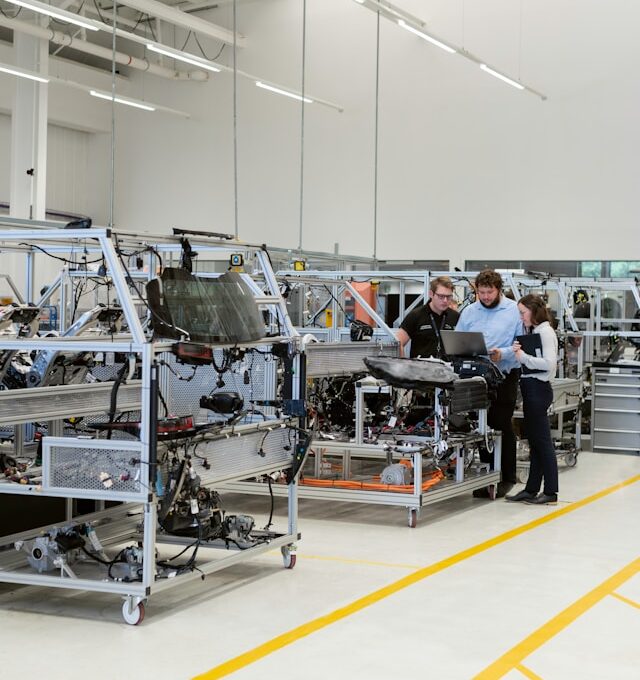
For most of the last two decades, planners worked in ERP systems, operators used spreadsheets and paper travelers, and manufacturing facilities operated a manufacturing execution system (MES) that nobody upstream could read in real time. As a result, by the time a quality issue or a labor shortage surfaced in a management report, the shift that caused it was already over.
SAP Digital Manufacturing is SAP’s attempt to close that gap for good, and the clock is now ticking for a specific group of customers. SAP Manufacturing Execution and SAP Manufacturing Integration and Intelligence (MII) are being retired, with version 15.5 confirmed as the final release. That single fact reframes Digital Manufacturing from a nice-to-have modernization story into a migration decision that manufacturing IT leaders cannot indefinitely postpone.
What Is SAP Digital Manufacturing?
SAP Digital Manufacturing is a cloud-based manufacturing operations management (MOM) platform built on SAP Business Technology Platform (BTP). Strip away the marketing, and it does three things that matter:
Explore related questions
Ask SAPi
- It connects shop-floor execution to ERP-level planning, so production responds to real demand.
- The platform layers AI-guided KPIs and analytics over that execution through an embedded SAP Analytics Cloud instance.
- It ties workforce skills and certification tracking directly to SAP SuccessFactors, so staffing a line is governed by the person qualified to run it.
The platform is organized into bundles that map cleanly to how a plant runs:
- The Insights bundle: lets teams model production using S88 or S95 standards and surface configurable KPIs inside the interfaces operators already use.
- The Resource Orchestration bundle: plans live operations against warehouse, quality, labor, and maintenance variables, then staffs workers by skill.
- The Execution bundle: validates direct and indirect labor and standardizes work instructions, scrap, and rework.
- A Production Process Designer: rounds out the platform, automating tasks across one or many systems through a graphical workflow designer that keeps the MES state aligned with the automation systems on the floor.
This is the technical heart of the value proposition: a single cloud MES that gives IT a single system to maintain across sites while still feeding contextualized, AI-ready data back to the people making decisions on the line.
The Customers Already Running It
The most persuasive part of SAP’s case is not the feature list; it is the roster. Medical-device maker Raumedic adopted SAP Digital Manufacturing to future-proof production in a heavily regulated market, citing time savings and stronger compliance. Catalyst and chemicals specialist Topsoe A/S used it to modernize and streamline its product manufacturing processes. King’s Hawaiian standardized on it as a single end-to-end solution for all its in-house bread production. Industrial technology group Bühler moved its factory employees to paperless work powered by real-time data, giving them full control over production processes.
How delaware Helps
Global SAP partner delaware accurately frames the real challenge of this platform when it notes that most organizations operate in complex environments of legacy systems, multiple applications, and fragmented data sources that limit visibility into business operations and make it difficult to adapt quickly to changing market conditions.
Moreover, successful SAP initiatives require more than implementing technology. Organizations must also align their business processes, governance models, and enterprise data strategies before the platform pays off. Delaware’s work across the full transformation lifecycle, from solution strategy and architecture design through implementation, business-process redesign, data and analytics enablement, and ongoing application management, helps organizations on this path.
For a manufacturer facing the MII retirement, that lifecycle framing is the point. Migration is not a like-for-like swap. It is a chance to redesign how a plant models production, governs its data, and staffs its lines, and doing that well is exactly the gap a capable SAP partner fills.
What This Means for SAPinsiders
The MII retirement turns evaluating the system into scheduling it. Version 15.5 is the final release of SAP Manufacturing Execution and MII, and SAP’s Customer Evolution Kit exists because the transition is non-trivial. Organizations running those products today can no longer consider whether to move; they will need to determine when and on whose terms. CIOs should build the business case now, while they still control the timeline, rather than under end-of-support pressure later.
Treat SAP Digital Manufacturing as a data and governance project rather than a software installation. The platform’s real leverage comes from SAP BTP, embedded SAP Analytics Cloud, and SAP SuccessFactors integration working together. None of that delivers value if the manufacturer’s production model, master data, and skills records are messy. Before scoping the MES, data specialists and enterprise architects should scope the data strategy and the S95 production model that will sit underneath it. This is where partners like delaware concentrate their effort, and where rushed implementations quietly fail.
Make the human element the success metric. Bühler’s win was based on operators working paperless with real-time data and full control of their processes. For CIOs and plant leaders, that is the outcome to measure: are people on the floor making better, faster decisions because the system finally speaks their language? If the shop floor and the top floor are still trading reports after go-live, the project missed the point.
More Resources
See All Related Content
From an empty tenant to your first table, step by stepThis article outlines the step-by-step process for administrators and key users to set up NextTables on a freshly provisioned tenant, detailing essential actions from accepting the administrator invitation to creating the first table, including optional steps and relevant guides for each phase.

SAP Says Supply Chain AI Should Start With the DecisionAt SAP Connect 2026, SAP's new supply chain product chief urged teams to define the business decision and its metric before choosing an AI use case. Bosch, Döhler, and Microsoft described how they apply that approach to supply chain agents.
4 minute read

How to Improve Supply Chain Visibility in SAP: Planning, Execution, and Best PracticesThe article discusses the growing complexity and frequency of disruptions in supply chains, emphasizing that while SAP solutions like S/4HANA, IBP, and EWM are essential for enhancing visibility, achieving real-time accuracy requires effective data capture, strategic alignment, and continuous improvement in execution processes to ensure operational efficiency.
10 minute read
SAP FinOps: Reduce Cloud Costs Without a Major RedesignSAP FinOps integrates cloud spending analysis with SAP workload demand and financial accountability to identify and address inefficiencies in SAP cloud resource usage, while fostering collaboration across finance, engineering, and business processes.
4 minute read