3 minute read

Meet the Authors
Key Takeaways
What you need to know
Nippon Ham is using SAP BTP to deploy AI-driven demand forecasting and inventory allocation as part of its SAP S/4HANA-based Connect Project.
The initiative replaces manual planning with data-driven decision-making to improve forecast accuracy and reduce inventory imbalances.
The company is also exploring SAP Business AI to automate order capture using natural language inputs and reduce administrative workload.
Japanese food company Nippon Ham (NH Foods Ltd.) said it has implemented AI-driven demand forecasting and inventory allocation capabilities on the SAP Business Technology Platform (SAP BTP). The initiative is part of a broader group-wide transformation known as the “Connect Project,” which involves migrating core systems to SAP S/4HANA to standardize operations and improve decision-making across its operations.
How Nippon Ham Uses SAP BTP to Maintain a Clean Core in SAP S/4HANA
A critical technical driver for selecting SAP BTP was Nippon Ham’s commitment to maintaining a “clean core” for its SAP S/4HANA system, the company said. By utilizing side-by-side development on SAP BTP, the company said it can implement specialized AI functions and meet site-specific needs without modifying the core ERP code.
The company said this architecture enables it to extend capabilities using SAP BTP while keeping the SAP S/4HANA core stable and standardized.
Explore related questions
Ask SAPi
How AI Forecasting and Allocation Standardize Nippon Ham’s Supply Chain
Before this digital shift, inventory and supply chain decisions across Nippon Ham’s logistics centers were highly individualized and heavily dependent on the intuition and experience of veteran staff, the company said. This reliance often led to variations in judgment, which in turn caused both stockouts and excess inventory.
As the number of experienced employees declined, Nippon Ham moved toward an AI-driven model to ensure more objective, data-driven operations.
The implementation followed a phased “Quick Win” approach. The AI inventory allocation initiative was launched in April 2021, with the system completed by March 2022 and going live at its first site in April 2022—one year ahead of schedule.
Meanwhile, the AI demand forecasting project began in April 2022 and was successfully deployed in April 2025. To secure organizational buy-in, the company developed early prototypes on SAP BTP. These prototypes were used to demonstrate potential labor savings to management and to help on-site staff understand how the AI system would function in practice.
Nippon Ham Shifts to Proactive Planning with AI on SAP BTP
The integration of AI has shifted Nippon Ham’s operations from reactive, after-the-fact responses to proactive, preemptive planning, the company said.
-
Improved accuracy: The system integrates historical sales data with updated inputs to generate more precise forecasts, the company said.
-
Operational efficiency: Sales representatives no longer manually input sales plans based on past data. Instead, they review AI-generated values and focus on strategic promotions and sales activities, the company said.
-
Waste reduction: For perishable food products where overstocking leads to losses, the system has optimized stock levels and reduced waste, the company said.
-
Standardized judgment: AI-based inventory allocation has reduced reliance on manual adjustments and lowered verification workloads, the company said.
SAP Business AI Could Automate Food Ordering Workflows
Building on this implementation, Nippon Ham is conducting a proof of concept using SAP Business AI to create a food ordering platform.
Currently, sales representatives in the meat division often take manual notes during meetings and transmit them via phone or fax, requiring manual data entry by headquarters staff. The new platform aims to allow representatives to input orders using natural language via voice or chat, which the generative AI can convert into structured data for SAP S/4HANA, the company said. This is expected to reduce clerical administrative work and increase time spent with customers, the company said.
What This Means for SAPinsiders
AI shifts planning from reactive to predictive. Enterprises can move beyond historical reporting toward forward-looking decision-making. This enables supply chain leaders to anticipate demand shifts earlier and reduce reliance on manual planning interventions.
SAP BTP enables extensible AI-driven planning. The platform provides a foundation to embed AI into core processes without replacing existing systems. This allows incremental innovation while maintaining continuity across ERP and supply chain landscapes.
Inventory optimization becomes a data problem. Balancing stock across locations increasingly depends on integrated data and algorithms. Organizations that unify demand, supply and external signals will outperform those relying on siloed planning systems.
More Resources
See All Related Content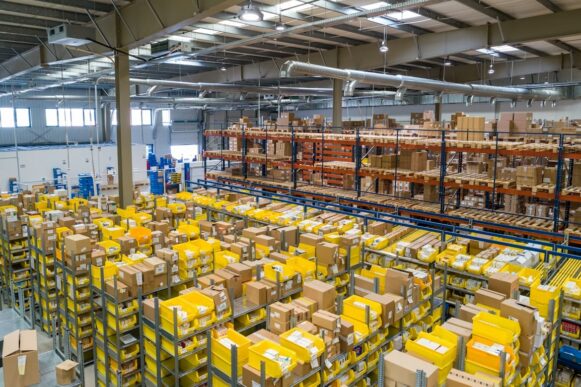
AI Ambitions Are Running Into Frontline Data ProblemsRFgen connects frontline work with SAP and other ERP systems through mobile data collection, offline sync, and guided workflows. Its platform helps SAP teams capture cleaner point-of-work data for analytics, automation, and supply chain AI.
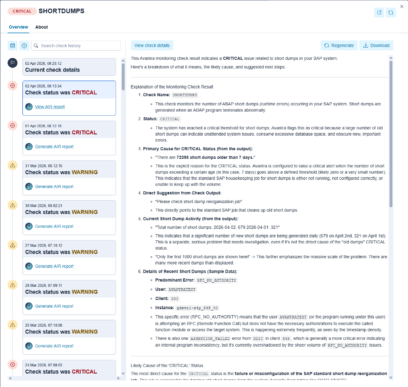
Stop Guessing, Start Fixing: AI Root Cause AnalysisAvantra 26 and Avantra AIR use AI grounded in SAP operations expertise and a proprietary knowledge graph to continuously detect issues, explain root causes in human-readable reports, reduce alert noise, and recommend next-best actions that speed resolution, prevent outages, and lessen reliance on SAP experts.
3 minute read

Q&A: How SAP Is Connecting Embodied AI and Robotics to Enterprise Business ProcessesSAP is building a BTP-first architecture to connect physical AI and robotics to end-to-end business processes. In this Q&A, SAP’s Adelya Fatykhova explains the partner ecosystem, early use cases in warehousing and inspection, and what organizations need to prioritize before scaling embodied AI into production.
9 minute read

5 misconceptions about AI security: Here’s where the real risk existsThe article argues that AI security risks are usually found in the surrounding system rather than the model itself, debunking five common misconceptions and emphasizing governance, least privilege, trusted data, controlled outputs, shared responsibility, and continuous monitoring and testing across the full AI stack.
5 minute read