
Meet the Experts

Key Takeaways
What you need to know
SAP's renewed commitment to the Autonomous Enterprise underscores a fundamental shift in enterprise strategy, emphasizing the integration of AI.
Governance is being redefined as a core component of SAP's approach to the Autonomous Enterprise, directly impacting organizations by ensuring compliance, security, and reliability in their AI implementations.
Limited adoption of the Autonomous Enterprise by customers indicates a significant challenge for SAP as it seeks to expand its user base.
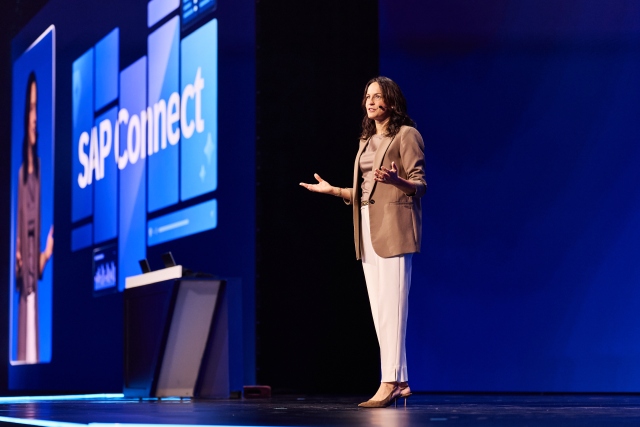
With SAP Connect drawing to a close, the focus should be on what mattered most for both those who were in attendance and the significantly greater numbers participating virtually as well as those who the announcements will impact but didn’t participate. Here are five key learnings from the event, and why each matters to SAPinsiders.
Autonomous Enterprise Remains at the Forefront of SAP’s Strategy
In the lead up to SAP Connect 2026 there were, and continue to be, significant questions asked about AI and the role that it should be playing in today’s enterprise. There was also speculation about whether SAP would adjust their vision given that not every organization wants their enterprise to be entirely autonomous. However, if Sapphire 2026 was about launching the Autonomous Enterprise vision, SAP Connect 2026 was about demonstrating progress towards that vision and how customers are leveraging it.
This emphasis was showcased in the theme for the event which was: “Autonomous Enterprise: Welcome to Better”, and every keynote focused on discussing and showing the Autonomous Enterprise. Whether or not customers are ready to move forward with the Autonomous Enterprise is a different question, but organizations should recognize that this continues to be SAP’s strategic direction and evaluate its implications for their own roadmap.
Explore related questions
Ask SAPi
Governance is Central to SAP’s Strategy
While some organizations have talked about governance, SAP is positioning governance as a core part of the Autonomous Enterprise strategy. SAP’s position is that user interfaces and AI interactions are only the visible layer of a broader governance framework that includes business context, security, compliance, and controls, and it is these controls and the enterprise context built into AI that makes it suitable for real business purposes. This includes regulation, compliance, enterprise security, localization, and auditability.
Capabilities that help achieve this governance include SAP AI Agent Hub which is part of SAP LeanIX provides a place to govern agents and share agent traces and related information. SAP Signavio Agent Mining connects agent activity with changes in business process KPIs rather than simply measuring tokens or usage. For any activity performed by an agent in an SAP system there is a full audit trail which preserves system integrity and auditability. And SAP has also built the platform to support regulated processes and localization.
Relatively Few Customers Have Adopted the Autonomous Enterprise
Despite SAP’s focus and the fact that each keynote involved customers talking about the capabilities they were using, actual adoption of the Autonomous Enterprise remains low. Given that less than 20 customers were part of the co-development program that SAP had established for the Autonomous Enterprise in the May timeframe it is no surprise that only a small number were able to talk about their successes only a few months later. In addition, the fact that only customers meeting appropriate licensing requirements are even able to access much of the Autonomous Enterprise also limits the number of customers who can even move forward.
While SAP has a vision of what they want to achieve, there is much work to be done if the company wants to achieve widespread adoption. With significant portions of the SAP customer base still running an older SAP ERP solution or SAP S/4HANA on-premise, this limits the number of customers that can currently take advantage of these capabilities. For broader adoption, SAP will need to address these challenges as well as providing incentives for customers to embrace these solutions.
Customers Making Progress are More Fully Prepared
While only a relatively small number of customers, compared with SAP’s enterprise ERP customer base, are making progress with the Autonomous Enterprise, all of them had either recently completed broader transformation initiatives or invested significant effort in foundational capabilities such as data quality, process standardization, governance, and ERP modernization. While it was not necessarily a highlight of the event, these organizations were prepared because they had already completed significant work to be prepared to use AI and Joule Assistants. It is this foundation, created through years of work, that ensued they were ready. This makes it crucial to prioritize data quality, process harmonization, governance, and ERP modernization initiatives. Organizations that are still struggling with fragmented processes or inconsistent data will find it difficult to realize meaningful value from autonomous agents, regardless of how sophisticated the technology becomes.
In addition, those moving forward successfully with the Autonomous Enterprise stemmed from starting with a clearly defined business problem and desired outcome, then determining how AI could contribute. They did not begin with AI as the objective and search for a use case afterward.
SAP Will Manage Future Joule Deployments
The original release of Joule relied on organizations having products or licenses that included access to AI, for example SAP SuccessFactors, obtaining SAP Business Technology Platform (BTP) if it was not already in place, and then enabling Joule through the Global Account Settings in the SAP BTP Cockpit. While this allowed organizations to start using Joule, the infrastructure and landscapes involved often made activation and utilization complex and may have been connected to the poor performance that those running Joule frequently experienced.
While the release of Joule Work has been delayed, the current plan is for Q4 2026, the huge difference in the way that it works is that the customer will no longer be required to do their own activations. Instead, SAP will manage all the activations and infrastructure themselves. SAP is still to provide details on how this will function, but once Joule Work is activated it will apparently be available for all customers at the same time.