
7 minute read
Meet the Authors
Key Takeaways
What you need to know
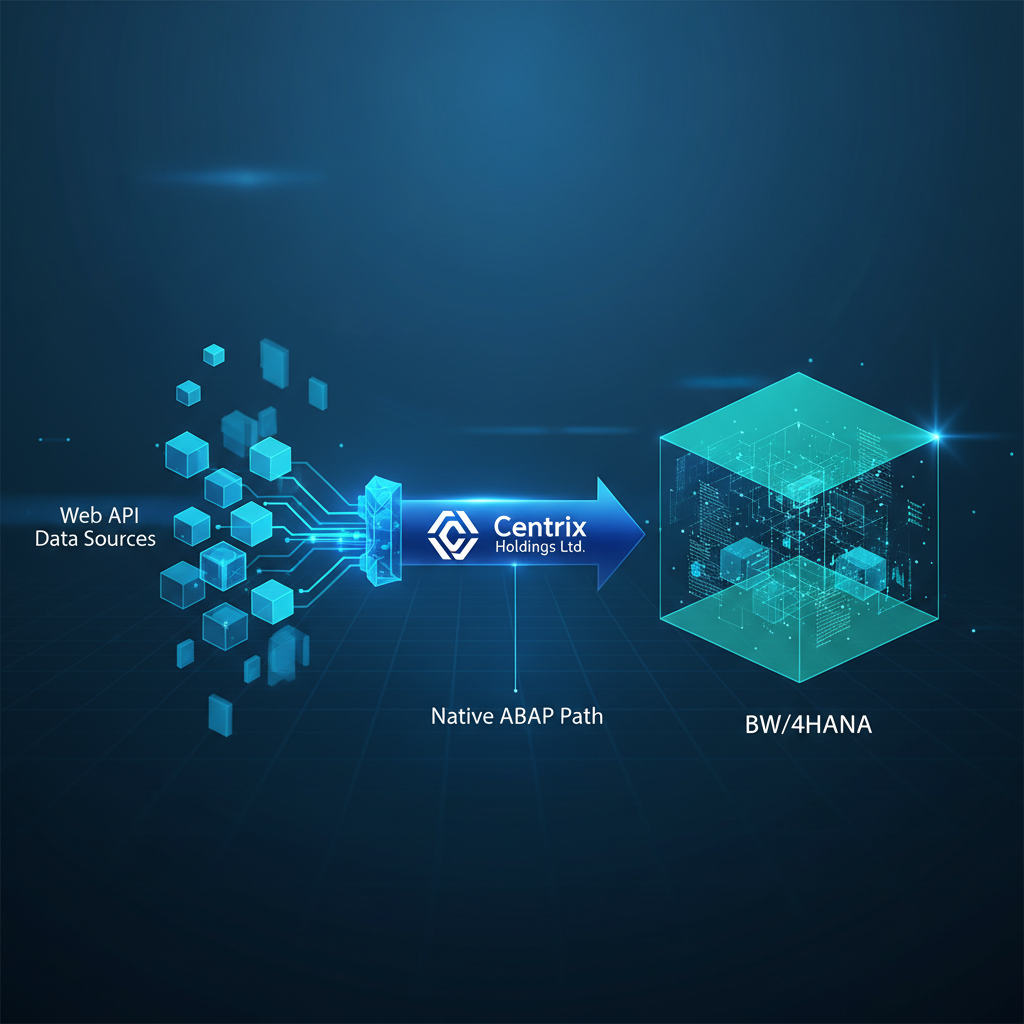
Centrix Consulting developed a native ABAP solution within BW/4HANA to integrate external Web API data, specifically for an HR KPI dashboard in SAP Analytics Cloud.
This approach utilized standard ABAP classes like CL_HTTP_CLIENT and /UI2/CL_JSON to pull and deserialize JSON data, landing it directly into a Direct Update aDSO.
The solution streamlines data flow by enabling immediate reporting without staging layers and supports ongoing operations through process chain scheduling, offering an alternative to external integration platforms.
Centrix Consulting’s BI & Analytics team took on a request to build an HR KPI dashboard in SAP Analytics Cloud, one that needed both a Time entry management view and an Efficiency analysis built around a Utilization Rate metric. The obstacle was structural: employee master data and time entry records lived in separate systems, and the employee start date needed for the UtilizationRate calculation had to be pulled into SAP BW/4HANA before it could reach the dashboard. Centrix’s answer was a custom ABAP program running inside BW/4HANA that calls a Web API directly, processes the response, and lands the result in a form ready for reporting.
Inside the Technical Build: Pulling Web API Data into BW/4HANA
The program’s connection layer relies on the ABAP class CL_HTTP_CLIENT, which establishes the link to the Web API and issues the call that retrieves employee data. The response comes back as JSON, and Centrix converts it using the ABAP class /UI2/CL_JSON, which deserializes the JSON structure into strings the program can work with. From there, the processed data is written into an aDSO using the function module RSDSO_DU_WRITE_API, targeting an aDSO of type Direct Update.
The choice of Direct Update matters for how the data behaves once it lands. This object type makes data immediately available for reporting, allowing Centrix to avoid routing employee data through additional staging layers before it reaches SAP Analytics Cloud. SAP BW/4HANA offers Direct Update ADSOs for near-real-time write scenarios, generally recommended when immediate reporting availability matters more than a full staging layer. Centrix also built pagination handling into the program, an optional capability needed when the Web API response spans multiple pages of records rather than returning everything in a single call.
Explore related questions
Ask SAPi
From One-Time Build to Ongoing Data Operations
Centrix organized the build around four stages: PREPARE, RETRIEVE, TRANSFORM, and CONSOLIDATE. PREPARE covers the groundwork, initializing data structures, creating the HTTP client, and setting the request headers needed for the GET request. RETRIEVE sends that request to the Web API, captures the JSON response, and checks the HTTP status code to confirm the call succeeded before anything downstream runs.
TRANSFORM does the heavier lifting. The program splits the response to extract both the user records and the pagination value, then applies the /UI2/CL_JSON deserialize method to convert that JSON into an ABAP internal table. CONSOLIDATE closes the loop, writing the contents of that internal table into the Direct Update aDSO through RSDSO_DU_WRITE_API. Once the four stages were working, Centrix integrated the program into a regularly scheduled process chain. As a result, the aDSO refreshes regularly rather than depending on a manual run each time the dashboard needs current data.
That scheduling step shifts the engagement from a single build into an operational routine. SAP customers integrating external Web API sources into BW/4HANA through custom ABAP code generally weigh that approach against platform alternatives such as SAP Integration Suite when governance and long-term maintainability become priorities. A custom program tied to a process chain keeps the technical footprint small and uses tooling already native to BW/4HANA. Still, it also puts the burden of handling API versioning, credential renewal, and error handling on whoever owns the schedule.
What This Means for SAPinsiders
Process chain scheduling keeps HR dashboards current. Folding the ABAP program into a regularly scheduled process chain lets the aDSO refresh automatically instead of depending on manual reruns. Teams supporting similar HR KPI dashboards should confirm their own scheduling cadence matches how often the source Web API data actually changes.
Native ABAP tooling can replace a middleware layer. Using CL_HTTP_CLIENT and /UI2/CL_JSON directly inside BW/4HANA lets Centrix pull external data without adding a separate integration platform to the landscape. Buyers evaluating support providers should ask whether a custom ABAP approach or a managed integration tool better fits their own governance requirements.
Direct Update aDSOs trade staging for speed. Writing straight into a Direct Update aDSO gave the HR dashboard immediate access to processed data without an extra staging layer. BW/4HANA teams need staff who understand when that immediacy is worth the tradeoff against the controls a staged layer would otherwise provide.
More Resources
See All Related Content

The SAP Shared Responsibility Model: Who is Responsible for Custom Application Code Security in SAP BTP?As companies transition to the cloud with SAP's RISE program, they often mistakenly assume that SAP will manage all security aspects, ignoring the critical need for active governance and responsibility over custom code and applications secured on the SAP Business Technology Platform (BTP), highlighting the importance of understanding the shared responsibility model and implementing stringent security measures.
7 minute read