

4 minute read
Meet the Authors
Key Takeaways
What you need to know
Agentic AI is transforming customer experience by moving beyond text generation to autonomous task execution within CX workflows, significantly reducing manual effort.
Successful implementation of agentic AI hinges on unified data access and robust orchestration, as fragmented data layers severely limit an agent's effectiveness and ROI.
For SAPinsiders, the focus shifts from system login metrics to measuring time saved on administrative tasks, necessitating upfront data integration and adjusted review processes for AI-handled interactions.
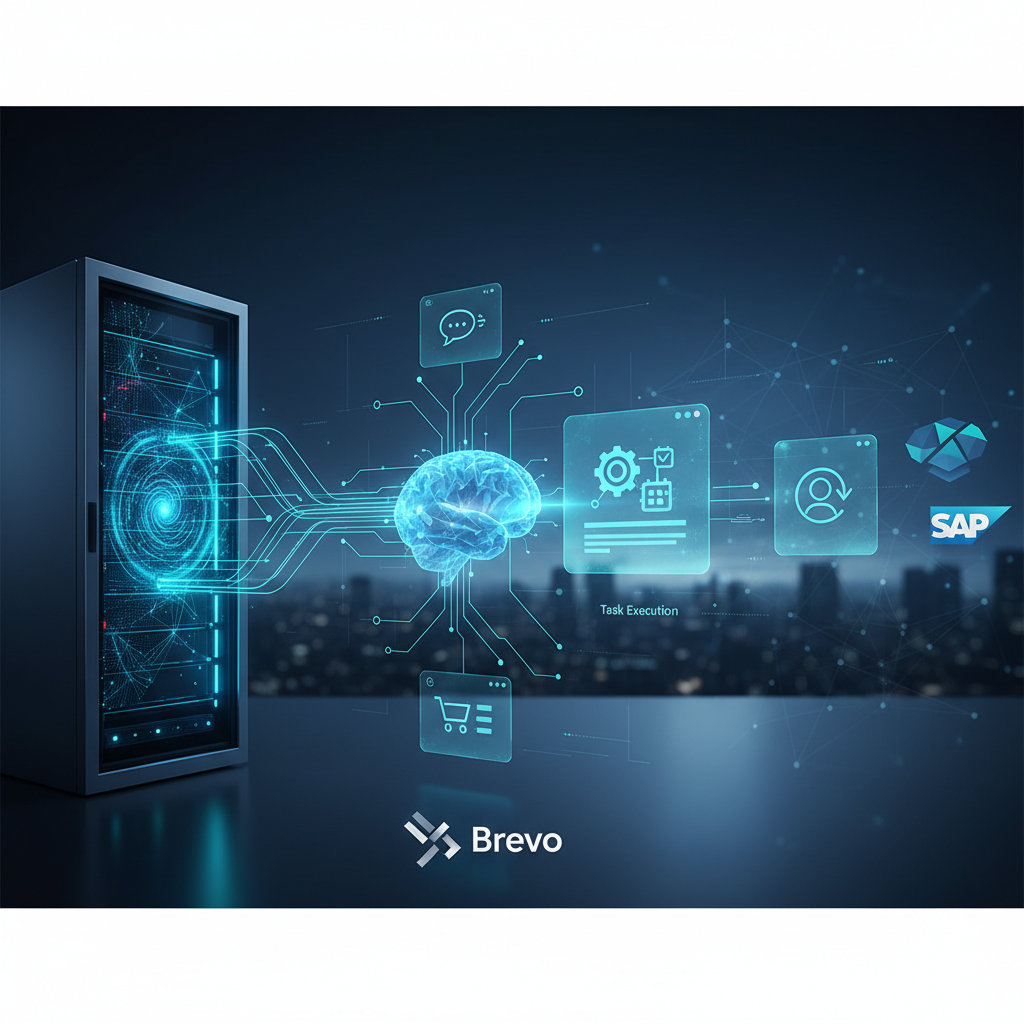
Enterprise AI in customer experience is shifting from copilots that draft text toward agents that understand intent, plan next steps, and carry out parts of a workflow across service, sales, and commerce environments. SAP has framed this shift around Joule Agents built for tasks such as case classification, quote creation, and shopping guidance, measuring success in CX by the reduction in time employees spend logged into a system. Brevo, a marketing, sales, and CRM automation platform, describes its own agent, called Aura, in similar terms: a system designed to eliminate routine manual work across marketing, sales, and support so users can focus on strategy.
What Agentic AI Is Changing in SAP Customer Experience Workflows
Joule Agents target discrete points of friction inside CX workflows instead of functioning as a general assistant layered on top of them. A case classification agent interprets an incoming service request, routes it, and helps generate knowledge content for a human to review before it goes out. A quote-creation agent takes unstructured input, such as a customer email, and converts it into a structured quote, addressing a delay that can slow revenue and frustrate buyers in B2B settings. A shopping guidance agent supports conversational product discovery, helping a customer compare options and navigate a catalog instead of searching it manually.
Task design, data access, and orchestration determine whether these agents deliver value, and a fragmented data layer creates a fragmented agent experience, no matter how capable the underlying model is. Unified data spanning marketing, sales, and customer service functions as the fuel agentic AI needs to work as intended. Return on investment gets assessed by translating hours saved on administrative tasks into revenue-generating initiatives, rather than by counting how many tickets an agent touched.
Explore related questions
Ask SAPi
The need for unified data points to integration work that sits outside the agent itself. Orchestrating an agent across multiple SAP applications typically depends on connecting data sources through a platform layer such as SAP’s Business Technology Platform, since an agent can only act on what it can see. An organization running case classification or quote-creation agents against a customer record in one system and a purchase history in another is unlikely to get the workflow automation the agent was built to provide.
How Brevo’s Aura Approaches Agent-Driven CRM Automation
Brevo built Aura to handle routine CRM work across marketing, sales, and support. On the support side, Aura answers 90% of FAQs directly and, when it cannot resolve a request, routes the ticket along with context such as usage history to a human agent, reducing back-and-forth for the customer. On the sales side, Aura transcribes calls, produces summaries, and generates follow-up emails automatically, and it surfaces relevant lead information before a call so a rep enters the conversation with sharper context.
A second set of Aura functions works on the data feeding those interactions rather than the interactions themselves. Aura enriches contact profiles with missing details and automates attribute mapping as new data enters the CRM or gets imported, cutting that process by up to 80% to 90% while improving downstream segmentation. Brevo credits this direction to a dedicated AI Lab and plans to invest heavily in AI development over the next five years, with a stated filter that it builds AI only when it makes a process faster, easier, or more effective.
Aura’s automation operates inside Brevo’s own CRM and marketing environment. Pairing a platform like this with SAP ERP for order, fulfillment, or financial context generally requires an integration or middleware layer to keep records synchronized in both directions, since neither system shares its data model with the other by default.
What This Means for SAPinsiders
Login time is no longer the adoption metric. SAP CX teams evaluating agentic AI should track reduced manual task time as the measure of success rather than counting system logins or session length. That shift changes how a rollout gets reported to leadership and how success gets defined in a pilot.
Data integration work precedes any ROI claim. Teams considering a CRM agent such as Aura alongside SAP ERP should scope the data-connection work before assuming automation percentages will translate directly into their environment. Fragmented data between systems limits what any agent can act on regardless of its design.
Automated ticket and call handling changes review workload. As agents absorb routine FAQ resolution and call summarization, support and sales leaders need a process for reviewing AI-routed context rather than assuming every interaction still gets handled end-to-end by a person. That shift moves governance attention toward spot-checking agent output rather than staffing every queue.
More Resources
See All Related Content
Skip navigation Sign in Deploy SAP Edge Integration Cell in Minutes, Not WeeksAs the 2027 deadline looms for transitioning from SAP PI/PO to the SAP Integration Suite, teams face challenges with Kubernetes deployment for the Edge Integration Cell, but SUSE Rancher offers a simplified, SAP-validated solution to expedite this migration.
1 minute read

ABAP Code Remediation vs Application Modernization: What to Do First on the Road to S/4HANAMoving from SAP ECC to SAP S/4HANA requires organizations to initially remediate legacy ABAP code for compatibility and business continuity, and subsequently modernize their customizations to align with clean core principles, balancing short-term needs with long-term agility.
9 minute read

Turning B2B Search Into a Tenfold ROI on SAP Commerce CloudA SAPinsider webinar with Boston Scientific, Coveo, and SAP explains how a medical device company turned product search on SAP Commerce Cloud into its first AI investment with a measurable return, delivering almost ten times the projected first-year ROI.
4 minute read