

4 minute read
Meet the Authors
Key Takeaways
What you need to know
SAP's 1H 2026 SuccessFactors release prioritizes AI integration across HR functions, enabling advanced performance management and career planning, which is crucial for HR leaders focusing on streamlined operations and compliance.
The introduction of AI agents transforms HR tasks by automating insights and improving employee engagement in career development, impacting HR business partners who will shift from manual processes to validating AI-generated recommendations.
Enhanced integration features in the updated platform require organizations to maintain robust data governance, making it essential for HR and technology executives to focus on data quality and security to fully leverage new AI capabilities.
SAP is using the 1H 2026 SAP SuccessFactors release to push AI deeper into everyday HR workflows while tightening connections across Employee Central, talent modules and payroll. For HR and technology executives, this means AI agents and unified experiences will shape how managers evaluate performance, plan careers and keep compliant in a fast changing regulatory climate.
AI Agents Moving From Advice to Execution
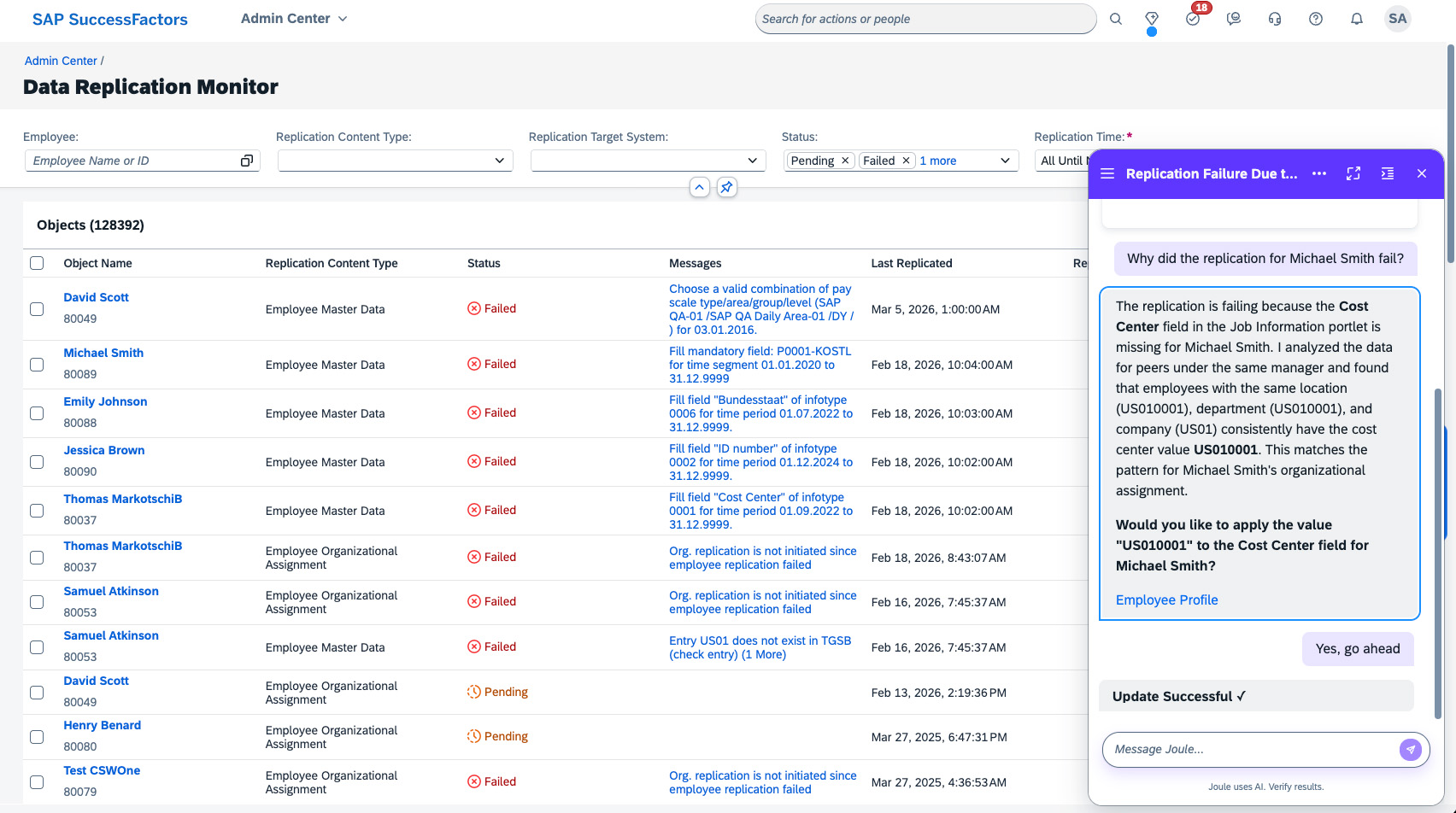
The release expands suite wide AI agents powered by Joule so they can act across performance management, learning, succession and people analytics rather than remain isolated helpers in single modules. New AI assisted performance insights are now available in all performance form steps, helping managers interpret rating patterns and calibrate feedback while reducing time spent manually reviewing reports.
In talent and career development, AI uses the Talent Intelligence Hub to match employee skills with internal opportunities and to propose development goals that align with role requirements and business demand. This shifts daily work for HR business partners from building plans by hand to validating system generated recommendations and focusing on exceptions where human judgment adds the most value.
Explore related questions
Ask SAPi
The release also introduces AI supported payroll explanation agents that help employees understand payslip details, cutting the volume of routine queries hitting HR service desks. Across modules, SAP stresses that outcomes still depend on clean job architectures, accurate skills data and clear governance so AI suggestions remain reliable and auditable.
Connected Experiences Raise the Bar For HR and IT
Beyond AI, the 1H 2026 release continues SAP’s shift toward a more connected platform, with additional capabilities moving into Admin Center and harmonized experiences across the suite. Employee Central enhancements streamline complex scenarios such as citizenship and work authorization changes with configurable workflows that trigger the right onboarding or reverification steps.
For HR operations leaders, this means fewer custom extensions to handle compliance heavy processes and more reliance on standard workflows that stay current as regulations change. Integration improvements and release readiness guidance underscore the need for sandbox testing so customers can see how new AI behaviors and mandatory profile changes will impact user experience before the May production rollout.
Technology executives evaluating HCM strategies should focus on three criteria highlighted by this release: the maturity of embedded AI agents, the quality of skills and talent data models that feed them and the vendor’s ability to deliver connected experiences across HR, payroll and analytics. With preview tenants available in mid April and production updates scheduled for mid May, organizations have a narrow window to validate security, data privacy and change management plans.
What This Means for SAPinsiders
AI infused HR becomes operational reality. With Joule agents now analyzing performance, explaining payroll and suggesting development actions, SAP landscapes must prioritize clean data, clear governance and manager enablement or risk undermining trust in AI generated decisions.
Talent intelligence turns into a strategic backbone. Because the release leans on unified skills and talent profiles, HR and IT teams will need to rationalize job architectures, competency models and integration points so SuccessFactors can power internal mobility and workforce planning at scale.
Release readiness demands new governance discipline. Given mandatory profile updates, AI behavior changes and tight preview timelines, SAP programs should formalize cross functional release councils, sandbox testing cycles and communication plans to keep SuccessFactors innovation aligned with business risk appetite.
ONLINE
See additional stories about SuccessFactors linked below.
More Resources
See All Related Content

Paradox Builds a Conversational AI Layer Directly Into SAP SuccessFactors RecruitingParadox introduces a conversational AI layer for SAP SuccessFactors Recruiting, streamlining candidate engagement and automating key processes. This integration enhances efficiency by managing tasks such as screening and scheduling directly within the existing HR platform.
3 minute read

Hyland Embeds Content Services Across SAP S/4HANA and SuccessFactorsHyland introduces a Fiori-native integration for SAP S/4HANA, enabling seamless content services and document continuity for organizations transitioning from ECC. This aligns with S/4HANA's clean-core model, alongside a parallel integration for SAP SuccessFactors.
3 minute read

Chachapoya Consulting Builds SAP SuccessFactors Practice Around Repeatable M&A OnboardingChachapoya Consulting, an SAP Silver Partner, built its SAP SuccessFactors practice around a unique delivery model to help Insight Corporation standardize HR operations amidst continuous M&A. This approach enabled rapid onboarding of new acquisitions using template-driven configurations, backed by multi-year managed services.
3 minute read