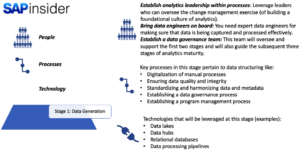
 We often jump into analytics to find "value" with whatever datasets we find. This is not a desirable approach because the analysis output will be dicey if you have not developed your data quality and integrity (Stage 1). Will you bet your career and millions of dollars of your organization on results that were generated using questionable data? All modeling and analytics are susceptible to GIGO (Garbage in Garbage out) principle. Without ensuring that your input data going into a model or analytics exercise is excellent, you are just looking at the output, giving you a picture that may be skewed from reality/feasibility.
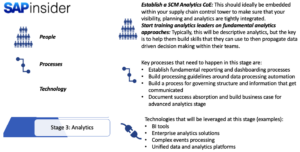
 Stage 2: Start becoming a data-driven enterprise
 Stage 3: Start extracting insights from the data
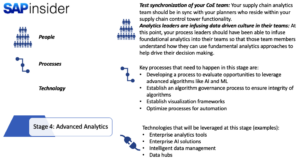
 Stage 4: Start predicting and prescribing
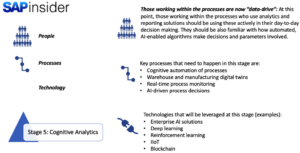
 Stage 5: The "Self-running" Supply Chain

2 minute read
Meet the Experts
Key Takeaways
What you need to know
The importance of supply chain analytics has increased due to growing complexities in supply chain networks.
To build world-class capabilities in this area, organizations will need to build a roadmap.
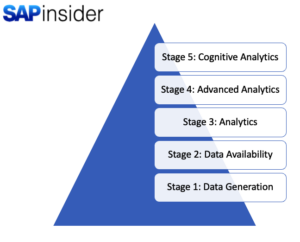
The roadmap consists of five stages, starting with foundational and going all the way to advanced analytics capabilities.
Supply chain analytics has rapidly evolved in the last few years, supported by progress in technology and computing power. This evolution can also be attributed to increasing supply chain complexities, and challenges companies are increasingly running into. SAPinsiders have consistently highlighted their increased focus on leveraging analytics and automation in the supply chain in our research, like the most recent research, Supply Chain Planning in The Cloud, and in our conversations with them, leading to “Supply Chain Analytics and Data Management” being the theme of our upcoming December 2022 research report. However, building robust supply chain analytics capabilities is a journey. Organizations need to develop a roadmap to attain supply chain analytics expertise, which needs to happen in various stages. This article discusses the five stages of building supply chain analytics maturity.
More Resources
See All Related Content


Customer Case Study: Establishing BDC as the Future-ready Enterprise analytics platform at Reynolds Consumer Products (RCP)Enterprise analytics teams are being asked to rethink their tools, architecture, and processes all at once — aging SAP BW landscapes, fragmented reporting, rising demand for AI-ready data, and business teams that will not wait a quarter for an answer. In this customer case study, analytics leaders from Reynolds Consumer Products (RCP) explain why they […]
1 minute read