Explore critical topics shaping today’s SAP landscape—from digital transformation and cloud migration to cybersecurity and business intelligence. Each topic is curated to provide in-depth insights, best practices, and the latest trends that help SAP professionals lead with confidence.
Discover how SAP strategies and implementations vary across global markets. Our regional content brings localized insights, regulations, and case studies to help you navigate the unique demands of your geography.
Get industry-specific insights into how SAP is transforming sectors like manufacturing, retail, energy, and healthcare. From supply chain optimization to real-time analytics, discover what’s working in your vertical.
Dive into the most talked-about themes shaping the SAP ecosystem right now. From cross-industry innovations to region-spanning initiatives, explore curated collections that spotlight what’s trending and driving transformation across the SAP community.
Explore critical topics shaping today’s SAP landscape—from digital transformation and cloud migration to cybersecurity and business intelligence. Each topic is curated to provide in-depth insights, best practices, and the latest trends that help SAP professionals lead with confidence.
Discover how SAP strategies and implementations vary across global markets. Our regional content brings localized insights, regulations, and case studies to help you navigate the unique demands of your geography.
Get industry-specific insights into how SAP is transforming sectors like manufacturing, retail, energy, and healthcare. From supply chain optimization to real-time analytics, discover what’s working in your vertical.
Dive into the most talked-about themes shaping the SAP ecosystem right now. From cross-industry innovations to region-spanning initiatives, explore curated collections that spotlight what’s trending and driving transformation across the SAP community.
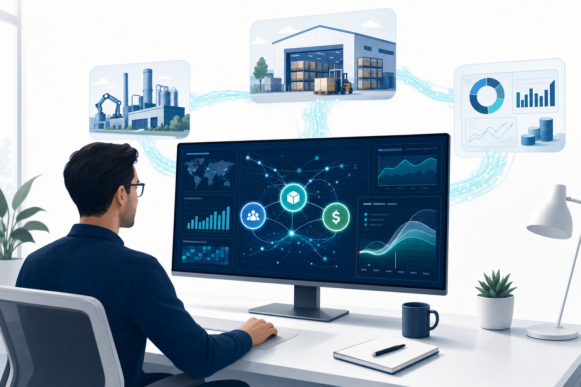
SAP and o9 both target the same strategic problem: how to turn supply chains into agile, data-driven engines for growth. Despite having the same goal, both vendors approach this challenge from different directions. SAP presents an ERP-centric execution backbone, while o9 uses an AI-native planning “brain”.
Integrated Planning from SAP
SAP’s core planning offering is Integrated Business Planning (SAP IBP), a cloud solution on SAP HANA that unifies S&OP, demand planning, inventory optimization, and response and supply planning in one platform. Tight integration with SAP S/4HANA and supply chain integration add‑ons enables near real‑time transfer of master and transactional data, so plans can drive production, procurement, and fulfillment with minimal manual touch.
For SAPinsiders this means that they have a single data model spanning finance, supply chain, and operations supporting integrated business planning and scenario analysis. SAP also provides embedded analytics, AI-supported forecasting, and demand sensing that sit natively in the broader SAP application landscape.
o9’s Digital Brain
o9 positions its platform as an AI‑powered “Digital Brain” that creates a knowledge‑driven digital twin of the end‑to‑end supply chain, from suppliers to customers. The platform emphasizes real‑time ingestion of ERP, IoT, and external data, advanced optimization solvers, and rich what‑if scenario planning across demand, supply, and operations.
The key values for o9 customers include event‑driven, continuous planning that senses disruptions and dynamically rebalances supply, inventory, and capacity. o9 also offers a unified planning workspace that connects S&OP, supply, distribution, and even commercial or product teams in a single collaborative environment.
Similarities and Differences
Both vendors aim to provide end‑to‑end planning coverage including demand forecasting, supply and inventory planning, and S&OP/IBP‑style consensus processes. Other crucial features include real‑time visibility and analytics via control‑tower‑like capabilities to detect risks and enable faster decision making. And both vendors include AI and machine learning for forecasting accuracy, demand sensing, and automated decision recommendations.
However, despite the overlaps, the strategic emphasis differs. SAP IBP is optimized for organizations standardizing on SAP S/4HANA and seeking a deeply integrated planning‑to‑execution stack. o9 is more ERP‑agnostic, often layered as a best‑of‑breed planning brain over SAP and non‑SAP backbones. Solutions from o9 are frequently regarded as highly configurable with rapid scenario modeling. SAP IBP, by contrast, offers best practice templates but can be perceived as being tied to SAP’s governance models.
For SAPinsiders, migration away from legacy SAP APO has opened a window for o9, which explicitly targets APO replacements and has even filed a trade‑secret complaint alleging SAP used o9 concepts in IBP, underscoring the intensity of competition in this segment.
Recent Friction
Complicating the picture for customers, in November 2025, o9 Solutions filed a complaint against SAP alleging that three former o9 leaders engaged in a coordinated effort to include o9’s confidential intellectual property in SAP’s planning and AI portfolio. The executives at the center of the complaint are Stephan de Barse, formerly o9’s Chief Revenue Officer; Stijn Pieter van Houten, a senior figure in knowledge innovation; and Sean Zonneveld, a global senior vice president.
The complaint alleges that, in the months before and around their departures from o9, the three executives downloaded and accessed thousands of internal files including technical documentation, product strategy materials, and detailed customer information. o9 contends that these documents helped SAP sharpen its messaging and accelerate development in AI driven planning and adjacent capabilities.
SAP has publicly rejected the accusation that it used a competitor’s trade secrets, maintaining that its supply chain and planning roadmap is the result of its own long-running investments and strategy. SAPinsider will continue to follow the story.
What This Means for SAPinsiders
Design around your planning “center of gravity”. If SAP S/4HANA is the operational backbone, SAP IBP offers a native path for integrated planning, leveraging a single data model, embedded analytics, and governance aligned with core ERP. For organizations with diverse ERPs or fast changing businesses, o9’s Digital Brain can be positioned as the primary planning layer that federates data from multiple systems while still feeding execution back into SAP.
Match use cases to each platform’s strengths. Use SAP IBP where you need standard, process driven IBP/S&OP, tight financial integration, and predictable templates that align with SAP best practices. Bring in o9 for cross enterprise scenario modeling, event driven replanning, and complex multi-tier optimization that spans suppliers, plants, and commercial teams, treating it as a specialized engine for the toughest planning problems.
Be deliberate about coexistence patterns. Many SAPinsiders will end up with a hybrid landscape where some planning processes sit in SAP IBP and others in o9. Define clear ownership for data (master and planning), decision rights, and “system of decision” by process so you do not duplicate scenarios, KPIs, or workflows across both tools. Then build integration so that whichever platform you choose for a specific process becomes the authoritative driver of downstream execution in SAP.
SAP offers Integrated Business Planning (IBP) as a cloud solution tightly integrated with SAP S/4HANA, providing a unified data model and real-time analytics for standardized planning and execution.
o9 positions its AI-native platform as a 'Digital Brain' for agility in supply chain planning, enabling event-driven continuous planning and scenario modeling across diverse systems.
SAPinsidersd should leverage SAP IBP for standardized processes and financial integration, while considering o9 for complex, cross-enterprise scenario modeling, fostering a hybrid landscape with clear data ownership and integration strategies.
SAP and o9 target the same strategic problem of transforming supply chains into agile, data-driven systems for growth but differ in their approaches—SAP uses an ERP-centric execution model while o9 leverages an AI-native planning framework.
Access exclusive SAP insights, expert marketing strategies, and high-value services including research reports, webinars, and buyers' guides, all designed to boost your campaign ROI by up to 50% within the SAP ecosystem.
Always have access to the latest insights with articles, Q&As, whitepapers, webinars, and podcasts. Gain the inside edge. The SAPinsider Weekly helps you stay SAP savvy. Access exclusive bonus materials, discounts, and more.