
Mar 16-19, 2026Las Vegas, Nevada, NV
SAPinsider Research
Upcoming Events
SAPinsider Las Vegas 2026
Related Vendors


Access the definitive State of the Market guides, with your steps to success from benchmarking the performance of SAP professionals worldwide. See which strategies are yielding the best results, what sets Leaders apart from their peers. Discover actionable, data-driven insights to ensure the success of your initiatives.
122 results
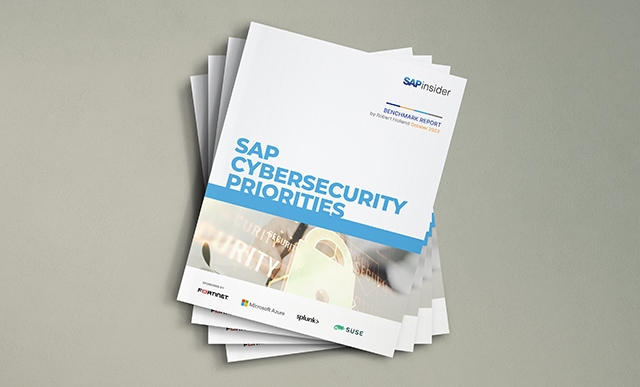
SAP Cybersecurity PrioritiesOct 31, 2023 — Cyberattacks and cyber crime continue to grow across the globe. The latest statistics show growth in both the frequency and cost of attacks, and as many as two thirds of organizations may have experienced a cyberattack during the past year. With cybersecurity on the minds of many businesses, it is important to examine what organizations are prioritizing when it comes to their SAP systems. Earlier this year, SAPinsider research revealed that ransomware attacks, unpatched systems, and compromised credentials were the top three cybersecurity threats to SAP systems. This report will focus on what organizations are prioritizing to secure their SAP systems and how they are ensuring their teams are ready to meet these threats.
The survey asked the respondents to about their cybersecurity priorities, the teams involved in setting those priorities, how they are protecting their SAP systems, in which areas they are prioritizing cybersecurity investment, and the impact of the current economic climate on their cybersecurity priorities. Protecting the data in SAP systems remains the top priority for respondents (57%), with risk assessment and management (33%) and identify and access management (30%) much less important. This aligns with the fact that 53% of respondents reported that the biggest factor impacting their cybersecurity priorities is the need to keep sensitive and confidential data in SAP systems protected from potential threats.
Download the benchmark report to read the full data analysis from 144 members of the SAPinsider community and receive recommendations for your own plans.
- Explore the factors that are most impacting cybersecurity priorities for SAP systems
- Learn about the actions being taken to support cybersecurity priorities
- Understand the types of security education and training being prioritized
- See the list of cybersecurity priorities and cybersecurity threats to SAP systems
1 minute read
The CIO’s Transformation Report Card 2023Oct 31, 2023 — Over 50% of tech leaders are prioritizing two transformation initiatives: business process automation, standardization, or redesign, and transitioning to SAP S/4HANA. This is according to SAPinsider’s CIO 2023 Transformation Report Card and represents a considerable growth compared to last year, with 17 and 22 percentage point increases. Tech leaders identified two main drivers of digital transformation. Nearly 50% of respondents cited the business need for greater flexibility and innovation as the top driver of transformation, 17 points higher than last year. Over a third of respondents noted the upcoming end of maintenance for ECC, 18 points higher than last year. Regarding SAP’s role in transformation initiatives, a shift in perception has been observed over the past 12 months. This year, 47% reported using SAP for core ERP, new cloud solutions and innovation, 11 points higher than last year, and 33% reported SAP would be back-end primarily while best-of-breed would provide cloud and innovation, down 9 points from last year.
1 minute read
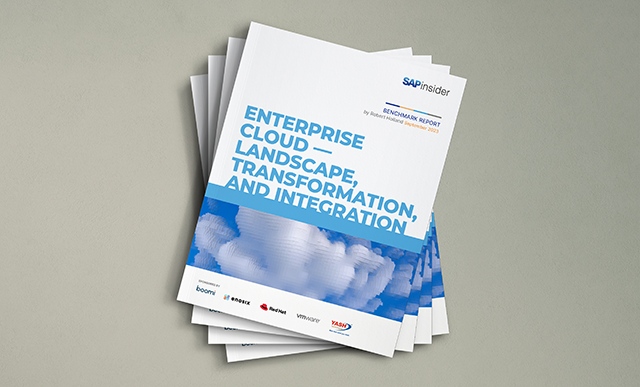
Enterprise Cloud – Landscape, Transformation, and IntegrationSep 29, 2023 — For the last four years, SAPinsider has been following the move to the cloud. Initially our research followed cloud workloads in general, but for the last two years we have focused on how SAP workloads are moving to the cloud. This year, cloud usage continues to increase across the enterprise landscape. SAP’s push for cloud ERP and the adoption of the SAP Business Technology Platform (BTP) is partly responsible for this, but organizations are also moving data, as well as both SAP and non-SAP workloads to cloud environments. In the SAP space, many organizations are still running older systems on local infrastructure, while newer solutions are more likely to be running in the cloud. But a significant proportion of those workloads still running on local infrastructure are likely to move to the cloud over the next few years.
The survey asked the respondents to about the SAP workloads they are running, the infrastructure used for those workloads, whether they planned on moving on-premise workloads to the cloud, the cloud providers they were using, and the factors most impacting their decisions to move SAP workloads to the cloud. As has been the case in the past, it is older SAP workloads that are most likely to be still be running on-premise. This includes sales solutions (45%) and SAP ECC or SAP Business Suite (38%). Most of these workloads will move to the cloud over the next few years, although those running new offerings like SAP HANA (55%) and SAP S/4HANA (47%) have no plans to move those workloads to the cloud likely because they are based on new infrastructure investments.
Download the benchmark report to read the full data analysis from 170 members of the SAPinsider community and receive recommendations for your own plans.
- Explore the factors that are most impacting how organizations will move SAP workloads to the cloud
- Learn about the criteria being used by respondents for selecting a cloud provider
- Understand the measurement criteria for cloud deployments
- See how organizations are integrating cloud deployments with other workloads both on-premise and in the cloud
2 minute read
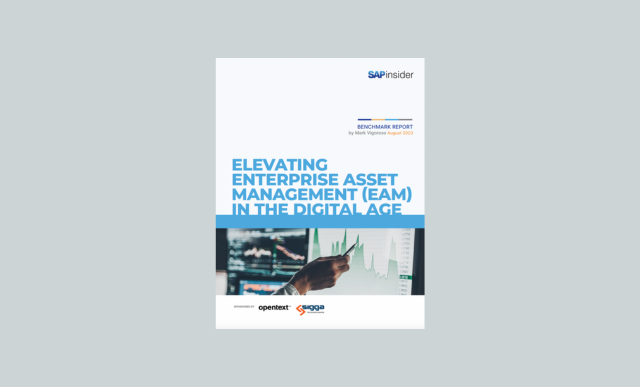
Elevating Enterprise Asset Management (EAM) in the Digital AgeAug 31, 2023 — For asset-intensive industries such as utilities, oil and gas, transportation, and discrete and process manufacturing, Enterprise Asset Management (EAM) has been a crucial necessity. It includes the management, support, and maintenance of a company’s physical assets throughout their complete lifecycle. This lifecycle encompasses capital planning, procurement, installation, performance, maintenance, repair, regulatory compliance, risk management, and asset decommissioning and disposal.
1 minute read
Deployment Approaches to SAP S/4HANA 2023Jul 31, 2023 — For the last three years, SAPinsider tracked how organizations deploy SAP S/4HANA. During that time, adoption of the solution grew steadily, although a significant proportion of respondents either still have no plans for SAP S/4HANA or are only at the point of evaluating the business case. The most likely deployment model for these organizations continues to be a system conversion or brownfield implementation with a new implementation being second. However, over the last two years a greater proportion of respondents indicated that a selective data transition is an option as existing SAP ERP users with complex implementations have started to move to SAP S/4HANA.
The survey asked the respondents to about whether they were running SAP S/4HANA, their time frame for switching, how they planned to deploy, the infrastructure they planned on using, and the factors most impacting their SAP S/4HANA deployment decisions. As has been the case the last three years, the proportion of respondents planning on using a selective data transition continues to grow just as more long-time SAP ERP customers move to the offering. But while a quarter (27%) of organizations have already switched to SAP S/4HANA, more than half the respondents to this survey (53%) indicated that they do not plan to switch before 2025. This has the potential to create a resource bottleneck for partners that are experienced with deploying SAP S/4HANA as the 2027 end of maintenance deadline approaches.
Download the benchmark report to read the full data analysis from 168 members of the SAPinsider community and receive recommendations for your own plans.
- Explore the factors that are most impacting how organizations will deploy SAP S/4HANA
- Learn about the types of deployments being used and what those trends mean
- Understand the time line for when respondents planned to switch to SAP S/4HANA
- See the infrastructure that organizations plan on using for their deployments
1 minute read
Evolving BI and AnalyticsJun 30, 2023 — Creating a cohesive data fabric is integral to organizational business intelligence (BI). However, while many organizations strive to reach this goal, there is often a gap between building cohesive data fabric strategy and its execution. The introduction of SAP Datasphere earlier this year aimed to address this need by harmonizing mission-critical data across the enterprise while maintaining its business context. However, SAPinsider research shows that a need to demonstrate return on investment (ROI) and provide faster time to value may override such broader, strategic goals.
Although four in five respondents reported that their organization was currently considering, planning, or implementing business intelligence solutions, most are still in the early phases of their deployments. The challenges that they face in deploying these initiatives relate to budget, change management issues, and embarking on broader programs rather than trying to provide quick wins. Despite the need for a cohesive data fabric, respondent organizations are constrained with demonstrating ROI, faster time-to-value, and limit expenditure. This may preclude them from meeting their broader business intelligence objectives even though there is a need for more agility and cross-enterprise capabilities in business intelligence. However, as operational business intelligence gets embedded in strategic plans and roadmaps, organizations will be able to better engage with their business intelligence plans.
Download the benchmark report to read the full data analysis from 178 members of the SAPinsider community and receive recommendations for your own plans.
- Explore the factors behind the need for business intelligence and analytics to evolve
- Learn whether business intelligence objectives are part of long-term strategic and enterprise planning
- Understand the challenges that organizations face with deploying business intelligence programs
- See what data consumption tools, technology platforms, and databases/data lakes are being used
1 minute read
IT Automation for Enterprise SAPJun 30, 2023 — The goal of IT automation is to create an environment that contains a clean landscape, is running smoothly, and is easy to patch. While simple in concept, this is much more difficult to achieve in practice. IT automation offers many benefits as it reduces errors and enhances efficiency by automating manual and repetitive tasks, and increases regulatory compliance and security as system patching and monitoring get automated. However, IT automation projects may have a significant up-front cost and require a robust technology platform to support desired automation capabilities. Despite this, the move to cloud-based environments has made it possible for SAP customers to implement and leverage IT automation within their enterprise SAP environments.
The survey asked the respondents to about how far they had reached with implementing IT automation for their SAP systems and environments, and in which areas they were utilizing automation. They were most likely to be leveraged in operations, maintenance, and testing, though more organizations planned to implement automation in the areas of patching and testing. Respondents were concerned about skill gaps and integrating automation solutions with existing systems, but expected to optimize costs and resources, reduce errors, and enhance reliability and quality.
Download the benchmark report to read the full data analysis from 137 members of the SAPinsider community and receive recommendations for your own plans.
- Explore the factors that are influencing the need for IT automation for enterprise SAP systems
- Learn how far organizations have reached with implementing IT automation
- Understand the most important features for IT automation
- See the areas in which organizations are utilizing IT automation for SAP
1 minute read
HCM and SAP S/4HANA – Benchmark ReportJun 30, 2023 — SAPinsider research highlights the necessity of a human-centric approach in workforce management to drive positive business outcomes. Human Experience Management (HXM) systems, such as the SAP SuccessFactors HXM Suite, are designed to improve employee experiences, enhance engagement, and boost productivity. This shift is especially crucial for 80% of the global workforce, consisting of frontline or shift workers. For SAP organizations, integrating HXM during enterprise transformations powered by SAP S/4HANA can result in heightened operational efficiency, cost savings, and superior overall business performance.
The research also uncovers the tangible benefits of merging cloud-based HXM systems with fundamental HR solutions, such as time and attendance management. Approximately 27% of organizations surveyed reported a favorable ROI and a competitive edge over their peers due to this strategic implementation. Leading organizations are 33% more likely to implement SAP HXM SuccessFactors in the cloud, suggesting a forward-thinking approach toward HXM adoption. These organizations demonstrate a significantly higher adoption rate of fundamental HR technologies, particularly in time and attendance management, with an adoption rate of 83%.
1 minute read

Global Tax Management 2023 – Benchmark ReportJun 30, 2023 — Last year's research on global tax management confirmed the importance of digital transformation in finance and tax functions, facilitated by initiatives such as SAP S/4HANA migration, automation, and AI/ML. This report explores how the priorities of SAPinsiders in various aspects of taxation and technology have evolved and how organizations have adapted their global tax management strategies in this ever-changing landscape.
As global tax regulations evolve rapidly, control and governance challenges have emerged as the foremost concern for businesses, with 51% identifying it as a significant pain point. This suggests an intensifying struggle to maintain compliance in a complex tax landscape. While more SAPinsider organizations plan to adopt third-party tax engines, consistent integration with ERP and other applications remains challenging, slowing utilization and posing difficulties for aligning tax management with broader business systems.
Download the benchmark report to read the full data analysis from 128 members of the SAPinsider community and receive recommendations for your global tax management plans.
1 minute read
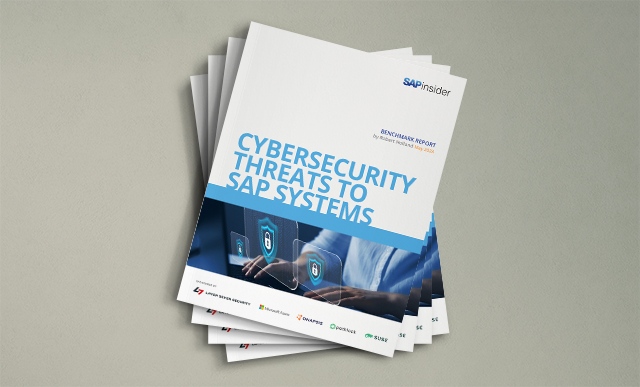
Cybersecurity Threats to SAP Systems 2023May 31, 2023 — In 2023, the focus of cybersecurity strategies for SAP systems shifted away from ransomware and malware attacks to addressing unpatched systems, concentrating on addressing system vulnerabilities over attack vectors. Exploring the details behind these changes, SAPinsider revealed some interesting in year-over-year trends during its third year of research on cybersecurity threats. Increasing regulatory compliance requirements, hybridization of environments, and economic pressures all played a role in influencing this shift in thinking.
The survey asked the respondents to rank the top cybersecurity threats to their SAP systems, ranging from most to least important. Ransomware attacks, unpatched systems, and credentials compromise were ranked as the most important threats to systems, similar to last year. These three are interconnected when it comes to root cause analysis. Credentials compromise is the gateway for threat actors to infiltrate systems and plant ransomware or malware. Failure to regularly apply patches exposes vulnerabilities that allow hackers to exfiltrate data, plant malicious code, or traverse across the network.
Download the benchmark report to read the full data analysis from 206 members of the SAPinsider community and receive recommendations for your own plans.
- Explore the top cybersecurity threats to SAP systems in 2023
- Learn what factors are impacting cybersecurity strategy
- Understand the challenges that organizations face with securing SAP systems
- See what elements organizations believe are necessary to secure SAP environments
1 minute read