Featured Content
Topics

Explore critical topics shaping today’s SAP landscape—from digital transformation and cloud migration to cybersecurity and business intelligence. Each topic is curated to provide in-depth insights, best practices, and the latest trends that help SAP professionals lead with confidence.

Regions

Discover how SAP strategies and implementations vary across global markets. Our regional content brings localized insights, regulations, and case studies to help you navigate the unique demands of your geography.

Industries

Get industry-specific insights into how SAP is transforming sectors like manufacturing, retail, energy, and healthcare. From supply chain optimization to real-time analytics, discover what’s working in your vertical.

Featured Content
Topics

Explore critical topics shaping today’s SAP landscape—from digital transformation and cloud migration to cybersecurity and business intelligence. Each topic is curated to provide in-depth insights, best practices, and the latest trends that help SAP professionals lead with confidence.

Regions

Discover how SAP strategies and implementations vary across global markets. Our regional content brings localized insights, regulations, and case studies to help you navigate the unique demands of your geography.

SAP Asset Accounting

Upcoming Events

SAPinsider Las Vegas 2026
Mar 16-19, 2026Las Vegas, Nevada, NV

Related Vendors

What is SAP Asset Accounting?

SAP Asset Accounting is a submodule of the SAP Financial Accounting (FI) module within SAP ERP that handles the management and supervision of an organization’s fixed assets. The fundamental goal of finance and accounting managers utilizing SAP Asset Accounting (FI-AA) is to track the acquisition, utilization, depreciation, and disposal of assets and determine the exact values of the company’s fixed assets on a given date. This includes everything from purchases and sales, rental income generated by properties owned by companies and other organizations, as well as any repairs, enabling customers to manage their physical assets.

What is SAP Asset Accounting?

SAP Asset Accounting is a submodule of the SAP Financial Accounting (FI) module within SAP ERP that handles the management and supervision of an organization’s fixed assets. The fundamental goal of finance and accounting managers utilizing SAP Asset Accounting (FI-AA) is to track the acquisition, utilization, depreciation, and disposal of assets and determine the exact values of the company’s fixed assets on a given date. This includes everything from purchases and sales, rental income generated by properties owned by companies and other organizations, as well as any repairs, enabling customers to manage their physical assets.

Key capabilities of SAP Asset Accounting include:

  • Automated depreciation calculation and reporting
  • Segregation of duties between accounting and operations
  • Robust security features
  • Integration with SAP ERP and other SAP solutions
  • Flexible asset valuation

Key Considerations for SAPinsiders

Evaluate needs for parallel reporting in SAP S/4HANA to support SAP Asset Accounting. The new features in SAP S/4HANA Finance significantly change how the FI-AA module must be set up when using local or group reporting to enable reporting with different fiscal year variants.

Consider utilizing SAP Asset Accounting to enable flexible asset valuation. SAP Asset Accounting in SAP S/4HANA Finance makes it easier to track assets and their transactions, so multinational organizations can better understand how much value they have tied up in fixed assets. Charting depreciation supports transaction data at the country level, allowing for complex asset valuation and depreciation processes.

Limit customizations with enhanced SAP Asset Accounting standard functionality in SAP S/4HANA. Maintaining compliance across multiple areas is difficult for any organization and often results in highly customized systems that are costly to maintain. Standard features in SAP Asset Accounting in SAP S/4HANA can help streamline core asset accounting processes, including tax depreciation, and enable comprehensive drill-down capabilities to reduce the need for highly customized reporting or functions.

6 results
How to Set Up Parallel Asset Accounting in SAP S/4HANA Finance with Differing Fiscal Year VariantsFeb 2, 2017  —  Learn how to set up the new Asset Accounting functionality (FI-AA) in SAP S/4HANA Finance in a parallel reporting scenario with differing fiscal year variants. Key Concept The unified data model and real-time integration between General Ledger Accounting (FI-GL) and Asset Accounting (FI-AA) force the fiscal year variants from the leading and non-leading ledgers onto […]
12 minute read
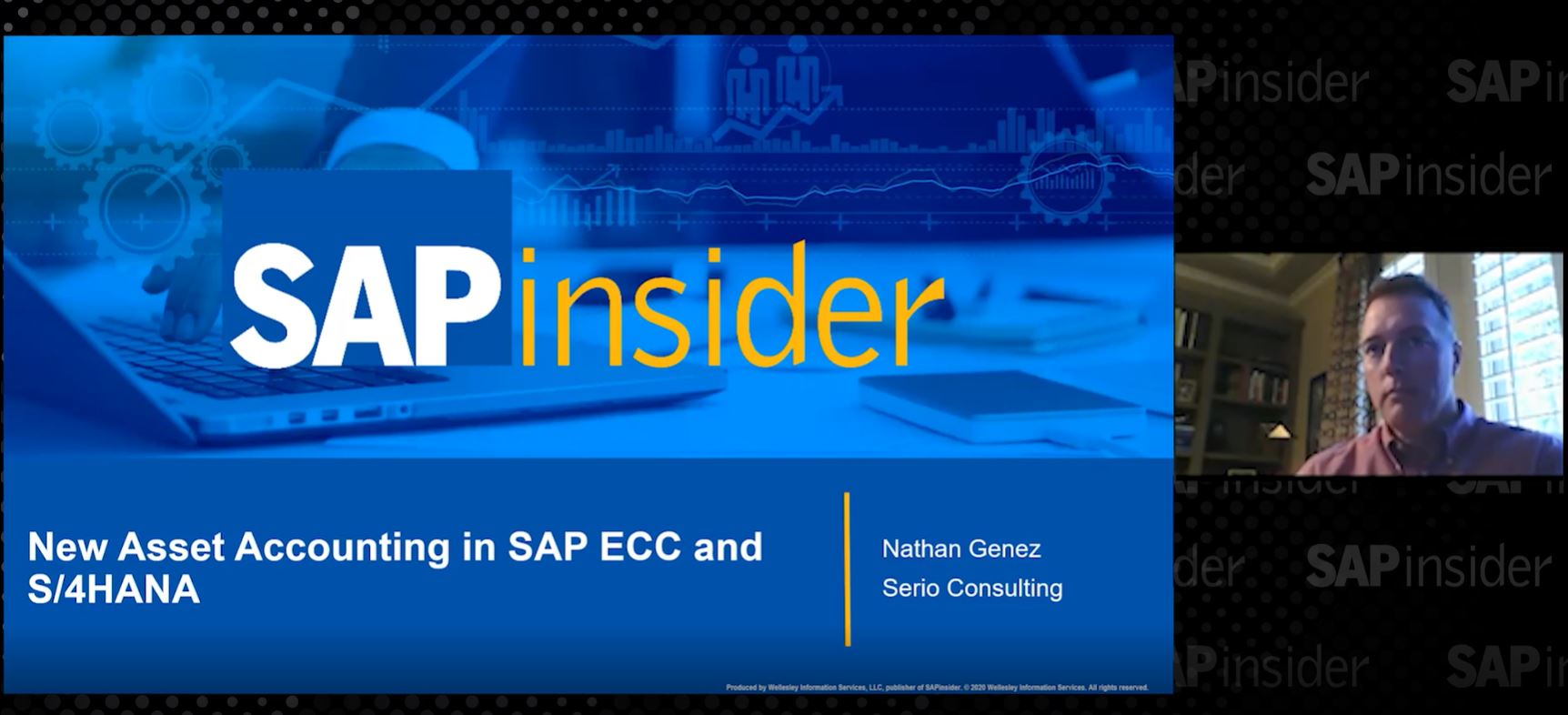
New Assets Accounting in ECC and SAP S/4HANAJan 19, 2021  —  SAP has introduced a new solution for managing fixed assets. Customers can optionally upgrade to it in ECC or handle it as part of their implementation of S/4HANA. In this session, the history behind the solution as well as the main benefits of it will be covered. Walk away from this session with an in-depth understanding of: - Historical changes in asset accounting that led to the current SAP S/4HANA new asset accounting release - Options for parallel valuations, integration options to the NewGL, and delta changes for depreciation and period end closing - Upgrade/Implementation options when upgrading to New Asset Accounting
1 minute read
asset accounting
Asset Accounting for Today’s EconomyJul 22, 2022  —  Asset accounting is the process of tracking and recording all company assets. By tracking and recording all company assets, businesses can more easily identify the most critical investments and make better strategic decisions about where to allocate resources.  This information can help finance and accounting teams make better strategic decisions about allocating resources to improve […]
4 minute read
Asset Migration with SAP S/4HANA FinanceMay 20, 2016  —  With S/4HANA learn how to use new transaction codes to complete asset migration either manually via transaction code ABLDT or automatically using a Business Application Programming Interface (BAPI). Key Concept A new design in SAP S/4HANA Finance enables reconciliation between Asset Accounting (FI-AA) and the SAP General Ledger. To reinforce this, SAP has changed the […]
6 minute read
An Overview of SAP S/4HANA Finance with a Focus on Asset AccountingMar 7, 2016  —  Learn how your organization can leverage the functionality of the new Asset Accounting (FI-AA) module in SAP S/4HANA Finance. Key Concept SAP S/4HANA Finance (formerly SAP Simple Finance) comes with a lot of features, such as the universal journal, streamlined design, and real-time analytics. The new Asset Accounting (FI-AA) module is one example of a […]
11 minute read
Are You Taking Full Advantage of Fixed Assets?Jan 25, 2017  —  

Fixed asset accounting is an important area of finance — depending on asset cost, companies can potentially save millions or even billions on tax deductions. Many organizations overlook fixed assets accounting, however, and fail to take advantage of these deductions. So how can you get the most out of fixed assets accounting in SAP landscapes? This article explains how you can complement your existing technology with efficient, automated processes and fully benefit from fixed assets accounting.  

3 minute read