



Mar 16-19, 2026Las Vegas, Nevada, NV
SAP Enterprise Architecture Framework
Featured Insiders
Upcoming Events
SAPinsider Las Vegas 2026
Related Vendors

What is SAP Enterprise Architecture Framework?
Based on The Open Group Architecture Framework (TOGAF), the SAP Enterprise Architect Framework (EAF) was developed to be an extension of TOGAF with the intention of supporting customers with an extensive SAP footprint. TOGAF and SAP EAF are intended to be complementary, with TOGAF 8.1 being the foundation for SAP EAF, and TOGAF 9.0 and higher being enhanced by contributions from the SAP EAF. The SAP EAF was initially developed by SAP to support the effective adoption of packaged software in a services-oriented enterprise.
What is SAP Enterprise Architecture Framework?
Based on The Open Group Architecture Framework (TOGAF), the SAP Enterprise Architect Framework (EAF) was developed to be an extension of TOGAF with the intention of supporting customers with an extensive SAP footprint. TOGAF and SAP EAF are intended to be complementary, with TOGAF 8.1 being the foundation for SAP EAF, and TOGAF 9.0 and higher being enhanced by contributions from the SAP EAF. The SAP EAF was initially developed by SAP to support the effective adoption of packaged software in a services-oriented enterprise.
While the TOGAF 8.1 Architecture Development Method (ADM) provides a narrative of each phase and describes the phase in terms of objectives, approach, inputs, steps, and outputs. What the SAP EAF adds is specific guidance around concepts, tasks, and terminology. In addition, narratives, worksheets describing outputs, and accelerators that can be leveraged for the ADM are included in the SAP EAF. The SAP EAF also provides a level of process flexibility that allows customers to focus on a target architecture rather than spending time defining a current architecture. Both extensions to the TOGAF 8.1 were included in TOGAF 9.0 content.
Key capabilities in the SAP Enterprise Architect Framework:
- SAP EAF Meta Model. The SAP EAF explicitly introduced a Meta Model concept as one did not exist in TOGAF 8.1, with the Meta Model enabling a comprehensive view of the entire enterprise architecture. The Meta Model classifies the enterprise into contextual and architectural elements and defines EA concepts into defined entities. These entity relationships provide the basis for a scheme for many enterprise architecture modeling tools.
- SAP EAF Artifacts. SAP EAF expanded on what was in TOGAF 8.1, which only provided a list of sample architectural views, to organize artifacts into Catalogs, Matrices, and Views (or Diagrams). The artifacts are integrated into the SAP EAF Process and Meta Model, and customers can leverage guidance and examples in SAP EAF to develop these artifacts.
- SAP Specific Mappings. The biggest area of distinct content for the SAP EAF is in providing content level guidance for organizations with a large SAP footprint. Mapping SAP content can help customers accelerate their efforts to develop their enterprise architecture as it includes references and mappings to SAP business, application, and technical content.
The SAP Enterprise Architecture Framework can offer specific advantages to SAP customers, and complements TOGAF to accelerate the development of an enterprise architecture for their business.
354 results

Analytics Innovation in The CloudJul 7, 2021 — Getting into the pilot seat Pilots are a critical element in advanced analytics journeys. For those not familiar with this jargon, a pilot essentially tests an analytics application use case in a scaled-down, siloed environment. And as organizations evolve in their analytics journey, they will go through several pilots. I believe that for an organization […]
8 minute read

Building Scalable Analytics Solutions : A Manufacturing ExampleJul 1, 2021 — By Kumar Singh, Research Director, Automation & Analytics, SAPinsider The killer of ROI on analytics investments – siloed solutions Every white paper, think tank perspective, analytics body of knowledge, research- they are all screaming one thing loud and clear in your ear: Building analytical capabilities within your operations is a must to compete and thrive […]
3 minute read
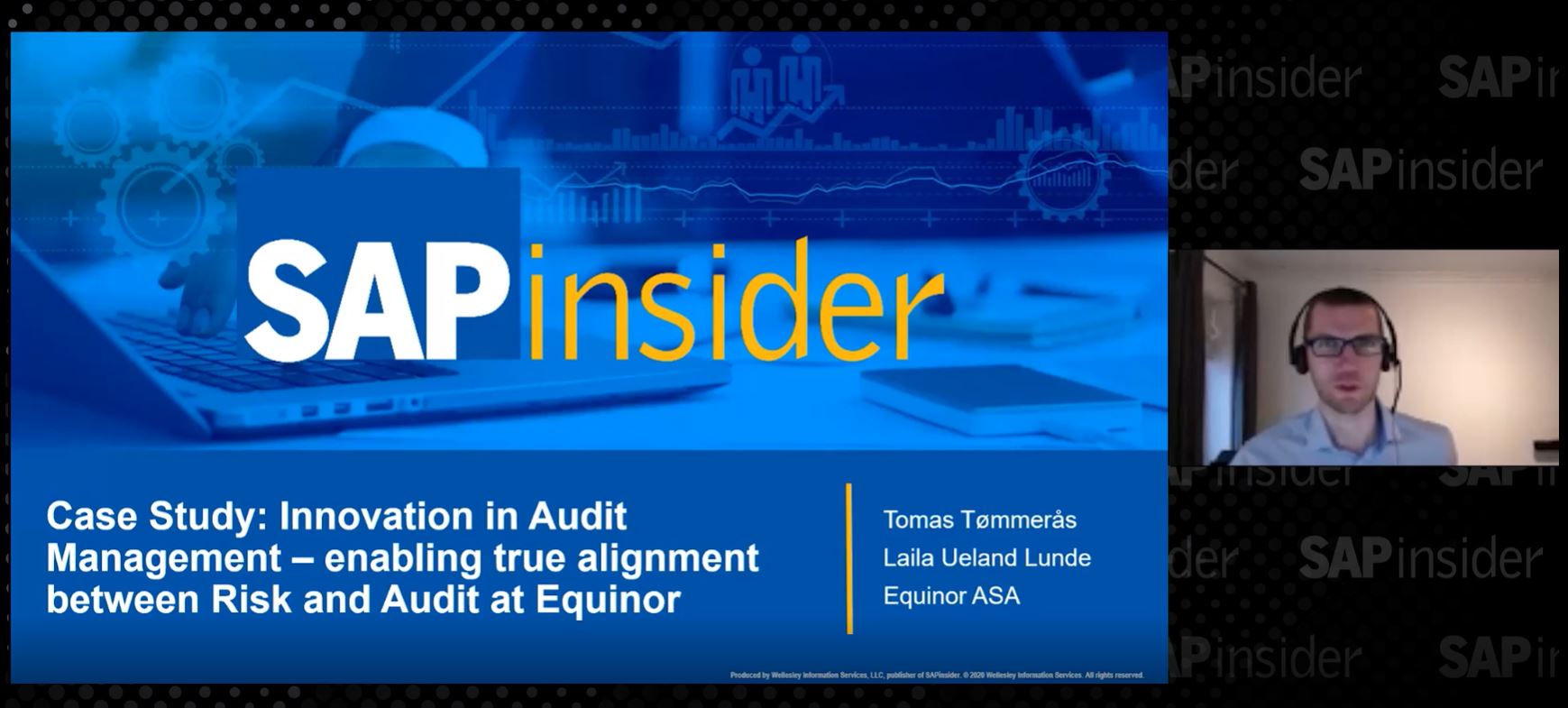
Case Study: Innovation in Audit Management – Enabling True Alignment Between Risk & Audit at EquinorJan 20, 2021 — Driven by the need to effectively translate company strategy, ambitions, and risks into actions and results; Equinor, a multinational energy company with operations in more than thirty countries, is utilizing an integrated performance management and risk solution powered by SAP UI5, SAP BW on HANA, SAP BusinessObjects Lumira, and SAP Analytics Cloud. Taking it one significant step further, Equinor is now integrating Audit Management into its unique solution – to create an unprecedented combination of capabilities that will enable fit-for-purpose planning, execution and follow-up of audits in the context of enterprise risk management and strategy. Hear about Equinor’s strategy for replacing its legacy SAP Audit Management solution, with special focus on the process and principles, the delivery model, architecture, and user engagement. Attend this interactive session to:
- See how Equinor partnered with SAP Innovative Business Solutions, using an iterative design-thinking approach to revamp and digitalise its performance framework, leveraging custom SAP UI5 to exponentially increase the value of existing investments and innovate in user experience
- Step through a live demo of planning, execution and follow-up of audits and related findings and actions in a large enterprise context
- Find out how the new solution will be a key enabler for unlocking new insight and ensure timely execution and follow-up of the audit program
1 minute read

Requirements for Securing Cloud-Based SystemsJan 14, 2021 — As organizations accelerate the move of enterprise applications and data into cloud-based and cloud-resident systems, it’s extremely important to ensure that security is in place early to avoid having to backtrack and address these issues. Whether systems are running in Software-as-a-Service, Platform-as-a-Service, or Infrastructure-as-a-Service environments, each deployment offers unique security challenges. This track will help you understand how you can best prepare for the move to the cloud, the steps that you need to take to secure your systems, as well as planning for how to protect your data and identify potential threats to your systems.
6 minute read

The Rise of Integration as a Strategic ImperativeJan 7, 2021 — A successful business case for integration hinges on a company’s ability to start viewing it as a strategic imperative at the heart of digital transformation, which will not just save costs but generate revenue. This article uncovers what is driving the increased focus on integration today. It also shares and details some guiding principles SAP customers can follow to improve their business outcomes. The strategic advice in this article will help you discover:
- The importance of securing executive support for integration projects
- How establishing an integration center of excellence is the key to success
- Details on a framework for conducting an integration maturity assessment
--Tips for the best way to devise and execute your integration strategy
11 minute read

Using Predictive Models to Prepare for the FutureApr 24, 2020 — The COVID-19 crisis has caused uncertainty in almost every aspect of business operations, but it has made one thing more clear: The need for businesses to adopt advanced analytics to survive in a digital environment. Known for its ability to work with various architecture frameworks, help businesses make data-driven decisions, and report in real-time, SAP Analytics Cloud had been identified as a solution that can help organizations move forward during times of uncertainty. In this article, two SAPinsider Contributors drill down into the solution’s features, including its machine learning and predictive analytics capabilities.
After reading this article you will be able to:
- Explain the different capabilities of SAP Analytics Cloud;
- Understand how different industries can use the solution to move forward in times of uncertainty; and
- Learn how data can help predict human behavior.
9 minute read

Meeting ROI with Transformation ProjectsApr 13, 2020 — IT projects are often too cumbersome, take too long, can be too expensive, and offer little return on investment (ROI) to show for the effort. In today's world, transformation starts in small teams, labs, and skunkworks, not in traditional IT shops. It requires new thinking, not conforming to the thousands of rules, red tape, and deliverables in the project management body of knowledge (PMBOK).
8 minute read

Accelerate Your Finance Shared Services Transformation and Centralized ReportingJul 16, 2018 — New features have been introduced in SAP S/4HANA 1709 that enable enterprises to leverage the benefits of shared services for certain financial processes along with added reporting flexibilities. In this blog, I provide a quick overview of the innovations in SAP S/4HANA 1709 along with some key considerations and limitations while implementing them. I focus […]
13 minute read

J.K. Cement Strengthens Its Controls EnvironmentDec 20, 2017 —
The technology infrastructure of cement producer J.K. Cement needed to tighten up its controls. Its ten-year-old SAP system had added thousands of users and vendors, and a slew of manual, paper-based processes led to too many segregation of duties (SoD) conflicts and too much possibility for fraud. Learn how the company adopted nine Security Weaver solutions in under a month to get its controls in order.
15 minute read

A Digital Partner in the CloudOct 9, 2017 —
Today, companies face enormous pressure to digitize the business and deliver on evolving customer expectations. To do so, organizations are increasingly leveraging cloud technology, but moving off their legacy on-premise infrastructure can be a complex and time consuming process. With SAP HANA Enterprise Cloud, companies can accelerate the roadmap to innovation and bypass many implementation and infrastructure challenges along the way. Learn how SAP HANA Enterprise Cloud can free companies from the traditional management and maintenance tasks associated with running an on-premise environment and how it can serve as a jumping-off point to experience SAP solutions.
5 minute read