3 minute read

Meet the Authors
Key Takeaways
-
The Deutsche Telekom Industrial AI Cloud connects compute power and practical industrial outcomes, enabling quick and compliant implementation of industry-specific solutions for public institutions and SMEs, which enhances operational efficiency and accelerates digital transformation.
-
Utilizing the Deutschland stack, SAP is positioned as the central control plane for sovereign AI, allowing businesses to seamlessly integrate AI-generated insights back into operational systems, thus streamlining processes and ensuring actionable data that leads to improved production and cost reductions.
-
Deutsche Telekom emphasizes the importance of sustainable and sovereign AI infrastructure, addressing regulatory compliance and ESG commitments, making it particularly relevant for industrial SAP customers facing increased scrutiny and pressure on carbon accountability.
Enterprise AI announcements often die in the gap between GPU capacity and business value. However, Deutsche Telekom’s Industrial AI Cloud story differs in how explicitly it connects compute, the ecosystem, and applied industrial outcomes, and in how it places SAP in the operational layer of the stack.
It Starts with The Framing
The AI factory is the basis for the Deutschland stack, delivered by Deutsche Telekom together with SAP. T-Systems is responsible for the infrastructure and platform level, including T Cloud. At the same time, SAP provides the SAP Business Technology Platform (BTP) and powerful business and AI applications as a tech toolkit for cloud transformation. Deutsche Telekom notes that this enables industry-specific solutions for public institutions, internal security, industry, and SMEs to be implemented quickly, securely, and in compliance with the rules.
That is essentially the sovereign cloud pitch—but the real signal lies in the ecosystem and use cases.
Explore related questions
Early Adopters
Deutsche Telekom lists early users like Agile Robots and PhysicsX. This highlights that the AI factory is already operating at over a third of its capacity with existing customers. It also emphasizes that Siemens’ simulation portfolio, SIMCenter, is integrated on the Industrial AI Cloud to enable digital twins and high-precision simulations that help companies develop and test products faster and reduce costs.
Cedrik Neike, CEO of Siemens Digital Industries, said, “Together with Deutsche Telekom, we are bringing our software into a GPU-accelerated, sovereign cloud and can thus drastically reduce our customers’ simulation times.” He added that this is not a promise for the future but already a reality.
Thus, the Deutschland stack is not about Europe finding more GPUs. It’s about positioning SAP as the control plane for sovereign AI to become operational, measurable, and governable—exactly where SAP has always won.
What This Means for SAPinsiders
Connect industrial AI outputs to SAP process gravity across three critical patterns. SAPinsiders should design integration architectures that route AI-generated insights back into the operational system of record, rather than leaving them stranded in external dashboards. Three patterns matter most. The first is Digital twin to SAP execution, where simulations that optimize production parameters or maintenance intervals must update SAP maintenance plans, work orders, quality notifications, and production versions. Here, the AI factory provides high-compute resources, while SAP provides the anchor AI for business processes. The second is quality inspection at scale, in which Deutsche Telekom explicitly identifies quality inspection applications as ecosystem use cases. Still, the SAP-centric challenge is operationalizing outcomes through automated quality notification creation, exception workflows, traceability, and audit readiness. The third is engineering-to-manufacturing feedback, where the Industrial AI Cloud provides the sovereign infrastructure required to move AI from experimentation into production across its most critical industries.
Build the business case with sovereignty and sustainability. SAP leaders presenting sovereign AI investments to boards should frame infrastructure choices as meeting both regulatory compliance and ESG commitments simultaneously. Deutsche Telekom’s Munich data center is modernized, powered entirely by renewable energy, and aims for maximum energy efficiency, with waste heat to be used to supply the district in the future. It uses water from the nearby Eisbach for cooling. This gives organizations the dual benefit of sovereignty and sustainability-aligned infrastructure for AI workloads, addressing both auditor questions and stakeholder ESG expectations. The framing is especially relevant for manufacturing and industrial SAP customers where both regulatory scrutiny and carbon accounting pressures are intensifying.
Execute a focused 90-day pilot culminating in production hardening. SAP teams should structure sovereign AI initiatives as time-boxed engagements lasting about 90 days, designed to achieve production readiness, rather than as perpetual pilots. For example, in Weeks 1–2, a German organization can choose one industrial workflow, define measurable success metrics, and document sovereignty/security requirements aligned to the German soil operation constraints. Weeks 3–6 can be dedicated to building a thin integration layer that writes AI results back into SAP business objects and enforces approval steps when the business process demands human-in-the-loop controls. In Weeks 7–12, the organization hardens for production with logging, incident handling, and capacity planning, because Deutsche Telekom explicitly positions the Industrial AI Cloud for mission-critical production systems, not experiments. This structure helps teams resolve integration, governance, and operational questions early, rather than deferring them indefinitely while AI stays in a non-production sandbox.
More Resources
See All Related Content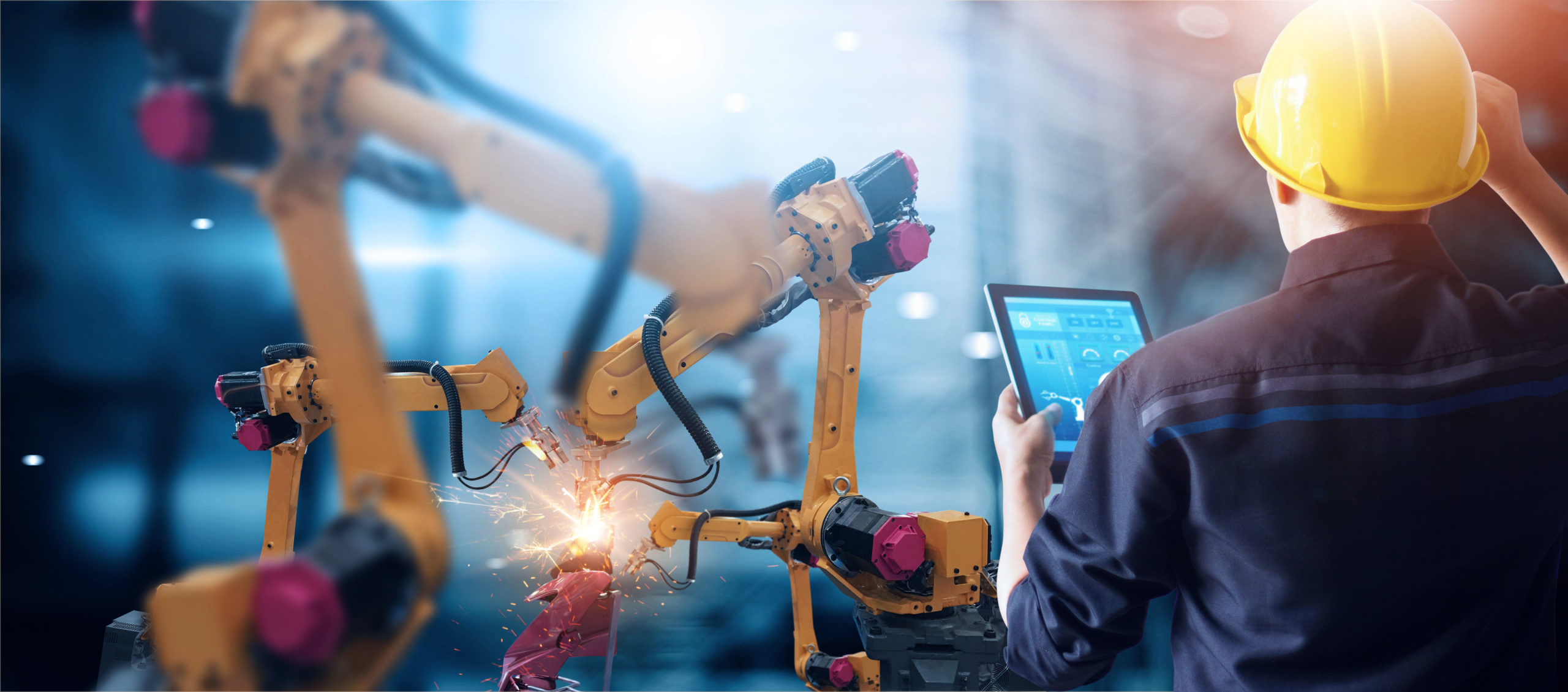
SAP, ANYbotics Gathering Insights from Robots Performing Dangerous TasksSAP and ANYbotics have integrated the ANYmal inspection robot into SAP workflows, enabling autonomous industrial inspections that enhance operational efficiency and data intelligence while keeping humans in the loop.
Rethinking AI Sovereignty: Pathways to Competitiveness through Strategic InvestmentsGlobal investment in AI is fast accelerating, with annual investment expected to increase to $1.5 billion for AI applications and $400 billion for AI infrastructure by 2030. Yet many economies risk falling behind as AI sovereignty becomes increasingly conflated with infrastructure ownership. Written by the World Economic Forum in collaboration with Bain & Company, Rethinking […]
1 minute read