

1 minute read
Meet the Authors
Key Takeaways
What you need to know
Partner capacity and start windows for SAP Cloud ERP Private programs may close well before ECC maintenance ends in 2027 as concurrent projects increase across the SAP base.
Custom-code triage across IS-U, CIS, AMI, work and asset management, and FERC accounting is where timeline risk becomes visible and should precede conversion.
Accelerator claims such as up to 50% faster implementation depend on accepting standardized, clean-core processes rather than recreating legacy customization.
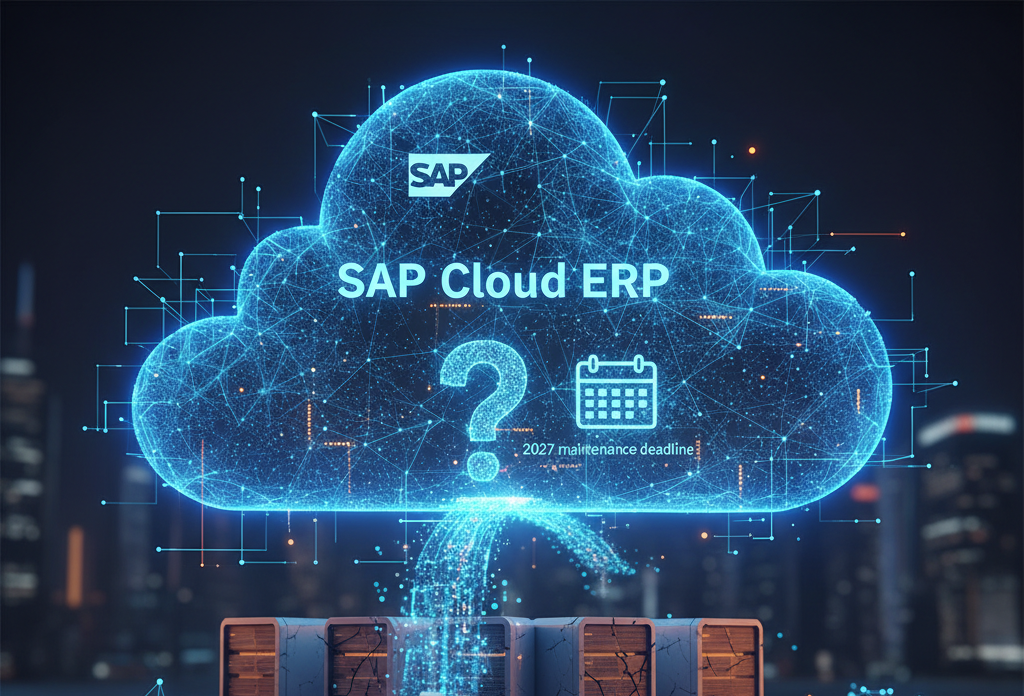
When SAP for Utilities 2026 convenes in San Antonio this October, the banner theme will be “Powering the Autonomous Utility Enterprise.” The agenda points toward AI, SAP Business Data Cloud, and predictive asset management. Yet, for the SAP base still running ECC, the road to any of that runs through a more immediate question. How, and when, to exit ECC before the 2027 maintenance deadline?
That deadline is no longer only a maintenance milestone. As ECC customers explore, plan, or deploy SAP Cloud ERP Private, utilities that wait may face tighter competition for teams with SAP utilities experience across IS-U, CIS, AMI, work and asset management, and FERC-specific requirements. Therefore, modernization planning now depends as much on sequencing and available expertise as it does on software choice.
delaware, one of only 11 global SAP Platinum Partners and a Gold Sponsor of this year’s SAP for Utilities event, will be working through exactly these questions at Booth #115 and in a customer session with regulated multi-state utility Avista on Wednesday, October 7 at 1:30 p.m. The story the session tells, of architectural decisions made early rather than retrofitted late, is a useful lens for the 2027 conversation.
Explore related questions
Ask SAPi
The Bottleneck Is People, Not Licenses
SAPinsider research shows the share of organizations still running SAP ECC or Business Suite has dropped to 50%. Among those still on ECC, 70% are exploring, planning, or deploying SAP Cloud ERP Private, though many will not complete the move before the end of 2027.
That matters because much of the SAP base is heading for the same exit at once, a deadline traffic jam with unusually expensive lane changes. For utilities with decades of configuration and custom development, the scarce resource is often the availability of implementation teams that understand how a utility system operates.
The runway is shorter than it appears. A typical SAP S/4HANA program runs for 12 to 18 months. Including business-case development, the full effort can span two to three years. SAPinsider’s research warns of a resource bottleneck as cloud ERP and SAP S/4HANA projects run concurrently across the SAP base. Even large implementation partners may struggle to supply qualified teams as 2027 and 2030 approach.
For ERP program managers, this reframes the planning model as both the start and go-live dates matter. A utility finalizing scope in 2026 may already be competing with other ECC customers that deferred the same decision.
Where Accelerators Help, and Where They May Not
Preconfigured tooling can reduce some of that pressure. delaware is an SAP Platinum Partner, an SAP Cloud ERP Private Validated Partner, and a RISE with SAP Validated Partner. It offers FAST Utilities, a preconfigured SAP Cloud ERP system based on its work with utilities. Moreover, SAP states that delaware’s industry-specific templates and preconfigured packages can reduce implementation time by up to 50%.
However, that figure needs context. Accelerators tend to compress timelines most effectively when a utility accepts standardized, clean-core processes rather than recreating legacy customization patterns. If a program recreates years of bespoke IS-U logic, the preconfigured baseline stops accelerating the effort and becomes another route back to legacy complexity. Thus, a configuration does not become clean core because it appears on a modernization slide. Utilities often encounter that distinction when the accelerator meets billing, AMI integration, asset management, or FERC requirements.
Clean Core Is a Governance Decision
SAPinsider’s migration benchmark data makes the tradeoff explicit. Only 32.5% of organizations that migrated to SAP S/4HANA reported preserving necessary custom code, and just 27.5% reported process-efficiency gains. Those numbers reflect that the customizations that feel essential are often the ones most likely to slow a fast migration.
Custom-code triage is a governance decision, and every object tends to need a verdict: is it genuinely differentiating and worth carrying forward, or is it older functionality that could retire into standard process design? Utilities that defer those decisions often rediscover them during regression testing, when the schedule has little slack left. In contrast, organizations with more credible 2027 paths tend to decide earlier which legacy behaviors are worth keeping and which can move toward standard design.
What Deciding Early Looks Like
delaware’s customer session at SAP for Utilities, “From SAP to Scalable: Avista’s Blueprint for a Modern Data Platform with Databricks + SAP BDC,” tells the story of a greenfield SAP S/4HANA implementation at a regulated utility serving customers across Washington, Idaho, and Oregon.
The foundational decision came early in the program: pairing SAP BDC with Databricks as a first-class design principle embedded from day one. The drivers will sound familiar to any utility weighing its 2027 path:
- Consolidating reporting across financial, operational, and regulatory domains
- Scaling self-service analytics, and future-proofing the platform for rate case support
- Long-range planning
- AI-enabled use cases
The same assess-before-committing logic runs through delaware’s booth demos, which include AIDA, its AI Digital Assessment, a Digital ERP Performance Scorecard, and best-practice utility processes across work and asset management, customer information systems, and analytics. Utilities working through capacity and clean-core questions can meet the delaware team at Booth #115 and attend the Avista customer session on Wednesday, October 7 at 1:30 p.m.
What This Means for SAPinsiders
- Partner capacity and start windows expire before the deadline does. For ERP program managers, a documented view of validated implementation-partner capacity and start-window availability ahead of the 2026 to 2027 demand peak is a decision point that may close well before maintenance ends as concurrent projects increase across the SAP base.
- Custom-code triage is where timeline risk becomes visible. Enterprise architects who build a custom-code inventory across IS-U, CIS, AMI, work and asset management, and FERC accounting before conversion begins can distinguish genuinely differentiating objects from those that could retire into clean-core standard functionality.
- Accelerator claims should be weighed against their clean-core conditions. CIOs evaluating implementation partners should treat the standardization mandate behind them as a governance decision settled internally before setting scope, because the benefit depends on the standardization assumptions the project accepts.
More Resources
See All Related Content

The Mandatory Transformation Your Business Didn’t Choose Could Be Its Biggest OpportunityThe mandatory migration to S/4HANA, often viewed as a disruption, can be transformed into a strategic opportunity through Lemongrass's Brightfield approach, which integrates AI from the onset to streamline the process, reduce costs, and unlock business value before go-live.
6 minute read

Shelf-Awareness: Stabilizing and Unlocking ERP Transformation in Grocery RetailIn the white-paper-shelf-awareness-stabilizing-and-unlocking-erp-transformation-in-grocery-retail, Boston Consulting Group outlines a three-phase framework of Stabilize, Simplify, and Scale with AI to help grocery retailers recover from ERP implementation disruptions and unlock long-term business value. The paper demonstrates how disciplined improvements in processes, data governance, architecture, and operating models can create the foundation for AI-driven inventory management, pricing optimization, and operational excellence
1 minute read