2 minute read
Meet the Authors
Key Takeaways
-
Jaguar Land Rover's transformation to SAP S/4HANA redefines ERP governance by prioritizing business ownership over IT-centric approaches, ensuring alignment across various brands and functions for better decision-making efficiency.
-
The introduction of structured change management and advanced integration systems has streamlined JLR's operations, enabling rapid production scaling and improved operational KPIs while significantly reducing post-go-live disruptions.
-
JLR's innovative training and support model, featuring superuser communities and blended learning strategies, empowers employees and fosters a culture of continuous improvement, essential for maintaining long-term success in ERP initiatives.
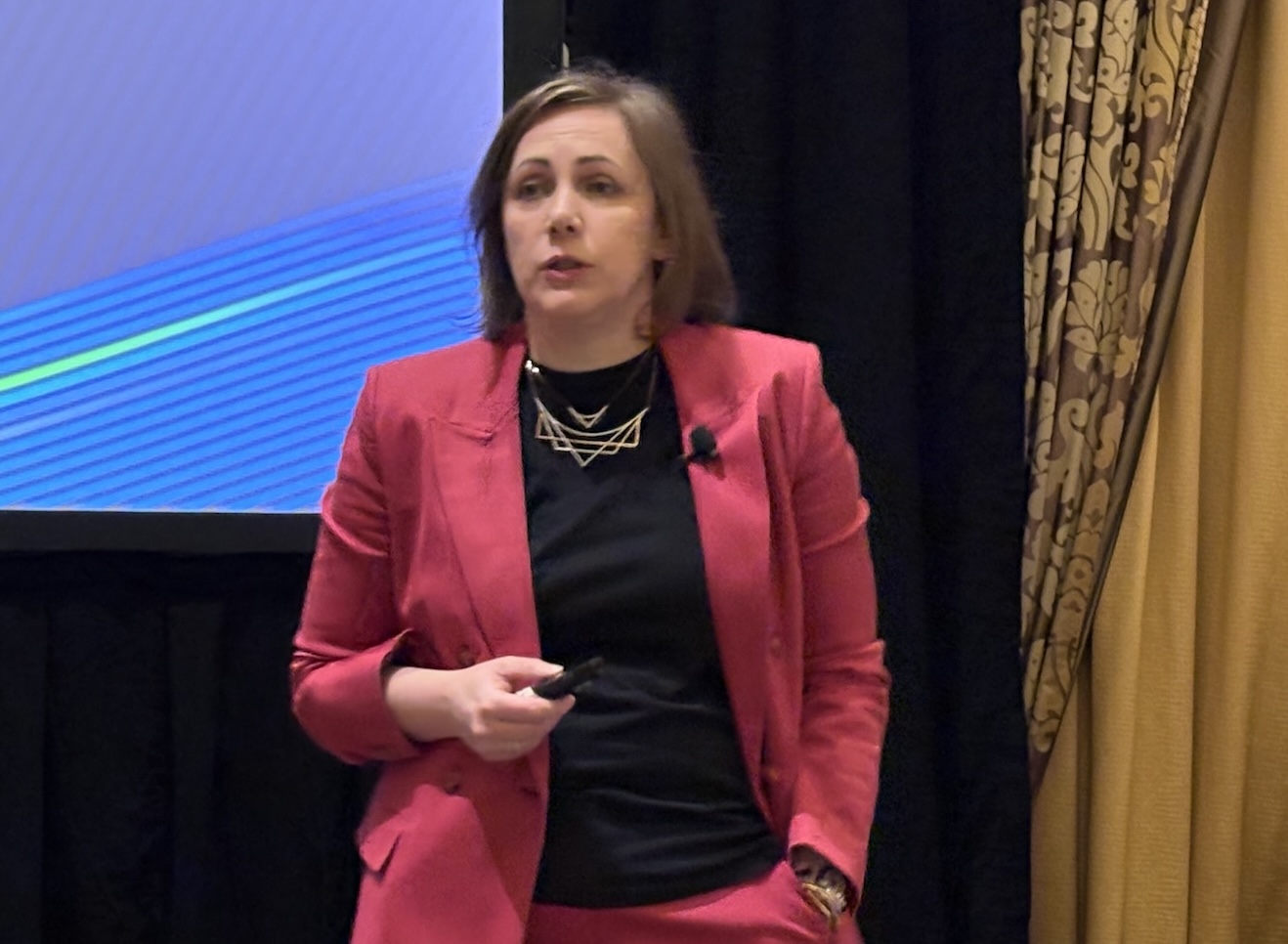
Jaguar Land Rover (JLR) is proving that large-scale SAP S/4HANA transformations can be business-owned, data-driven programs that deliver stable production without derailing manufacturing operations. In the presentation, “Scaling a Business-Led SAP S/4HANA Program at JLR” at SAPinsider Las Vegas, Paulina Chmielarz from JLR and Andrew McKay from SAP S/4HANA emphasized how the transformation changed their daily priorities around data quality, integration readiness, and structured change management.
How a Business-Led S/4HANA Program Changes Daily Work
JLR operates four distinct brands, which drove the company to treat S/4HANA as a cross-brand business initiative rather than a central IT project.
“Each brand is distinguishably different,” Chmielarz said. “They are different from the size, supply chain, the messaging and the number of cars produced. We have to deliver gigantic technologies and digital services and somehow synchronize and provide simplicity amongst the operations.”
Explore related questions
It was a daunting prospect, Chmielarz said, and they spent time researching and understanding what other companies in the SAP landscape were doing before beginning their process.
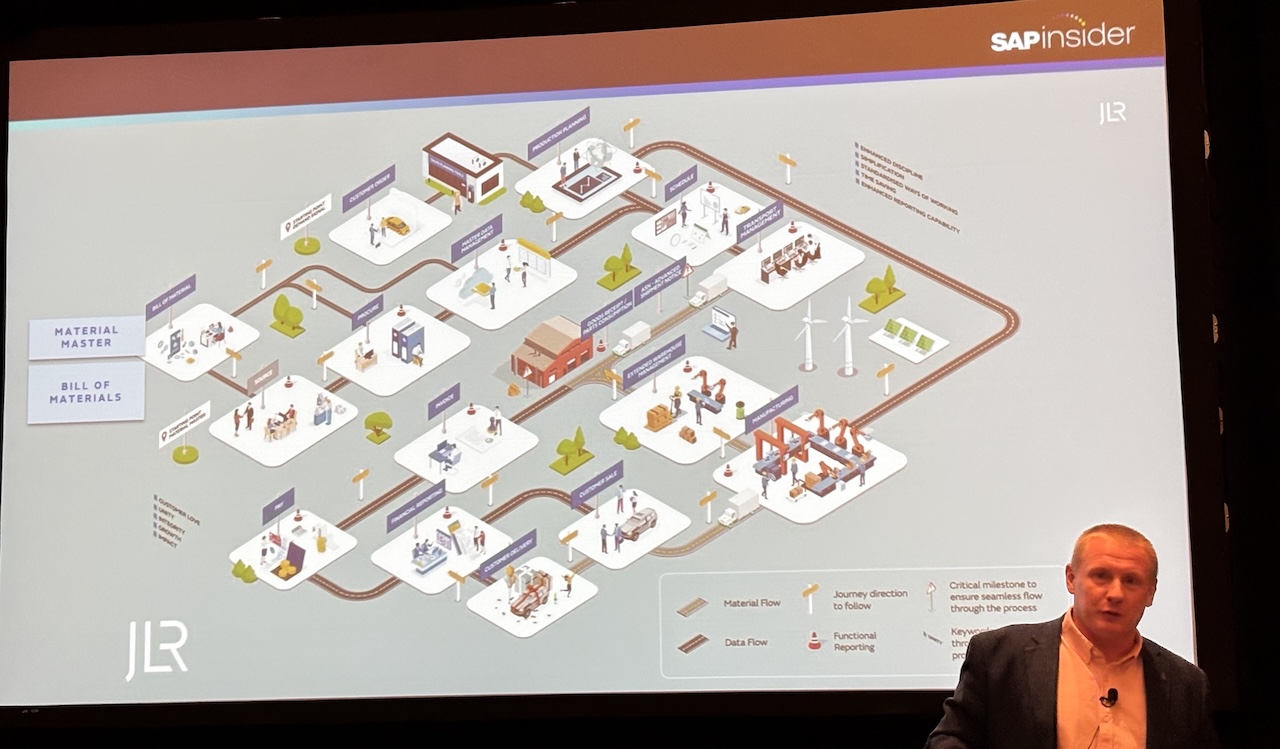
Discovery work began in 2022 with value stream analysis and clarification of what S/4HANA would mean to the business, followed by Phase 1 approval in 2023, a technical go-live in 2024, and a year of stabilization and supplier onboarding through 2025 as the program entered post-hypercare and prepared for Phase 2. For CIOs and program leaders, that cadence shifts day-to-day responsibility toward long-horizon portfolio planning, governance, and continuous rollout rather than one-off ERP “big bang” events.
The Halewood deployment demonstrates how this approach plays out on the shop floor. JLR went live on S/4HANA at a brownfield site with roughly 120 integrations, including demanding financial and manufacturing flows, yet reached full production pace rapidly: more than 200 cars were on track by day three, 95% of processes were validated in a live environment, and volume and sales targets were met by the end of the first week. Technology leaders in similar environments can expect daily attention to shift from firefighting post-go-live disruption to monitoring a structured stabilization plan and validating that operational KPIs hold steady as volumes scale.
JLR’s design choices also change how architects work. The team built state-of-the-art integration between product lifecycle management (PLM) and SAP, relying on what speakers described as a “three-order concept” that allows flexible movement between demand, production, and supply orders when conditions change. Data across upstream engineering, transactional systems and downstream logistics is treated as a single decision fabric, according to McKay.
“Data is king and queen,” he said. Not just the data in the transactional system, but the data in the upstream and downstream flows.”
Lessons for Evaluation, Integration, and Change Management
The JLR program offers concrete lessons for evaluating partners and structuring change that will influence day-to-day responsibilities for technology professionals. JLR emphasized selecting a system integrator that matched the company’s ambition and making that partner part of the business conversation, not just a technical implementer. Over time, the team refined expectations and collaboration models, highlighting the need for ongoing partner performance reviews, clear governance, and readiness to pivot when program needs evolve.
On the integration side, JLR’s brownfield context and 120 required interfaces illustrate the scale of work that SAP S/4HANA programs often face. Data and integration readiness emerged as critical success factors, prompting teams to prioritize end-to-end testing, cutover rehearsals, and traceability across PLM, ERP warehouse management and finance so everything flowed to the financial report.
For architects and integration leads, this translated into daily tasks centered on regression testing, interface monitoring and rapid defect resolution as subsequent plants and functions come online.
“We didn’t want to run this as an IT program because IT doesn’t usually take business into consideration. We helped make IT an enabler for the business change,” McKay said.
Building a Strong Support System for the Future
JLR also was aggressive with is its transition network and superuser model. They recruited end users to become subject matter experts, built a blended learning strategy mixing microlearning and hands-on practice and created a superuser network that acted as local evangelists and first-line support. They also created flexibility in their education.
“It’s never one size fits all,” McKay said. “We made sure to include micro and hands-on learning. We made sure the data is available during the journey. All of it done with the end user in mind.”
They were complemented by highly visible frontline “SAP smurfs” on factory floors and in warehouses worldwide. For technology and change leaders, this means day-to-day work includes orchestrating training content, nurturing superuser communities, and maintaining feedback loops to capture pain points long after go-live.
The go-live itself was treated as a cultural event as much as a technical milestone. JLR celebrated the first S/4-enabled vehicle off track, the first custom car, and the rapid attainment of volume and export targets, reinforcing confidence that the ERP transformation could succeed without compromising operations.
JLR plans to sustain “delivery excellence at pace” as the global rollout continues, maintain a clean core strategy to protect future flexibility, and deepen innovation on SAP while refining program planning, stakeholder engagement and testing practices based on Halewood lessons learned.
While they succeeded where others either failed or had a rocky process before succeeding, Chmeilarz said their initial success and they’re getting ready for phase 2, saying, “Everything that happens after go-live is 10x more important than what happens before go-live.”
What This Means for SAPinsiders
Business ownership redefines ERP governance. Business-led S/4HANA programs will require vendors and partners to align roadmaps, contracts, and delivery models with cross-functional value streams instead of IT-centric project milestones.
Change networks become core architecture. Superuser communities and structured transition networks emerge as repeatable assets, pushing integrators and architects to design training, support, and feedback mechanisms as deliberately as technical interfaces.
Clean core enables scalable innovation. A disciplined clean-core strategy at sites like Halewood signals growing demand for extensible, upgrade-friendly SAP platforms that support iterative rollouts, advanced integration and ongoing innovation without destabilizing operations.
More Resources

Microsoft Signals Agent-First Shift as Enterprise Apps Move to Human-Agent CollaborationMicrosoft is transitioning enterprise applications towards an agent-first era, emphasizing a collaborative approach in software design that incorporates process experts and AI, while ensuring governance, trust, and security are embedded from the outset.