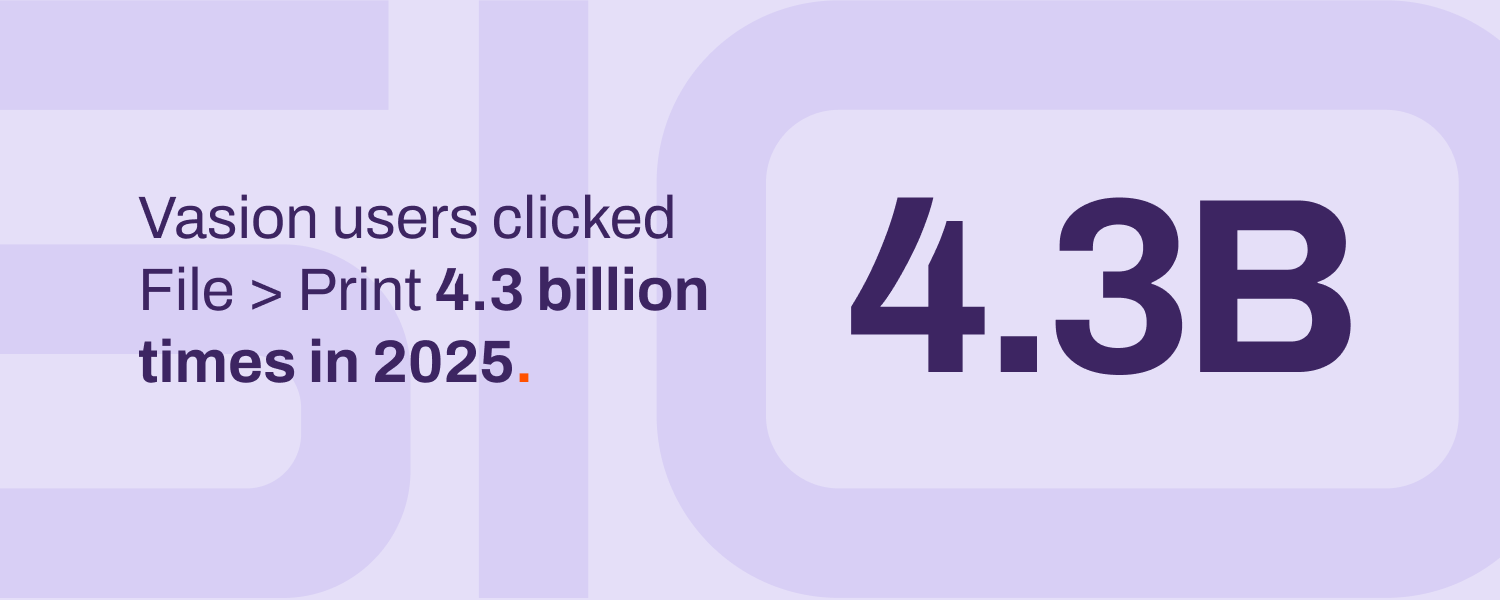
Your print environment is doing exactly what it was designed to do twenty years ago. That’s the problem.
While you’ve been modernizing every other part of your IT stack, your print infrastructure has stayed exactly where it was, quietly consuming budget, accumulating security risk, and producing documents that exit your digital ecosystem the moment someone clicks print. Nobody made a deliberate choice to leave it behind. Print just never made the priority list, because it worked well enough to stay invisible. And invisible infrastructure is infrastructure your strategy can’t touch.
The consequences of that invisibility used to be manageable. They aren’t anymore.
Every AI initiative in your organization depends on structured data. Your forecasting tools, your contract analysis platform, your compliance automation, your clinical decision support systems: all of them are reaching for data that exists, in volume, in your document layer. And most of that data is exiting as printed pages, scanned images, and flat PDFs that no model can ingest, routed through infrastructure that predates the cloud and has never been asked to do anything more than get a document to a printer.
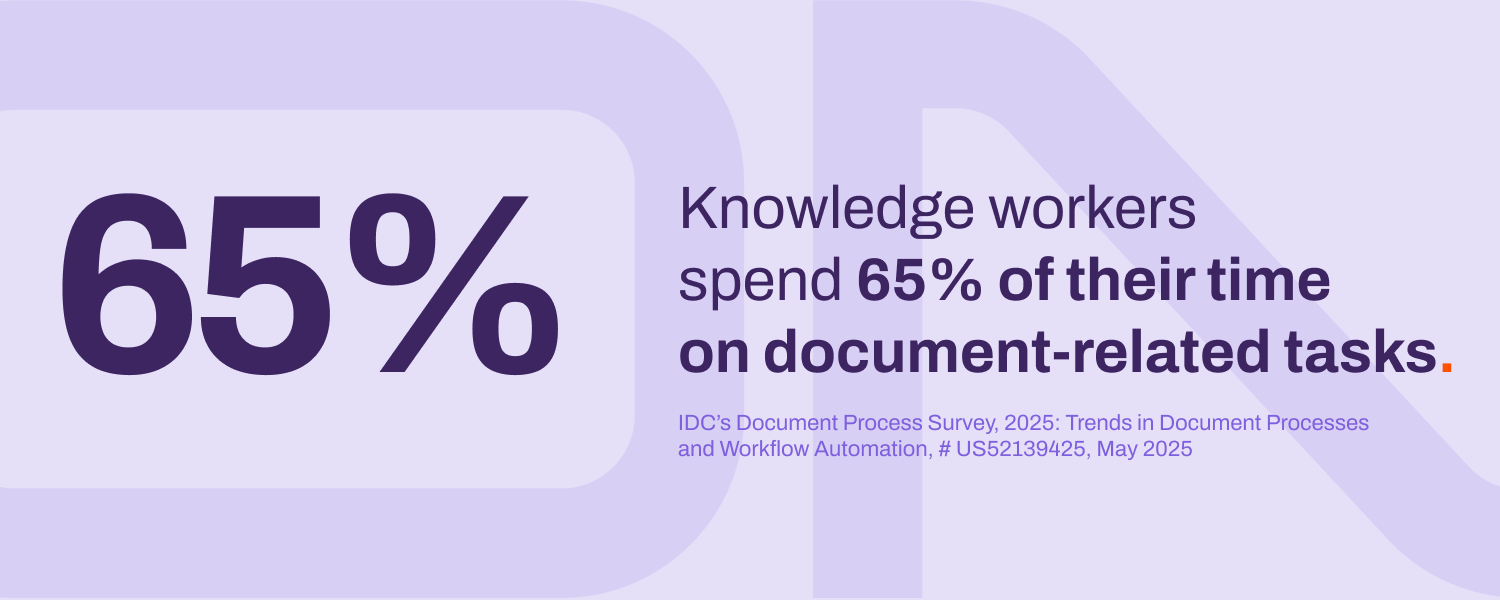
This is the gap that Gartner has been tracking with increasing urgency. IDC reports that knowledge workers spend 65% of their time on document-related tasks (paper and digital)1. According to Gartner®, “roughly 80% of enterprise information is unstructured, spread across documents, files, and rich content in dozens of systems2.” Gartner also states that “only 14% of leaders are very confident that their content and data can provide value for AI and human interactions3.” And lack of GenAI-ready data is now the top reason for failed AI deployments. The ambition is there. The foundation isn’t. And for most organizations, the missing foundation traces directly back to a layer nobody prioritized: the document layer that print controls.