
2 minute read
Key Takeaways
What you need to know
SAP Sapphire 2026 shows that enterprise AI is shifting from future roadmap to live business execution, with SAP Business AI Platform already embedding AI agents into ERP, finance, supply chain, procurement, HR, sales, and operations. This matters because it moves AI from experimentation to scalable automation, and it impacts enterprise IT leaders, SAP customers, and business transformation teams looking for production-ready AI.
The biggest change is SAP’s focus on governed enterprise AI that combines business data, process knowledge, organizational context, security, compliance, and explainability instead of standalone AI copilots. This matters because disconnected data and weak governance have been major blockers to AI adoption, and it impacts CIOs, compliance teams, data leaders, and regulated industries that need trustworthy AI decision-making.
SAP is positioning the SAP Knowledge Graph and more than 600 operational AI agents as the foundation for context-aware enterprise AI that can reason across business applications and act securely within enterprise rules. This matters because it creates a scalable AI operating model for real workflows, and it impacts organizations using SAP ERP, enterprise data platforms, and AI automation strategies that require business-context-driven outcomes.
Every year, SAP Sapphire offers a view into where enterprise technology is heading. Historically, many of those announcements represented long-term strategy and future-state vision.
This year was different.
Sapphire 2026 was not centered on hypothetical AI capabilities or distant roadmaps. SAP demonstrated that enterprise AI is already becoming operational, scalable, and embedded into real business processes today.
Explore related questions
Ask SAPi
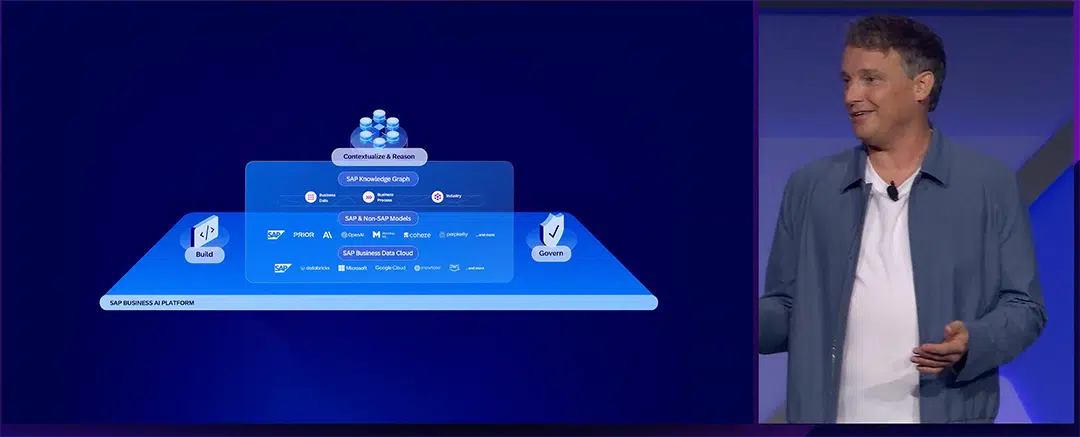
At the center of that strategy is SAP Business AI Platform.
The biggest takeaway from Sapphire was not simply the number of AI agents SAP announced. It was SAP’s broader approach to solving the core challenge that has limited enterprise AI adoption: disconnected data, fragmented processes, and the lack of governance.
 Source: SAP
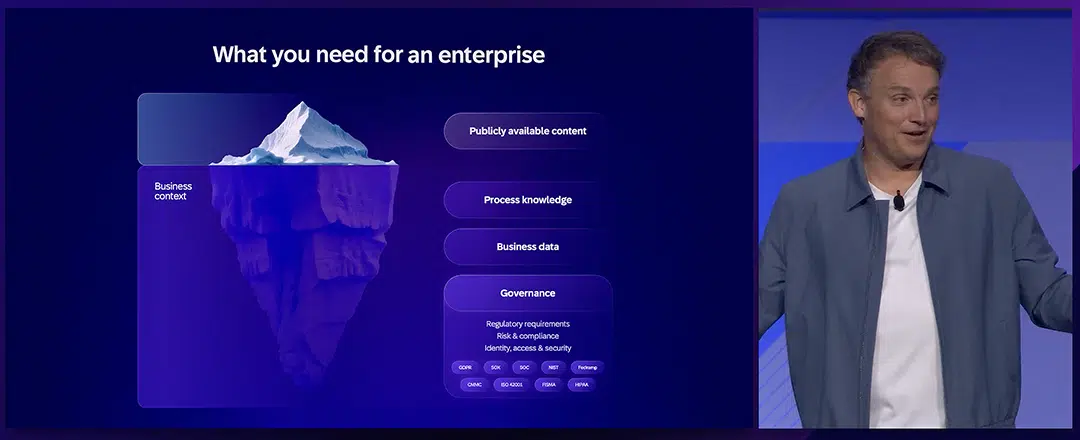
SAP’s message: Enterprise AI cannot operate effectively without business context.
Consumer AI can work from publicly available information. Enterprise AI requires far more:
- Business data
- Process knowledge
- Organizational context
- Security and authorization
- Regulatory compliance
- Explainability and governance
That distinction appeared repeatedly throughout Sapphire presentations and demos.
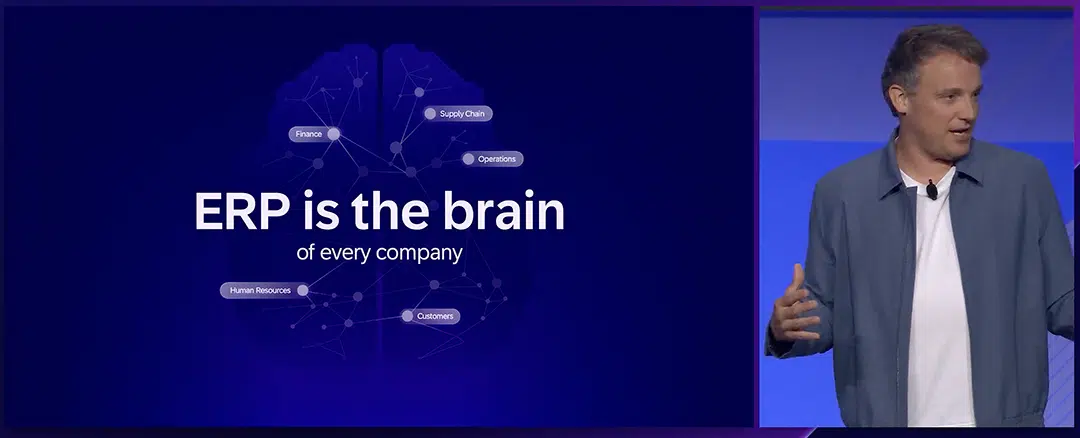
SAP is positioning ERP as the operational brain of the enterprise because ERP systems already contain the processes, relationships, and transactional data that businesses run on every day. Finance, supply chain, procurement, HR, sales, operations, and customer data are no longer being treated as isolated systems. SAP is building a framework where AI agents can securely access and act across those domains in a governed way.
 Source: SAP
This is where SAP Business AI Platform becomes strategically important.
The platform combines:
- SAP business applications
- SAP Knowledge Graph
- SAP and non-SAP AI models
- Enterprise data platforms
- Governance and compliance controls
The goal is not simply to generate answers. The goal is to enable AI agents to reason within enterprise processes using trusted business data and governed business rules.
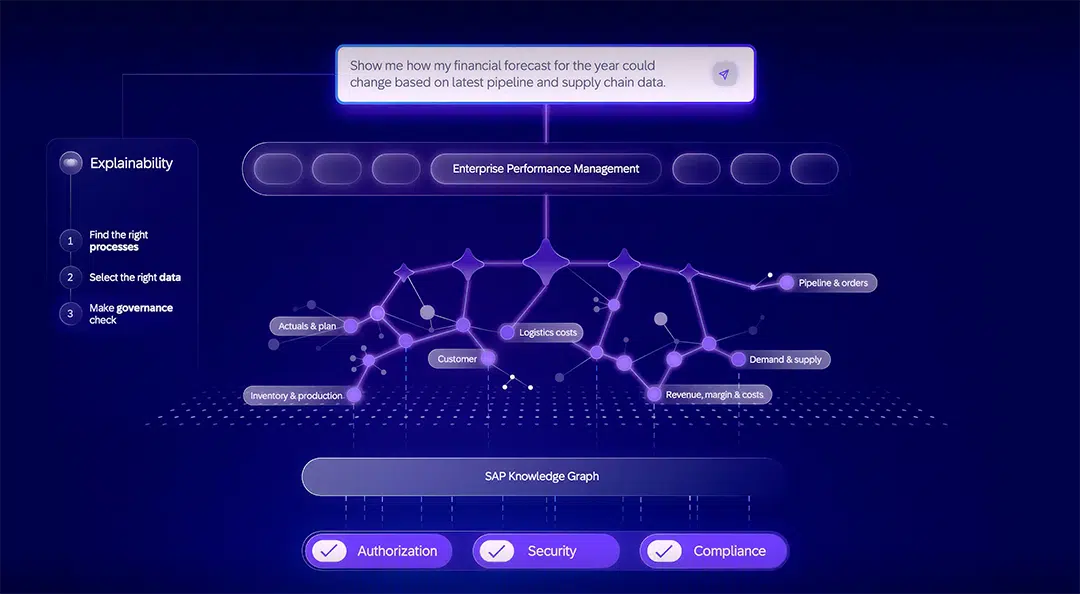
One of the most important concepts introduced at Sapphire was the SAP Knowledge Graph. SAP demonstrated how it connects business data, process relationships, industry context, and operational dependencies to provide AI systems with contextual understanding of how the enterprise works.
SAP also emphasized explainability throughout the event. Enterprise leaders need to understand:
- which processes AI is accessing
- which data sources are being used
- how recommendations are generated
- whether governance policies are being enforced
That focus on explainability, authorization, compliance, and security is what separates enterprise AI infrastructure from consumer AI experiences.
 Source: SAP
SAP is no longer talking about AI as an isolated assistant layered onto existing systems. The company is building an enterprise-wide AI operating model where agents can interact across applications, processes, and data domains with governance built into the foundation.
Perhaps the most significant shift was the scale of what already exists. SAP highlighted more than 600 operational AI agents available across business functions today. That changes the conversation from experimentation to execution.
The direction is becoming increasingly clear.
Enterprise AI will not be won by standalone copilots or disconnected automation tools. It will be won by platforms capable of combining enterprise data, business processes, governance, and contextual intelligence at scale.
Sapphire 2026 made it clear that SAP intends for SAP Business AI Platform to become that foundation.
 Source: SAP
More Resources
See All Related Content
The Importance of ERP Knowledge Transfer During ImplementationWhile go-live is often viewed as the finish line of an ERP implementation, the long-term success of the system depends heavily on the activities that follow. Establishing structured knowledge transfer processes and maintaining comprehensive documentation helps organizations support user adoption, preserve critical system knowledge, and ensure the ERP solution continues to deliver value well beyond implementation.
1 minute read

Enterprise Wide Packages Its Retail SAP Work Into an S/4HANA Advisory Practice With SAP ECC support winding down, Enterprise Wide has organized its retail SAP experience into an advisory practice spanning roadmaps, S/4HANA transformation, and enterprise architecture. Here is where each service fits and what ANZ SAP teams should evaluate first.
3 minute read

EVEREDGE Positions SAP at the Center of a Full-Lifecycle Consulting ModelEVEREDGE runs a three-phase model from advisory to managed operations, with SAP at the center of an ERP, HCM, and BPM portfolio. Here is how the delivery mechanics map to SAP program decisions and where partner tools like Neptune Software fit.
3 minute read