Key Takeaways
What you need to know
ERP project risk signals are changing from a focus on missed milestones and budget overruns to earlier detection of behavioral and stakeholder alignment issues, which matters because leaders can still reset expectations and reduce delivery risk before the program slips off course. This impacts ERP implementation teams, project sponsors, and business and technology stakeholders.
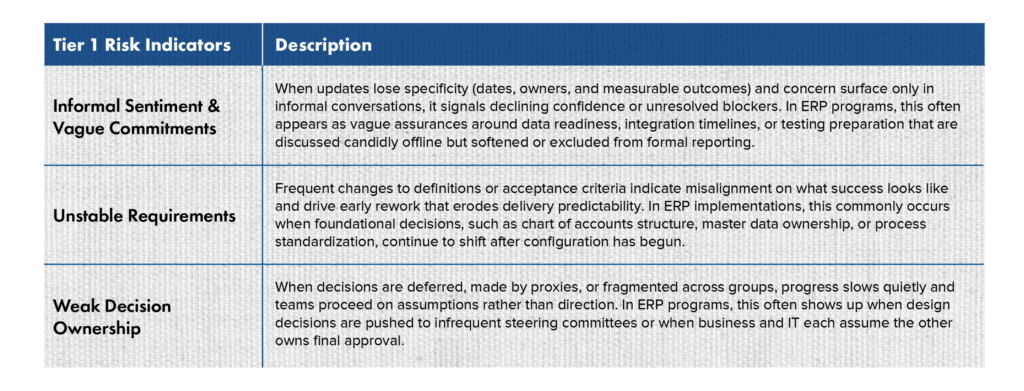
The earliest and most dangerous ERP implementation warning signs are quiet changes in team communication, decision-making, commitments, and cross-functional alignment, because these soft signals predict future cost overruns, failed testing, and cutover problems. This impacts ERP program managers, change management leaders, and executive sponsors who need earlier intervention.
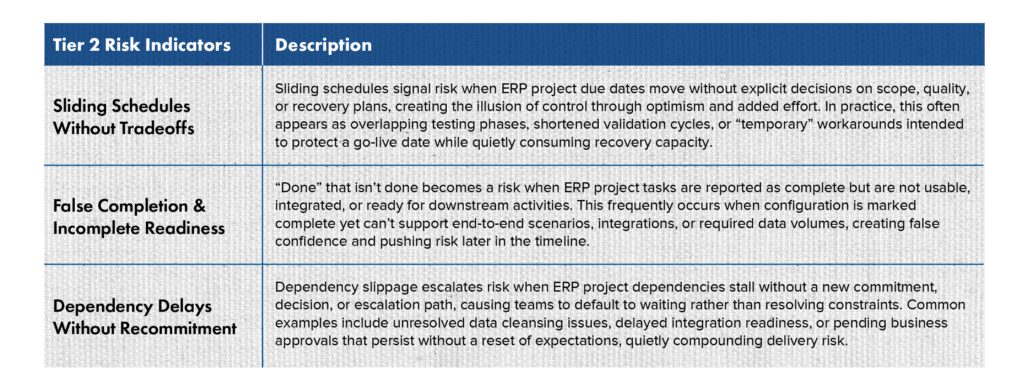
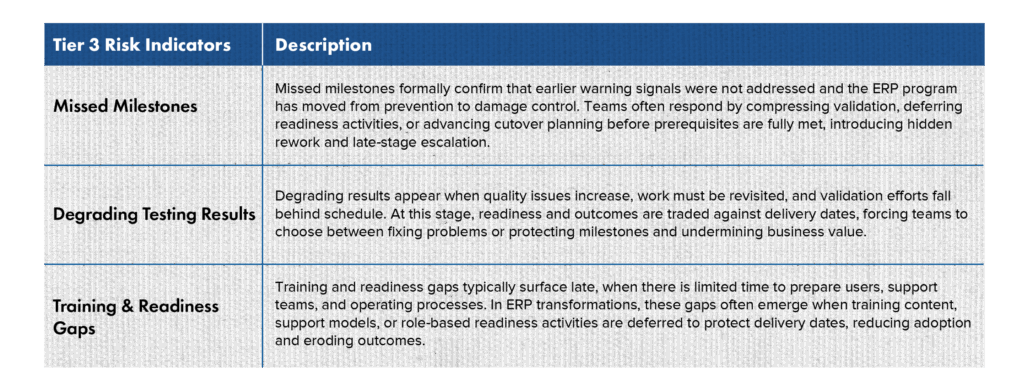
A tiered ERP risk framework separates predictive Tier 1 signals from recoverable Tier 2 structural breakdowns and harder-to-fix Tier 3 lagging indicators, which matters because acting early preserves delivery options and avoids damage control. This impacts organizations running SAP ERP or broader ERP transformation programs, especially during implementation and change management.
The article explains that ERP projects usually fail gradually through early behavioral, alignment, and decision-making warning signs that appear before formal metrics turn red, and urges organizations to detect and address these signals in tiers so they can intervene early, preserve options, and avoid costly delivery breakdowns.