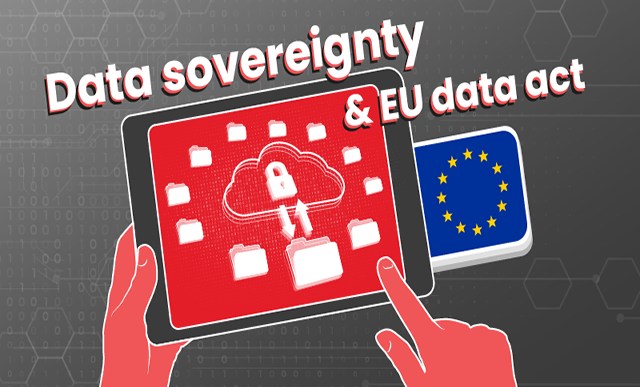
Digital transformation is changing the way companies handle their data. Cloud technologies promise flexibility, scalability, and innovation – but they also introduce new dependencies. Especially for companies relying on SAP systems and looking to integrate their data into modern cloud architectures, a key question arises: Who ultimately controls the data?
Definition: What Is Data Sovereignty?
Data sovereignty refers to an organization’s ability to exercise full control over its data – regardless of where it is stored, processed, or transmitted. It’s about deciding independently who can access the data, how it is used, and where it resides.
At its core, data sovereignty encompasses three key aspects:
- Decision Authority: The organization decides on data storage, access rights, and usage scenarios. This control must not be undermined by technical dependencies or contractual restrictions.
- Technical Independence: Data architectures should allow switching between platforms, providers, or technologies at any time without being trapped in proprietary formats or requiring costly migrations.
- Legal Control: Companies must ensure they retain lawful authority over their data and comply with regulations such as the GDPR or EU Data Act.
Difference Between Data Protection and Data Sovereignty
While data protection governs the safeguarding of personal data and ensures legal compliance, data sovereignty goes further: it encompasses strategic and technical control over all company data, whether personal or not.
Data protection is a legal obligation; data sovereignty is a strategic competitive advantage.
Difference Between Data Sovereignty and Digital Sovereignty
Digital sovereignty is the overarching concept, referring to the ability to use and shape digital technologies independently. Data sovereignty is a central subset, focusing specifically on data control. While digital sovereignty also covers technology independence, IT security, and innovation, data sovereignty targets data ownership and portability.
Key Principles of Data Sovereignty
A sovereign data architecture follows clear principles that ensure technical flexibility and strategic autonomy:
- Control Over Data Flows: Companies must be able to track and manage how data moves between systems, where it is processed, and who accesses it. Transparent data architecture provides real control – from source to usage in analytics or AI applications.
- Transparency and Access Authority: Every interface, transfer, and processing step must be documented and controllable. Black-box systems that obscure data handling conflict with data sovereignty principles.
- Data Portability: Data must be transferable between systems and platforms at any time – without quality loss, vendor lock-in, or prohibitively high switching costs. Standardized interfaces and open formats are essential.
- Flexibility in System Choice: A sovereign architecture does not tie itself to a single target system or cloud platform. Components can be swapped when requirements change or better alternatives emerge.
- Legal and Compliance Alignment: The EU Data Act (Regulation (EU) 2023/2854) governs access and use of data, especially from IoT devices and SaaS services. Users have the right to access and share data generated by them. Sovereign architectures must respect these legal frameworks, ensuring both technical and legal control.
Why Data Sovereignty Is Critical Now
Data has become a strategic production factor, underpinning business decisions, AI applications, and digital business models. Regulatory requirements like the EU Data Act are tightening the rules. Companies must ensure not only data protection but real control over their data – regardless of storage location or cloud platform.
The main challenge: Proprietary cloud ecosystems and native connectors quickly create technical dependencies that undermine data sovereignty. Gradual vendor lock-in becomes a strategic trap, limiting innovation and increasing switching costs.
Data Sovereignty in the Cloud: Opportunities and Risks
Cloud technologies have transformed IT landscapes, enabling scalability, global availability, and rapid innovation. Companies can leverage computing resources flexibly and deploy AI or machine learning without heavy infrastructure investments.
However, the cloud introduces risks that can threaten data sovereignty:
- Dependency on Cloud Providers: Using proprietary cloud ecosystems can create technical dependencies. Native cloud services are often tightly integrated, making migration difficult or costly.
- Limited Portability: Proprietary formats, platform-specific APIs, and closed ecosystems hinder data and application migration. What begins as a flexible cloud strategy can quickly become a technical dead end.
- Typical Lock-in Scenarios: This is especially critical when using native cloud connectors to link on-premises SAP systems with cloud platforms. These connectors are often platform-specific, making later migration nearly impossible.
What Is a Sovereign Cloud?
A sovereign cloud meets several criteria beyond basic security:
- Data Ownership Remains With Users: The provider supplies infrastructure and services, but data control – including access and usage – remains fully with the company.
- Portability Ensured: Data and applications can migrate to other platforms without prohibitive effort. Open standards and standardized interfaces are key.
- Transparency of Data Flows: It must always be clear where data is stored, how it’s processed, and who can access it.
Cloud usage does not automatically mean loss of control. The integration strategy is decisive. Platform-independent integration layers that operate separately from specific cloud platforms are crucial – they decouple data sources from target systems and allow cloud services without technical binding.
Vendor Lock-In: The Greatest Threat to Data Sovereignty
Vendor lock-in describes technical or contractual dependency on a software provider, making switching difficult or economically unattractive. For data sovereignty, it is the biggest threat, as it effectively removes control over data.
- High Switching Costs: Deep integration into a proprietary ecosystem makes exit expensive. Migration efforts, process adjustments, and re-implementation of interfaces can easily reach six figures.
- Limited Innovation Freedom: Dependence on a provider restricts technology choices and ties the company to the provider’s product strategy and innovation cycle.
- Dependence on Pricing and Product Strategies: Providers can raise prices, discontinue features, or change licensing models, leaving companies with little choice but to comply.
- Lack of Flexibility in Component Replacement: In tightly coupled architectures, individual components cannot be replaced easily when better alternatives exist.
Vendor lock-in often develops gradually. Seemingly pragmatic solutions, like native SAP cloud connectors, create dependencies that significantly limit strategic freedom over time.
Data Sovereignty in the SAP Context
SAP systems are the backbone of many enterprises, managing critical data from finance, logistics, production, and sales. These data not only support operations but also strategic decisions, analytics, and AI processes.
In the SAP context, data ownership is crucial: companies must ensure flexible use of SAP data – whether in cloud-based analytics platforms, data lakes, or hybrid architectures.
The EU Data Act reinforces this: data processed in cloud systems belongs to users, not software or cloud providers. Companies have the right to extract, port, and use SAP data in other systems without technical or contractual barriers.
SAP Data in Modern Cloud Architectures
Modern architectures separate data sources from target systems. SAP remains the stable source system, while analytics, data lakes, or cloud platforms serve as target systems.
Typical target architectures for SAP data include:
- Cloud-based data warehouses and analytics platforms
- Data lakes consolidating data from multiple sources
- Hybrid architectures combining on-premises and cloud systems
- AI and machine learning platforms leveraging SAP data for predictive analytics
Integration, portability, and access control are critical. The integration layer must remain neutral to avoid binding to a specific platform.
SAP Data Portability as the Foundation of Data Sovereignty
Portability of SAP data is key. Only if data can move freely between target systems does the company retain control over its architecture.
- Separation of Source and Target Systems: SAP should remain the stable source, while the target system choice stays flexible.
- Use of Standardized Interfaces: Standard APIs and open protocols allow platform-independent integration. Proprietary connectors tied to a specific cloud should be avoided.
- Ensuring Control Across All Systems: The integration layer must provide full transparency of data flows and control over access rights and usage scenarios.
Best Practices for Data-Sovereign SAP and Cloud Strategies
For future-proof data architectures, data sovereignty must be approached holistically, covering all data sources – SAP, CRM, IoT devices, e-commerce platforms, and external data. Key practices include:
- Use SAP as a Stable Source System: SAP remains the central repository for critical data. Integration should extract data without compromising the source system’s stability.
- Keep Target Systems Flexible: The architecture should allow multiple target systems without locking into a specific platform. Changing requirements or better technologies must allow easy migration.
- Build Interoperable, Future-Proof Architectures: Open standards, neutral integration layers, and portable formats (e.g., OpenTable) enable platform-independent data use. Avoid proprietary solutions that create long-term dependencies.
- Ensure Integration Layer Neutrality: Tools transferring SAP data should be platform-agnostic and compatible with multiple cloud providers, data warehouses, and analytics platforms – avoiding technical restrictions and vendor lock-in.
Conclusion: Data Sovereignty as a Strategic Advantage
Data sovereignty is not just technical – it’s strategic. Companies that secure data control today gain long-term competitive advantages.
- Technology Freedom as a Competitive Edge: Companies not tied to a provider can adapt quickly, integrate new technologies, and use best-of-breed solutions. Flexibility is critical in a rapidly evolving digital world.
- Why Neutrality Matters: Platform-independent integration layers are key to data sovereignty, enabling cloud use without sacrificing strategic freedom.
- Securing Data Today to Stay Flexible Tomorrow: Decisions made now shape operational capabilities for years. Data sovereignty is a long-term investment in strategic independence.
Want to use your SAP data without being tied to a target system?
Talk to us about combining data sovereignty with cloud flexibility. We help build a future-proof, portable architecture that gives you full control over your SAP data – regardless of cloud or analytics platform.