Featured Content
Topics

Explore critical topics shaping today’s SAP landscape—from digital transformation and cloud migration to cybersecurity and business intelligence. Each topic is curated to provide in-depth insights, best practices, and the latest trends that help SAP professionals lead with confidence.

Regions

Discover how SAP strategies and implementations vary across global markets. Our regional content brings localized insights, regulations, and case studies to help you navigate the unique demands of your geography.

Industries

Get industry-specific insights into how SAP is transforming sectors like manufacturing, retail, energy, and healthcare. From supply chain optimization to real-time analytics, discover what’s working in your vertical.

Hot Topics

Dive into the most talked-about themes shaping the SAP ecosystem right now. From cross-industry innovations to region-spanning initiatives, explore curated collections that spotlight what’s trending and driving transformation across the SAP community.

Featured Content
Topics

Explore critical topics shaping today’s SAP landscape—from digital transformation and cloud migration to cybersecurity and business intelligence. Each topic is curated to provide in-depth insights, best practices, and the latest trends that help SAP professionals lead with confidence.

Regions

Discover how SAP strategies and implementations vary across global markets. Our regional content brings localized insights, regulations, and case studies to help you navigate the unique demands of your geography.

Hot Topics

Dive into the most talked-about themes shaping the SAP ecosystem right now. From cross-industry innovations to region-spanning initiatives, explore curated collections that spotlight what’s trending and driving transformation across the SAP community.

SAP Migration Strategy

What Is SAP Migration Strategy?

With the last major release of SAP ECC, version 6.0 EHP 8, made available in 2016, the question facing SAP customers is around the move to SAP S/4HANA. While SAP has extended mainstream maintenance for the ECC 6.0 platform until the end of 2027, with an optional premium maintenance available for an additional three years, those running these solutions need to decide on the move to SAP S/4HANA. The three biggest factors around this move are when they will move, and how they will move, and where they will move.

What Is SAP Migration Strategy?

With the last major release of SAP ECC, version 6.0 EHP 8, made available in 2016, the question facing SAP customers is around the move to SAP S/4HANA. While SAP has extended mainstream maintenance for the ECC 6.0 platform until the end of 2027, with an optional premium maintenance available for an additional three years, those running these solutions need to decide on the move to SAP S/4HANA. The three biggest factors around this move are when they will move, and how they will move, and where they will move.

The when is a question that is up to each organization. However, with the majority of organizations taking between 12 and 18 months once the business case has already been made, the period before mainstream maintenance ends can approach very quickly. Once the decision has been made when to move, organizations must then determine what approach they will take to their SAP migration. Will they simply move everything as is into SAP S/4HANA? Will they start from scratch to produce as clean a system as possible? Or will they take an intermediate route? The last factor is where they will move. With most organizations moving SAP workloads to the cloud, this may be the route of choice. However, others will want hybrid environments or entirely local infrastructure.

Key Considerations for SAPinsiders

  • Understand what other organizations are saying about their SAP Migration Strategy. These include: 1) the fact that the biggest challenge is often building the business case, 2) moves to a new ERP system are both resource intensive as well as expensive, 3) newer versions of SAP S/4HANA include significant business benefits, and 4) the move to SAP S/4HANA represents a major opportunity to improve business operations.
  • Ensure that you have planned effectively for the migration. When migrating from your existing ERP system, there are important tips that you can follow to ensure that processes are successful. First, engage your business teams in the process. While this is an investment in resources, there will be more success with the overall project if your business teams are involved from the beginning. Second, remove unnecessary custom code. Limiting what you have to move forward will make the process much easier. And lastly, plan for a phased approach. You will want to have dry runs and even maintain both systems in parallel to ensure that they are working correctly.
SAPinsider Technology Leaders Strategic Agenda for 2026 benchmark report cover showing digital data flow graphic and research sponsors SAP Microsoft Boomi Onapsis Red Hat.
SAPinsider Technology Leaders Benchmark Report Finds Cost Pressures Define 2026SAPinsider’s latest benchmark report shows how technology leaders are prioritizing cost efficiency, ERP transformation, and AI adoption in 2026. The research highlights a shift toward platform and data investments as organizations balance competing demands under tighter constraints. These findings point to a year defined by execution across overlapping priorities.
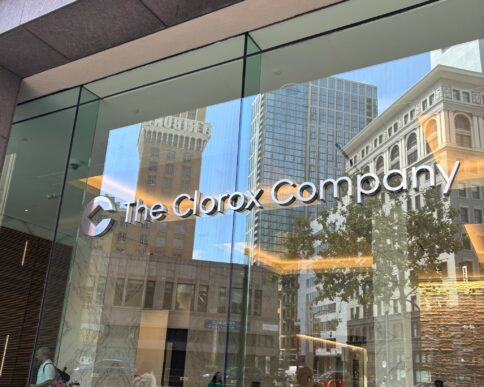
The Clorox Company headquarters building exterior reflecting city skyline during SAP S/4HANA transformation case study.
Exclusive: How Clorox Planned Its SAP S/4HANA TransformationClorox shares in an exclusive interview how it planned and executed its SAP S/4HANA transformation, from early design decisions to adoption, execution trade-offs, and post–go-live success.
Bellagio Hotel in Las Vegas, host location of SAPinsider Las Vegas 2026 CIO transformation discussions
CIOs Shift SAP Transformation Focus to Long-Term Value at SAPinsider Las Vegas 2026CIOs at SAPinsider Las Vegas 2026 discuss how SAP transformation decisions are shifting toward long-term value, with a focus on migration versus modernization, cost pressures, and post-go-live accountability.
Financial analytics dashboards showing data visualization and automated finance insights across enterprise systems.
UiPath’s Hitesh Ramani on Agentic Finance: Why the Hardest Part Isn’t TechnologyUiPath’s Hitesh Ramani explains why scaling agentic finance requires more than automation, highlighting how data integration, governance frameworks, and organizational change must evolve together in SAP S/4HANA environments.
UiPath logo representing automation and agentic AI embedded in SAP S/4HANA finance transformation.
UiPath’s SAP S/4HANA Migration Brought Automation to Finance — And Built Confidence in the NumbersUiPath embedded automation and agentic AI directly into its SAP S/4HANA migration through a Customer Zero initiative. Chief accounting officer Hitesh Ramani explains how automation reshaped finance operations, governance frameworks, and the way teams interact with financial data.
How cbs Integrates Change Management in SAP TransformationsSAP S/4HANA transformations require more than technical migration. This analysis examines how cbs integrates change management, PMO governance, and its M-cbs methodology into a structured execution model designed to align employee adoption with measurable business outcomes.
Why Techwave Sees SAP EHP8 Upgrades as a Strategic Step Toward S/4HANA ReadinessTechwave is advising SAP ECC customers to view the EHP8 upgrade as a strategic move to mitigate risks while preparing for S/4HANA, emphasizing the need for modernization before the end of extended support for older versions in 2025.
SAP Sovereign Cloud and OpenAI
SAP’s Cloud Sovereignty ShiftJim Loiacono, HPE’s Worldwide SAP Private Cloud Sales Lead, challenges the myth that SAP S/4HANA migration demands a hyperscaler exodus. In this exclusive interview, he reveals how one Texas enterprise unlocked true Cloud ERP value by choosing SAP Cloud ERP Private inside their own data center—slashing data gravity costs, sovereignty risks, and hidden integration icebergs while fueling AI innovation on their terms. If hyperscale TCO and vendor lock-in are stalling your roadmap, Loiacono’s blueprint proves you can have cloud agility, full data control, and maximum business value—without leaving your walls.
Saviynt logo representing identity governance modernization for SAP S/4HANA environments ahead of SAP IDM end-of-life in 2027.
How Saviynt Supports SAP S/4HANA Identity Modernization Ahead of 2027As SAP Identity Management approaches end-of-life in 2027, SAP S/4HANA modernization programs must reassess identity governance, cross-system segregation-of-duties risk, and third-party access control across distributed cloud environments.
AI agents operating inside SAP systems increase the need for unified identity governance and visibility across S/4HANA environments.
AI, SAP, and 2027: Why Identity Architecture Is Now a Program-Level DecisionAI agents are already operating inside SAP systems, yet most organizations lack visibility and effective control over their privileges. As S/4HANA migration and SAP Identity Management retirement approach, identity architecture is no longer an operational afterthought. It is becoming a structural decision that shapes automation risk, segregation-of-duties integrity, and audit resilience.


Related Vendors