
Mar 16-19, 2026Las Vegas, Nevada, NV
Analyst Insights
Upcoming Events
SAPinsider Las Vegas 2026
Related Vendors

Analyst Insights are written by SAPinsider’s research team. Based on information gleaned from surveys of the SAPinsider Community, conversations with experts, SAP employees, vendors, and SAPinsiders, Analyst Insights provide a thoughtful analysis of critical topics, technologies, and challenges that SAP customers face today.
229 results

SAP Partners with Onapsis to Provide Security Incident ResponseDec 16, 2024 — SAP customers have a responsibility when it comes to threat detection and incident response for their systems, whether their applications are running on-premise or in the cloud. These responsibilities are clearer in an on-premise environment where the customer manages secure configuration and operations including the servers on which the solution runs, databases that are in use, and the networking infrastructure. Responsibilities are less clear for cloud operations, which is why a shared responsibility model that includes privacy, compliance management, business continuity planning, and threat detection is essential. This is the case with the Shared Responsibility Model that SAP has published for RISE with SAP S/4HANA Cloud Private Edition.
Understanding these responsibilities is crucial for customers because unclear roles can lead to oversight of critical elements. This is particularly important because cybersecurity attacks continue to increase in volume and impact. Even if an attack doesn’t directly impact SAP systems, it may indirectly affect these systems through cross-contamination, which can force organizations to shut down SAP systems to prevent them from being impacted.
Organizations can address these challenges by reporting new security issues to SAP. However, what SAP can achieve will be limited by the access that they have to the system, and a security incident may exceed the expertise or capacity of in-house teams. To support organizations in addressing this, Onapsis has partnered with SAP to provide faster investigation and incident response assistance to SAP customers. Onapsis’ SAP Incident Response enables organizations to use an SAP-endorsed incident response when faced with an attack. Having access to expertise, support, and technology when managing a security incident can help hasten investigations and accelerate recovery.
Given the security challenges faced by organizations today, what should SAPinsiders do to be prepared?
- Ensure that there is a clear understanding of roles and responsibilities when it comes to securing SAP solutions.
- Follow security trends and put in place response plans that can be activated when threats or vulnerabilities are detected.
- Ensure that SAP teams collaborate closely with customers’ IT teams or dedicated security teams when it comes to managing the security of SAP systems.
4 minute read

Navigating SAP and ERP Evolution: Insights from Protiviti on Transformation, AI, and Future ERP StrategiesNov 14, 2024 — Protiviti's strategic approach to SAP and ERP consulting emphasizes integration into overall business strategies, simplifying complex processes, and incorporating advanced technologies like AI to enhance organizational resilience and adaptability in digital transformation.
4 minute read

Navigating the Future of GRC and Access Governance in SAP EcosystemsNov 13, 2024 — A New Era of Security and Access Governance Governance, Risk, and Compliance (GRC) and Access Governance are undergoing major changes due to digital growth and stricter regulations. As organizations connect more data and systems, they’re shifting from isolated security practices to proactive, integrated compliance processes. Raghu Boddu, founder of ToggleNow and a seasoned leader in […]
4 minute read

Executive Q&A: Unlock the Potential of SAP Business Technology Platform to Drive Transformation and Business ROIOct 30, 2024 — SAP Business Technology Platform (BTP) is rapidly gaining traction among SAP customers due to its comprehensive integration, analytics, and emerging capabilities in AI and automation, with 25% of surveyed CIOs preferring it for transformation initiatives, as highlighted by CRO Kulmeet Bawa's insights on its role in SAP's growth and the need for customer education on its extensive functionalities.
5 minute read

The AI Revolution: How Artificial Intelligence is Driving the Future of Liquidity Management and Treasury OperationsOct 29, 2024 — Liquidity management and Treasury Operations, once a back-office function, has become a critical, strategic operation for navigating today’s complex financial landscape. Modern treasurers are expected to do more than track cash flow—they must optimize liquidity to enhance working capital, manage risk, and support growth. In a recent discussion with Kyriba, and April Moh, Chief Marketing Officer, and Tom Callway, VP of Product Marketing, emphasized that AI isn’t just enhancing treasury—it’s transforming it.
4 minute read

TechEd Announcements Focus on AI and SAP BuildOct 9, 2024 — Innovation continues at SAP, with TechEd 2024 showcasing SAP’s unrelenting focus on business AI and its seamless integration across SAP systems and applications. Announcements were made on how Joule is enhancing everything from troubleshooting errors in invoices to accelerating ABAP development, how SAP Build now includes ABAP development capabilities, the role of cloud ERP in today’s business environment, and new enhancements in data and analytics and integration.
As has been since the start of 2024, SAP has focused extensively on AI and that was reflected in the keynote as speakers discussed how SAP has added AI to its solutions and positively impacted business processes. This gave the spotlight to generative AI, and SAP’s generative AI copilot Joule, which was at the core of SAP’s many new announcements as the company continues to emphasize Joule as the primary way of interfacing with applications in the near future.
SAP Build was launched in 2022 with a focus on low-code development and extending critical business applications to address the unique needs of SAP customers. SAP Build Code was added in 2023 and enabled low-code developers to work with professional developers and leverage Joule as part of their development process. Now, SAP Build will support ABAP development and will include new generative AI capabilities.
While the focus on using AI in business applications remains unchanged, the emphasis is more on the underlying technologies that enable developers to do more using SAP’s AI foundation. SAP is now focusing on its partner ecosystem to develop new use cases and scenarios, and has over 100 partners building on the SAP AI Foundation in addition to the existing 100 AI use cases that SAP has developed.
While Joule has been available in SAP S/4HANA Cloud Public Edition since July, SAP S/4HANA Cloud Private Edition FPS02 will include new use cases for interacting with Joule. Due for release in the fourth quarter of 2024, the goal is to enhance navigation and context for users while improving interactivity by bringing data into Joule and allowing users to remain in the same interface.
One of the biggest challenges that SAP is addressing is ensuring AI is ready for the enterprise. While some organizations have made significant investments in AI, they have shared with SAP that implementing AI in the enterprise has been more challenging than anticipated. And, while AI use cases demonstrate value, proving return on investment (ROI) remains challenging.
Considering this, SAP is looking to provide AI use cases out-of-the-box which will enable customers to realize AI’s value quickly. This is why SAP has embedded generative AI in the most commonly used workflows and tasks across its solutions. By having AI built directly into business functionality, organizations will be able to realize value more quickly. This also extends to Joule in SAP Build, which equips developers with tools that will make them more productive. All this also allows SAP to support “clean core” extensions whether these are on-stack or side-by-side.
However, one of the challenges for SAPinsiders is that a significant portion of these AI capabilities are only available to those with RISE with SAP or GROW with SAP contracts. Joule can be licensed directly for use in some applications, but it is only available in SAP S/4HANA Cloud Private Edition to companies with a RISE with SAP Premium Plus contract. Customers running SAP S/4HANA on premise can extend their solutions with AI using intelligent scenario lifecycle management (ISLM) which integrates with SAP BTP to manage integration and model lifecycle. However, this is a custom extension for on-premise customers and requires more work to use than what is available in SAP S/4HANA Cloud.
9 minute read

Concrete AI Use Case that Generates Significant ROI for the Financial CloseOct 9, 2024 — Like many other areas in business, the financial close is facing stagnation. Outdated manual processes drain time and resources. Many newer professionals entering the workforce are not interested in doing things how they have always been done. Instead, they want to work for innovative organizations leveraging newer technologies that drive efficiency. Trintech is leveraging advanced automation and AI to revolutionize the financial close process, addressing workforce challenges and enhancing efficiency, with their proprietary Large Language Model significantly reducing the time for creating journal entries from 8-10 minutes to under a minute.
3 minute read

SAP IDM Is Ending—Are You Ready for the Future of Identity Management?Oct 4, 2024 — The end of SAP Identity Management (IDM) is looming, and it’s not just another "turn it off and on again" moment. With mainstream support wrapping up by 2027, this is a wake-up call. But don’t worry—it’s not all doom and gloom! In this article, I walk you through how to assess your current setup, preserve your tech investments (because who wants to start from scratch?), and explore new IAM solutions like SAP Cloud Identity Services and Microsoft Entra ID. It’s time to gear up for a smooth transition that’ll make you feel like an identity management superhero!
5 minute read

SAP Announces Cloud ERP Option on Microsoft SQLSep 25, 2024 — SAP ERP, private edition, option for Microsoft SQL is now available for customers that want to lift and shift their SAP ERP system into SAP cloud infrastructure that is supported by Microsoft Azure. While this is only applicable to those that are running their ERP system on Microsoft SQL Server, a relatively small proportion of the total SAP ERP customer base, this may make sense as an interim step for customers that are not yet ready to move to SAP S/4HANA. SAP also sees benefits for customers that are moving to RISE with SAP but are not able to transition all their ERP systems during a single project or rollout.
SAP made it clear that this offering is not an alternative to RISE with SAP and SAP S/4HANA. There is also no impact on the upcoming end of mainstream maintenance in 2027 or the switch to customer specific maintenance in 2030. Organizations using SAP ERP, private edition, option for Microsoft SQL will face the same end of maintenance challenges as every other customer still running a core SAP Business Suite application. But this may benefit those that are running their ERP system on Microsoft SQL Server and want to leverage a managed cloud infrastructure prior to their eventual move to SAP S/4HANA.
If your organization is running SAP ERP on SQL Server, then you can immediately leverage this new scenario if you want to move off existing infrastructure into a managed cloud environment. This may help split your move to RISE with SAP into multiple steps without necessarily increasing overall cost. It may also allow you to leverage some of SAP’s tailored migration offerings or the opportunity to complete more remediation of custom code or business processes as part of the move. Lastly, it may provide more direct access to Microsoft Cloud Services from an innovation perspective.
3 minute read
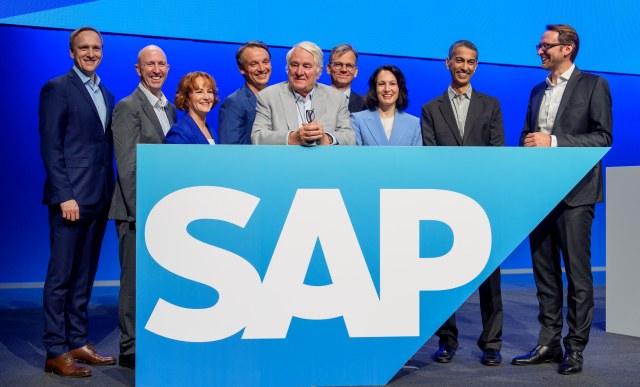
Julia White and Scott Russell to Depart SAPJul 30, 2024 — SAP announced on July 30th, 2024 that Chief Marketing and Solutions Officer Julia White and Chief Revenue Officer Scott Russell would be departing the company’s Executive Board as of August 31st. Given that SAP had just reported another very strong quarterly performance, the news that two board members who have contributed significantly to this success would be departing is somewhat surprising, although Russell did not join last week’s earnings call as he has done regularly in the past.
White joined SAP in 2021 from Microsoft where she was the Chief Marking Officer for Microsoft Azure. In leading Marketing and Solutions, White brought together Product Marketing and Global Marketing teams into a single organization that was focused on supporting SAP’s cloud-first model. When White joined the SAP Executive Board, this was the first time that Marketing had been directly represented at that level.
Although the press release does not detail what changes will occur when White leaves, it does say that SAP is planning to “strengthen the synergy between product marketing and product teams by bringing those teams together”. Ironically, this is the organizational structure that existed prior to White joining the SAP Executive Board where Product Marketing teams reported through the same management structure as Product Engineering teams. While alignment calls are planned for many marketing teams at SAP today, it seems that the plan is to have Global Marketing teams return to the CEO board area as was also the case prior to White joining SAP.
Russell has a much longer tenure with SAP having first joined the company in 2010. Prior to joining the Executive Board in 2021 and leading the Board area for Customer Success, Russell was the President of SAP Asia Pacific Japan. When Russell joined the Executive Board, he replaced Adaire Fox-Martin in the role of board member for Customer Success. The previous three Executive Board members for Customer Success were Jennifer Morgan, Rob Enslin, and Bill McDermott, who all came through the SAP Americas organization. CEO Christian Klein will have interim responsibility for leading SAP’s sales organization.
SAP’s press release stated that “a search for Russell’s successor is underway”, but a similar statement was not made regarding White. This implies, as indicated earlier, that Marketing will no longer be directly represented on the SAP Executive Board. Product Marketing teams will be embedded in Product Engineering organizations, and Global Marketing will report through the Office of the CEO. These changes appear to be a return to the structure that existed when Alicia Tillman, Maggie Chan Jones, and Jonathan Becher were Chief Marketing Officers for SAP.
Both Klein and Pekka Ala-Pietilä, the recently elected Chairman of the Supervisory Board of SAP SE, thanked White and Russell for their accomplishments and contributions. Ala-Pietilä also stated that the “in the context of SAP’s ongoing successful cloud transformation, the SAP Supervisory Board believes that now is the moment to embark on the next era of growth”. What this will mean for the future structure of the SAP Executive Board remains to be seen.
2 minute read