

1 minute read
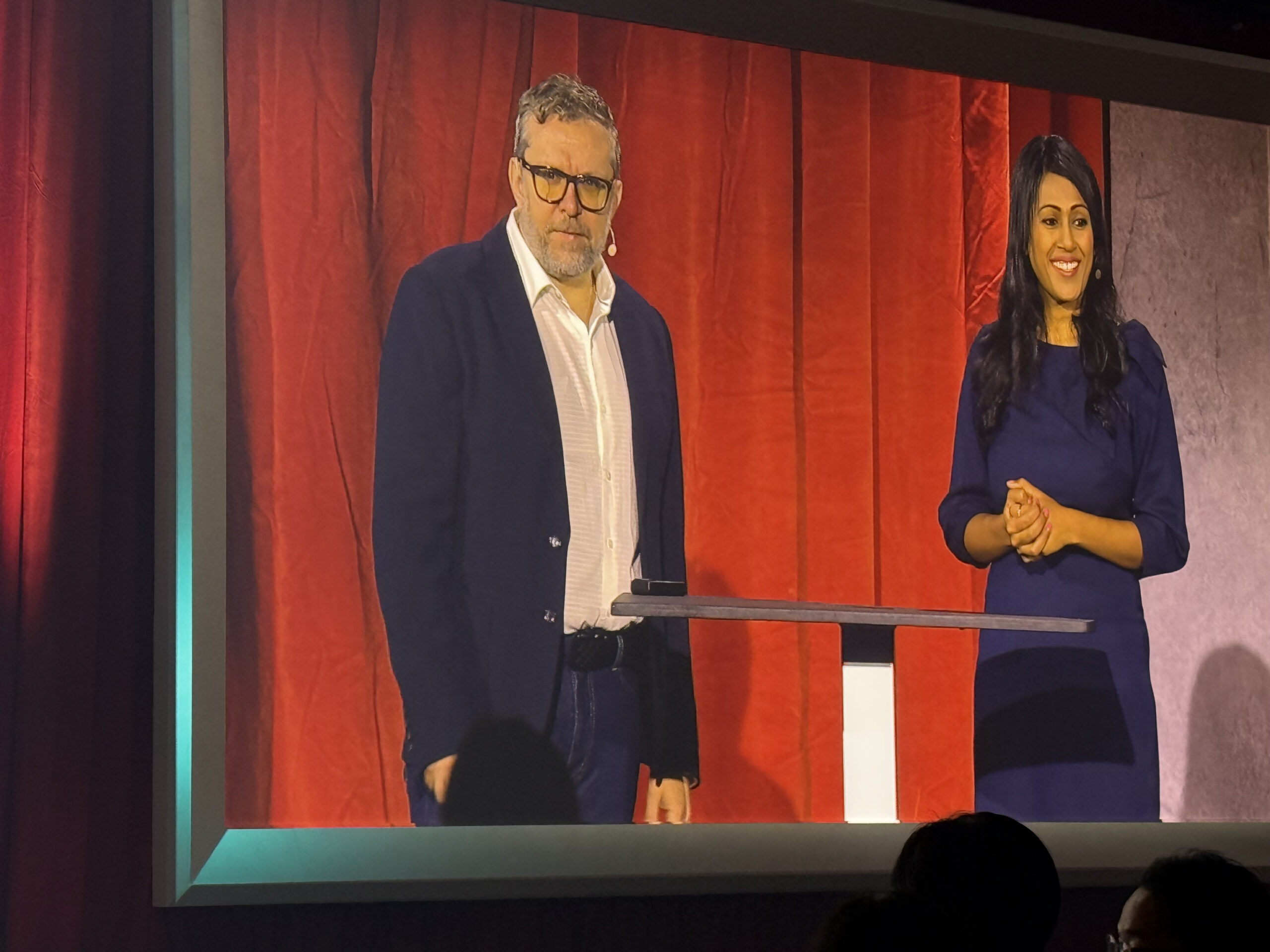
Meet the Authors
Key Takeaways
-
UiPath embedded automation directly into its SAP S/4HANA migration, running the program as a Customer Zero initiative under live finance conditions.
-
The project showed how SAP S/4HANA can remain a clean system of record while automation and agentic workflows handle cross-system complexity and exceptions.
-
UiPath’s Customer Zero experience highlights how automation-led SAP S/4HANA migrations reshape delivery risk, operating models, and agentic readiness.
UiPath’s decision to migrate to SAP S/4HANA followed a period of rapid growth that placed new demands on its finance systems. The company expanded globally, added more than 35 legal entities, and scaled finance operations to support a public company after its IPO.
In an interview with SAPinsider, UiPath CIO Mihai Faur describes the migration as a deliberate “Customer Zero” initiative—an internal effort to modernize the company’s own ERP while testing how automation-led and emerging agentic approaches would function under production conditions.
UiPath had prior experience with automation, but the SAP S/4HANA program became the point at which those capabilities were embedded directly into the migration itself.
Explore related questions
“We didn’t just need a new ERP—we needed an ERP that could scale with automation and AI at its core,” Faur says. The challenge, he explains, was whether an enterprise ERP could be implemented in a way that preserved clean-core discipline while allowing automation to expand during execution, without reintroducing rigidity through customization.
What S/4HANA Was—and Wasn’t—Expected to Solve
UiPath selected SAP S/4HANA to address governance, compliance, and control requirements its existing ERP environment could no longer sustain. Transaction volumes increased. Finance operations became more distributed. Real-time visibility across entities became mandatory rather than aspirational.
“SAP S/4HANA gave us the enterprise-grade controls and compliance we needed, along with standardized processes and a clean core,” Faur says. “But we were clear from the beginning that the ERP alone was not going to absorb all the complexity of how our finance processes actually run.”
UiPath positioned SAP S/4HANA explicitly as the system of record. Complex business logic, cross-system integrations, and exception-heavy workflows would live outside the ERP. That boundary was intentional. It protected SAP standard design while allowing finance processes to function across SAP and non-SAP systems without customization creep.
Where ERP Ends and Automation Begins
Several assumptions UiPath held at the outset were tested as the Customer Zero initiative progressed. One concern was that a strict clean-core, fit-to-standard approach could reduce flexibility in finance operations. In practice, Faur said the opposite occurred.
“By deliberately keeping SAP standard and using automation to extend functionality and handle exceptions, we preserved agility without sacrificing governance,” he says. That shift reframed how UiPath thought about where complexity should live. Core accounting aligned well with standard SAP. Friction emerged elsewhere, in processes that stretched across systems and required interpretation rather than rules alone.
“The most challenging requirements were not core accounting functions, but complex, end-to-end finance processes that extend beyond the ERP,” Faur says. Revenue recognition exposed that tension early. “Revenue recognition was particularly difficult to support with standard ERP capabilities alone,” he says. Cash application and customer collections followed a similar pattern.
Another assumption was that automation would follow go-live. Instead, automation became integral to the migration itself, supporting data preparation, reconciliation, testing, and risk reduction. What began as an efficiency lever evolved into a core delivery capability.
That same delivery model later carried into production operations.
“UiPath automation—leveraging configured APIs, integration services, orchestration, and action-center workflows—handled validations, reconciliations, approvals, and exception management across revenue, cash application, and collections,” Faur says. “SAP remained the system of record, while automation acted as the execution and integration layer around it.” The experience reshaped UiPath’s clean-core philosophy.
“Instead of asking which requirements justified customization, we focused on what should never live in the ERP core,” Faur says. “By externalizing complexity into automation—and increasingly into agentic workflows—we protected SAP standard design and created a scalable foundation for future agentic finance operations.”
From Automation to Agentic Operations
As UiPath stabilized finance operations on SAP S/4HANA, and pushed more execution into automation, some limits became clear. Certain scenarios required context, interpretation, and judgment that deterministic workflows alone could not provide.
That is where agentic capabilities entered the picture.
As finance processes matured, UiPath introduced agentic workflows selectively, applying them to areas where exceptions and reasoning were unavoidable. According to Faur, agentic workflows are now running in production across selected finance processes, including accounts payable, invoice matching, and discrepancy resolution.
“At the start of the program, agentic operations were viewed as experimental,” Faur says. “Customer Zero changed that perception. We found that agentic automation can be production-ready today when combined with deterministic robots, orchestration, strong governance, and human-in-the-loop controls.”
The operating model mattered as much as the technology. Core accounting and controls remained within standard SAP. Deterministic automation handled structured execution. Agentic workflows were reserved for decision-heavy scenarios, with humans engaged only when judgment or escalation was required.
“This directly reflects the original vision of ‘robots do, agents think, people lead,’ with execution now matching strategy—not just in concept, but in production reality,” Faur says.
How Customer Zero Became a Repeatable Model
Deloitte partnered with UiPath throughout the Customer Zero initiative. Early collaboration centered on keeping SAP standard, accelerating delivery, reducing risk, and embedding automation into the program design. As execution progressed, the relationship evolved into co-creation. Custom code was replaced with automation. Integration and testing patterns were scaled. Governance models were captured and reused.
That experience shaped how Deloitte now approaches similar transformations.
“Agentic automation isn’t just about deploying bots; it’s about designing processes from the ground up to enable intelligent agents to orchestrate work across systems,” says Aditi Gupta, a business transformation and AI leader at Deloitte.
One insight proved especially durable.
“The key insight was identifying the ‘automation seams’—those handoff points in SAP processes where intelligent automation delivers exponential value, not just incremental efficiency,” Gupta says. The approach has since been codified into a reusable playbook used to guide other SAP S/4HANA programs.
Gupta also cautions against automation excess. The Customer Zero experience revealed more opportunities than made sense to pursue.
“Just because something can be automated doesn’t mean it should be,” she says. That realization led to frameworks that now help clients determine when SAP-native tools suffice and when external automation delivers greater value.
Lessons That Extend Beyond a Single ERP Program
Looking back, Faur says the Customer Zero initiative clarified how UiPath now approaches ERP transformation internally. “The key lesson was that an ERP transformation is as much about changing how the organization works as it is about implementing new systems.”
The SAP S/4HANA migration served both as an internal modernization effort and, over time, as a Customer Zero reference for the market. UiPath ran the program under real operational constraints, exposing clear boundaries between what belongs in the ERP core and where automation and agentic workflows are better suited to handle complexity.
That combination gives the experience relevance beyond UiPath itself. Customer Zero ultimately functioned as a showcase grounded in production conditions, where assumptions were tested, tradeoffs were made, and operating-model challenges surfaced.
What This Means for SAPinsiders
Clean core shifts complexity, not capability. UiPath’s experience shows clean-core discipline does not constrain SAP environments when complexity is deliberately externalized. Automation and agentic workflows absorb variation, judgment, and integration logic without turning SAP landscapes into a brittle customization layer.
Automation redefines SAP delivery economics. Treating automation as part of migration execution changes the risk profile of large SAP programs. It compresses timelines, stabilizes go-live outcomes, and converts testing, reconciliation, and integration into reusable operational assets rather than one-time project costs.
Agentic SAP is an operating-model decision. UiPath’s production use of agentic workflows demonstrates that AI readiness in SAP contexts depends less on tools than governance and role design. Leadership teams should view agentic capabilities as a workforce and accountability shift, rather than simply an automation upgrade.
More Resources
See All Related Content

Essential Features of Digital Credit Application SoftwareThe article highlights the significant advancements of true digital credit applications over traditional methods, emphasizing real-time data verification and automation that enhance approval speed, reduce fraud risk, and improve operational efficiency.
12 minute read

SAPinsider Announces 2026 SAPinsider Awards Finalists; Winners to Be Revealed Live at SAPinsider Las VegasSAPinsider has announced the finalists for the 2026 SAPinsider Awards, highlighting outstanding organizations and leaders in SAP innovation, transformation, cybersecurity, and ERP modernization, with winners to be revealed at the awards ceremony on March 16th in Las Vegas.
2 minute read
How to Prep for Success with S/4HANA Migration Before Day 1 In this video, our Managing Partners discuss how businesses facing the S4HANA migration for SAP users can plan ahead to ensure success and a smooth transition. This video delves into strategies to get on the right track from the beginning, including actionable steps of a Phase Zero approach, tips on preparing your team for migration, and critical success factors from real-world client experiences.
1 minute read