3 minute read
Meet the Authors
Key Takeaways
-
SAP's collaboration with UnternehmerTUM marks a transition from isolated robotics innovation to integrated daily operations, enhancing workplace safety through AI-driven automation.
-
The introduction of SafetyGuard streamlines safety inspections and compliance, reducing errors and inspection times for EHS and operations leaders while enabling real-time data integration with SAP systems.
-
Embodied AI technologies are reshaping enterprise architecture, prompting CIOs and architects to adopt AI-native, manufacturer-agnostic platforms that modernize operational processes and enhance robot orchestration.
SAP’s expanded collaboration with UnternehmerTUM (UTUM) around embodied AI shows how robotics and business AI are moving from innovation centers into day-to-day operations, starting with safety, logistics and sustainability use cases. For technology leaders, the SafetyGuard prototype and related programs signal a shift toward AI-native, robot-agnostic platforms that plug directly into SAP’s digital core rather than standalone pilots.
What SafetyGuard Means for Operations, EHS and IT
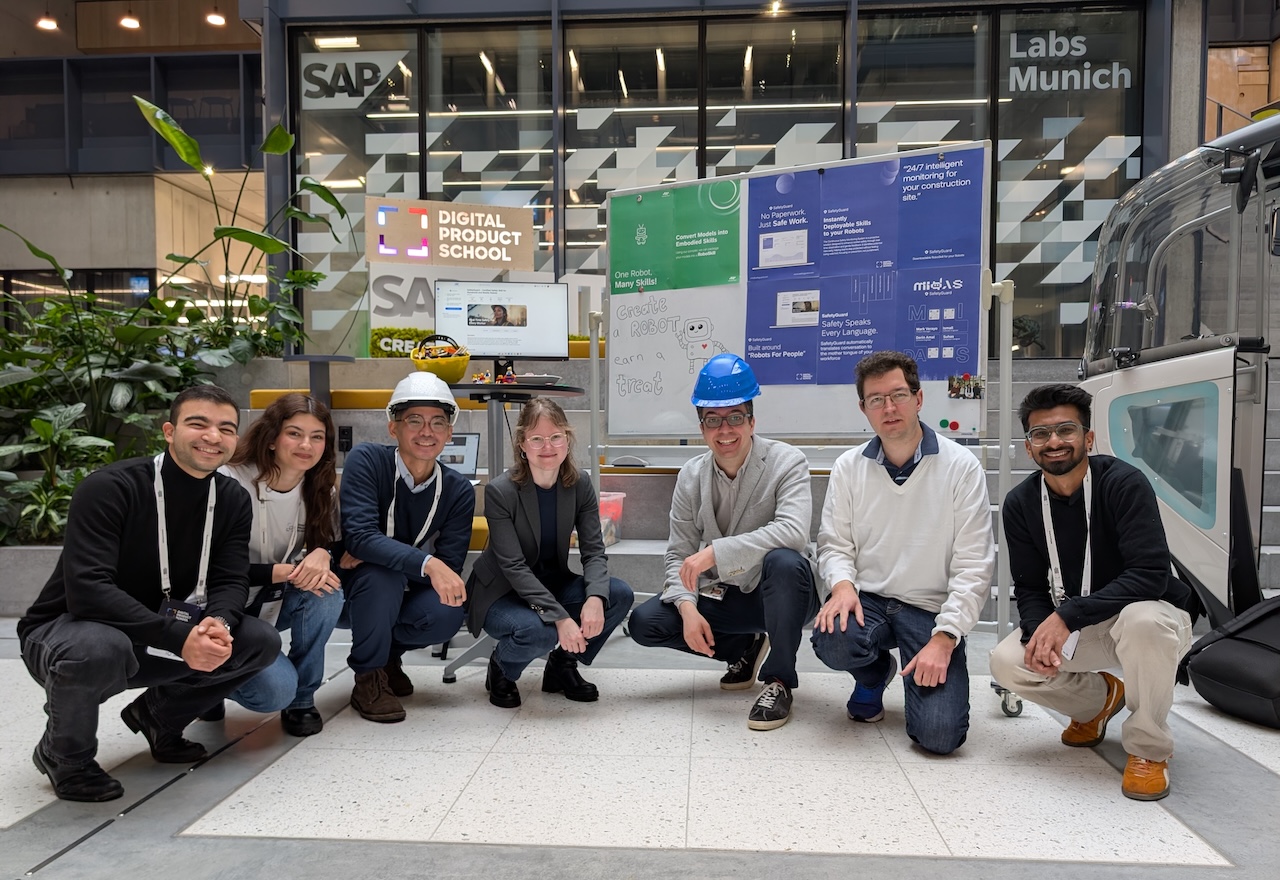
SafetyGuard, developed in 12 weeks by UTUM’s Digital Product School and SAP Research & Innovation, uses drones or humanoid robots plus a specialized AI model to automate workplace safety inspections and documentation. The system detects missing protective equipment, flags hazards and records incidents while robots simultaneously transport materials or monitor machinery, combining inspection with routine shop-floor tasks.
For EHS and operations executives, this changes daily work from reactive, clipboard-based audits to continuous, sensor- and AI-driven oversight that can reduce inspection time and error rates while tightening compliance with safety standards. Because SafetyGuard is designed to align with SAP’s environment, health and safety management portfolio and embodied AI layer, findings can feed directly into incident workflows, maintenance orders and risk dashboards without manual reentry. That means EHS and maintenance leaders spend more time prioritizing remediation and less time assembling evidence or reconciling spreadsheets.
Explore related questions
The prototype is architected as AI-native and manufacturer-agnostic, allowing multiple robot types to run against the same business logic and SAP context. For CIOs and enterprise architects, that suggests a future in which embodied AI becomes another extension layer on SAP Business Technology Platform, with standardized services handling robot orchestration, process guardrails and write-backs into S/4HANA and line-of-business applications. Day to day, platform teams will need to manage policies for which tasks can be delegated to robots, what data they can access and how exceptions are handled across plants and regions.
Co-Innovation as an R&D Engine for SAP Customers
The SAP–UTUM partnership illustrates how co-innovation can compress the cycle from idea to working prototype for SAP road map topics. Since 2017, UTUM programs have produced 13 prototypes for SAP, including Carbon Data Exchange, now part of SAP Sustainability Control Tower, and a chatbot that lets developers query SAP Field Service Management documentation instead of manually searching it. These examples show how student and research teams can de-risk emerging capabilities before they become fully productized features.
For technology executives, this ecosystem model offers two practical implications. First, embodied AI is being explored in domains with hard ROI levers based on earlier Project Embodied AI pilots that reported up to 50 percent reductions in downtime and 25 percent productivity gains. Second, prototypes are tightly coupled to SAP product teams and road maps, which increases the likelihood that successful patterns, integration approaches, and data models will be available as reusable services rather than custom one-offs.
When evaluating embodied AI and robotics providers, SAP customers should therefore look for three qualities: alignment with SAP’s embodied AI layer and BTP services, ability to operate across heterogeneous robot fleets, and demonstrable integration into safety, maintenance, and sustainability processes already running on SAP. As these projects mature, day-to-day responsibilities for IT and operations will increasingly involve governing fleets of cognitive robots, validating AI models against safety and compliance requirements, and iterating on automation scenarios in collaboration with partners, universities and SAP’s innovation programs.
What This Means for SAPinsiders
Embodied AI becomes an operational safety tool. SAP leaders should treat cognitive robotics as a lever for continuous safety compliance, automated inspections and integrated incident management rather than as isolated innovation pilots.
Co-innovation accelerates SAP’s product pipeline. Transformation leaders can expect faster prototyping of embodied AI scenarios that plug into existing SAP road maps, influencing vendor selection, partner alignment and long-term platform decisions.
Robot-agnostic platforms reshape architecture strategy. Enterprise architects must plan for AI-native, device-agnostic layers that orchestrate diverse robots through SAP BTP, enforcing process guardrails while extending automation into physical operations.
More Resources
See All Related Content

CCH Tagetik: Modernizing Financial Close on SAPCCH Tagetik on SAP HANA supports financial close, consolidation, and planning directly on SAP data. The platform integrates with S/4HANA and legacy systems, reducing reliance on separate data pipelines and enabling finance processes to operate closer to SAP data structures.
4 minute read

The Deutschland Stack: Bridging the Gap Between AI Compute and SAP Business ValueDeutsche Telekom and SAP’s Industrial AI Cloud is more than a sovereign cloud pitch. Discover how the Deutschland Stack positions SAP as the operational control plane for digital twins, quality inspection, and sustainable industrial AI.
3 minute read