



Mar 16-19, 2026Las Vegas, Nevada, NV
SAP S/4HANA
Featured Insiders
Upcoming Events
SAPinsider Las Vegas 2026
Related Vendors


SAP S/4HANA: An Overview and Key Considerations
What Is SAP S/4HANA?
Enterprise Resource Planning (ERP) has been the cornerstone of SAP solutions since the company was founded in 1972. SAP’s first packaged mainframe software application, SAP R/2, was released in 1979, and was followed by SAP R/3, SAP ERP Central Component (ECC) 5.0, and SAP ECC 6.0. SAP’s current flagship enterprise ERP solution, SAP S/4HANA, was released in 2015, and was a significant shift for the organization as it ran exclusively on the SAP HANA database.
Modules included in an SAP S/4HANA system include: Asset Management, Finance, Human Resources, Manufacturing, R&D/Engineering, Sales, Service, Sourcing and Procurement, and Supply Chain. Each of these modules consist of multiple applications that offer specific features and functionality, as well as industry-specific and enhanced line-of-business functions.
SAP S/4HANA: An Overview and Key Considerations
What Is SAP S/4HANA?
Enterprise Resource Planning (ERP) has been the cornerstone of SAP solutions since the company was founded in 1972. SAP’s first packaged mainframe software application, SAP R/2, was released in 1979, and was followed by SAP R/3, SAP ERP Central Component (ECC) 5.0, and SAP ECC 6.0. SAP’s current flagship enterprise ERP solution, SAP S/4HANA, was released in 2015, and was a significant shift for the organization as it ran exclusively on the SAP HANA database.
Modules included in an SAP S/4HANA system include: Asset Management, Finance, Human Resources, Manufacturing, R&D/Engineering, Sales, Service, Sourcing and Procurement, and Supply Chain. Each of these modules consist of multiple applications that offer specific features and functionality, as well as industry-specific and enhanced line-of-business functions.
Key Considerations for SAPinsiders
- SAP S/4HANA is the solution that SAP wants enterprise ERP customers to be running, but it is about more than simply adopting technology. According to Tom Janoshalmi, the former Global Head of SAP Digital Core Move, organizations need to look at their move to SAP S/4HANA to being about a connected story not just a technology upgrade. While SAPinsider research has shown that many organizations look at SAP S/4HANA largely because of the upcoming end of maintenance for core SAP ERP releases, more see a move to SAP S/4HANA as the opportunity to re-engineer and update processes and configurations. Janoshalmi agrees. He wants organizations to focus on the value they can derive from SAP S/4HANA and what they can achieve moving forward. You can hear more about why the move to SAP S/4HANA is important by reading SAPinsider’s interview with Janoshalmi.
- SAP S/4HANA is the core around which organizations can build their transformed landscape. When Eczacıbaşı Building Products needed to update their existing systems and processes, they looked at SAP S/4HANA as the central part of their update. The overall process involved a complete evaluation of all their current processes and implementing technologies that would increase agility while boosting customer brand experience. SAP S/4HANA was used to connect all the different parts of the business in that process. This article covers more about the Eczacıbaşı project, as does this event session where they discuss their results.
- SAP continues to enhance SAP S/4HANA by including it in RISE with SAP. RISE with SAP is not a new product, but an offering that includes assets that help organizations achieve transformation. The central part of this is SAP S/4HANA Cloud, the software-as-a-service version of SAP’s flagship ERP solution. Damien Johnson from SAP explains in this session what RISE with SAP is, and how it impacts organizations’ existing SAP S/4HANA projects.
847 results

SAP S/4HANA and Data Analytics: Evolution or Revolution?Oct 10, 2016 —
SAP S/4HANA has created a stir in the data analytics space, representing a significant shift in SAP’s business suite platform and offering noteworthy advancements in real-time analytics capabilities. As with any new technology, customers have questions about how an SAP S/4HANA implementation will affect them. This article explores three common questions that data analytics professionals are asking about SAP S/4HANA and examines strategies for implementation.
3 minute read
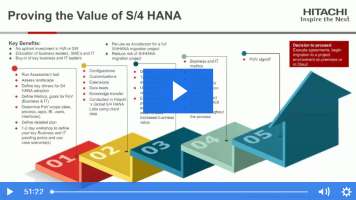
Accelerating Your Journey to SAP S/4HANAOct 4, 2016 — In an increasingly connected world, enterprises need the ability to leverage leading-edge technology to respond faster to change, improve key business processes and access the real-time information that enables innovative action. For organizations considering how to take advantage of SAP S/4HANA as the digital core to drive business transformation, the right strategy can accelerate the […]
1 minute read

Navigating the Digital Transformation Journey with SAP S/4HANAOct 4, 2016 —
The pace of innovation is fast, and it’s only getting faster. As technology continues to change every aspect of daily life, including the way businesses operate, organizations need to digitize to succeed. SAP S/4HANA provides companies with a proven path toward the digital transformation they need to keep up with the pace of innovation. Learn how SAP S/4HANA addresses the unique challenges of running a business in the digital age and the role that partners can play in making a successful transition to running live.
9 minute read

How Freudenberg IT Meets Hosting Needs for Growing SAP HANA Customer BaseAug 8, 2016 —
Freudenberg IT (FIT), one of the world’s largest IT services and cloud providers for SAP applications, is no stranger to the world of SAP software. With its diverse customer base rapidly moving to SAP HANA, FIT realized it needed to evolve with the technological improvements to keep up with customer demand. This led the company to adopt Lenovo Solution for SAP HANA, which earned the company 25% savings on total cost of ownership, a significant decrease in the overall data center footprint, and the flexibility needed to easily scale-out systems for its customers. Learn how this customer-focused company teamed up with Lenovo to cut costs and pass those savings on to its customers.
9 minute read
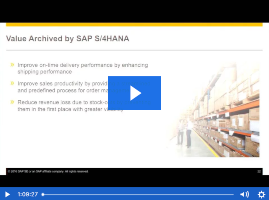
SAP S/4HANA Use Cases: Inside its Value as a Digital Business FoundationMay 24, 2016 — View this session in its entirety from SAPinsider’s HANA2016 event. Stephanie Grethen, SAP, demonstrates how and why SAP S/4HANA fully leverages the performance and simplification capabilities of SAP HANA and delivers a modern, personalised, and simple SAP Fiori user experience that can run on any device. Examine use cases across lines of business and industries […]
1 minute read
Ready for Real-Time Business?Apr 26, 2016 —
While many data warehouses are based on a clustered, multi-node system, the new era of real-time business demands less latency and faster transactional workloads. One way to achieve this is by setting up a single-node system that can scale up rather than scale out. New technologies, such as SAP S/4HANA, bring game-changing capabilities and the architecture behind the scenes must be able to keep up. Learn how the in-memory capabilities of SAP HANA are greatly improving uptime and application availability as well as how leveraging the cloud and various consumption models can take the pressure off IT departments to deliver business value.
2 minute read
The Digital Core Unraveled: How SAP S/4HANA Is EvolvingApr 26, 2016 —
In a manner of speaking, companies have been “digital” for a long time: Few enterprises still use paper-based processes. But simple automation barely scratches the surface of the digital transformation. Enterprises are looking to seamlessly integrate their automated processes across the enterprise, eliminate all manual processes, and enrich business with embedded insights. And SAP S/4HANA is the digital core that will help organizations to do so. Discover how SAP S/4HANA is revolutionizing how organizations do business by leading them further along their digital transformation journey.
3 minute read
Executive Overview Expanding the Scope of the Digital CoreApr 26, 2016 —
The launch of SAP S/4HANA marked SAP’s most significant release to date, and the technology is only improving. SAP S/4HANA now covers 10 lines of business, making it an essential part of the digital core that powers modern enterprises. In this exclusive interview, Dr. Markus Schwarz, Senior Vice President and General Manager of SAP S/4HANA at SAP, discusses these new improvements. Get the inside look at SAP S/4HANA’s latest capabilities and SAP’s future plans for the technology.
7 minute read
Agile Integrated Real-Time Business OperationsApr 26, 2016 —
The fast-paced digital economy requires an unprecedented level of agility. If customers can’t enjoy speed or personalization in their experience, they will quickly move elsewhere. But the dynamic agility needed for this agility can’t be achieved with legacy systems. It can only become a reality with a flexible digital core. This article explores how SAP S/4HANA can provide that digital core and how SAP S/4HANA Enterprise Management brings together core processes in one system to enable end-to-end enterprise agility. Read on to discover what you can achieve with a flexible digital core.
6 minute read

Navigating the SAP S/4HANA Journey with the SAP Partner EcosystemApr 26, 2016 —
As organizations across the globe consider adopting SAP S/4HANA, many realize that they can’t do it alone. Luckily, there are over 3,000 consultants and over 6,500 partner resellers dedicated to helping them. These partner companies — from small organizations focusing on SMEs to enterprises that employ thousands of SAP professionals and consultants — help ensure that every organization has the resources it needs for a successful SAP S/4HANA implementation. In this article, three SAP partners share their insights on what it means for a partner to successfully help an organization on its SAP S/4HANA journey.
6 minute read