Topics

Explore critical topics shaping today’s SAP landscape—from digital transformation and cloud migration to cybersecurity and business intelligence. Each topic is curated to provide in-depth insights, best practices, and the latest trends that help SAP professionals lead with confidence.

Regions

Discover how SAP strategies and implementations vary across global markets. Our regional content brings localized insights, regulations, and case studies to help you navigate the unique demands of your geography.

Industries

Get industry-specific insights into how SAP is transforming sectors like manufacturing, retail, energy, and healthcare. From supply chain optimization to real-time analytics, discover what’s working in your vertical.

Hot Topics

Dive into the most talked-about themes shaping the SAP ecosystem right now. From cross-industry innovations to region-spanning initiatives, explore curated collections that spotlight what’s trending and driving transformation across the SAP community.

Topics

Explore critical topics shaping today’s SAP landscape—from digital transformation and cloud migration to cybersecurity and business intelligence. Each topic is curated to provide in-depth insights, best practices, and the latest trends that help SAP professionals lead with confidence.

Regions

Discover how SAP strategies and implementations vary across global markets. Our regional content brings localized insights, regulations, and case studies to help you navigate the unique demands of your geography.

Hot Topics

Dive into the most talked-about themes shaping the SAP ecosystem right now. From cross-industry innovations to region-spanning initiatives, explore curated collections that spotlight what’s trending and driving transformation across the SAP community.

SAP Analytics

SAP Analytics focuses on how organizations use enterprise data to generate insight, support better decisions, and automate parts of day-to-day decision-making across SAP environments. The topic spans business intelligence, machine learning, artificial intelligence, SAP HANA, the Predictive Analytics Library, SAP Data Intelligence, SAP Analytics Cloud, and SAP AI offerings embedded across business processes.

Analytics connects business users, data scientists, ML engineers, finance leaders, supply chain teams, and IT organizations around a shared goal: turning SAP data into operational insight, predictive capability, and business process intelligence.

What is SAP Analytics?

SAP Analytics is the use of SAP data, analytics platforms, and embedded intelligence to understand business performance, identify patterns, predict outcomes, and guide decisions inside enterprise processes. It includes descriptive analytics through BI, advanced machine learning models that learn from changing data, and AI capabilities that support problem-solving and decision-making.

The end-to-end process of BI involves analyzing the data generated by businesses, transforming the data into insights, and leveraging those insights to make optimal decisions. BI tools primarily leverage “descriptive analytics,” because these tools traditionally focus on analyzing current and historical performance based on data generated by the enterprise.

In practice, SAP Analytics helps organizations use tools such as SAP Analytics Cloud, SAP HANA, SAP Data Intelligence, and SAP AI capabilities to support reporting, planning, predictive analytics, automation, and business process improvement.

What are some SAP Analytics use cases?

Business intelligence and reporting

Teams use BI tools to analyze current and historical enterprise performance, transform business data into insights, and support decisions based on descriptive analytics.

Predictive analytics

Organizations use machine learning algorithms and SAP HANA’s Predictive Analytics Library to build models that learn from input data and support predictive use cases.

Self-service analytics

SAP Analytics Cloud supports business users with intuitive, AI-guided analytics capabilities, helping functional managers work with analytics without needing to be data scientists or technical managers.

Enterprise planning

SAP Analytics Cloud combines planning, predictive analytics, reporting, and BI, allowing organizations to use it as a collaborative enterprise planning tool.

Business process intelligence

SAP AI offerings are positioned to infuse intelligence into lead to cash, design to operate, source to pay, and recruit to retire processes.

Data science and ML development

SAP applications support data scientists and ML engineers building advanced ML models and solutions, while also helping end users perform advanced analytics with minimal technical proficiency.

What does SAPinsider research say about SAP Analytics?

SAPinsider research shows that analytics maturity increasingly depends on cloud-based platforms, self-service access, and cross-functional data models. SAP Analytics Cloud reflects this shift by combining planning, predictive analytics, reporting, BI, and AI-guided analytics for business users.

The SAP Business Data Cloud benchmark shows that data foundations remain a major constraint. Only 3% of organizations have a unified governed data layer, while 38% remain siloed, limiting progress toward real-time analytics and AI-driven decision-making. Still, investment momentum is building. SAPinsider found analytics modernization was a top SAP BDC driver at 28%, followed by AI and agent-based use cases at 26%.

SAPinsider’s AI maturity research reinforces the importance of trusted analytics foundations. While 91% of respondents report some AI use, 79% cite access to high-quality, trusted data as a requirement for successful AI strategies.
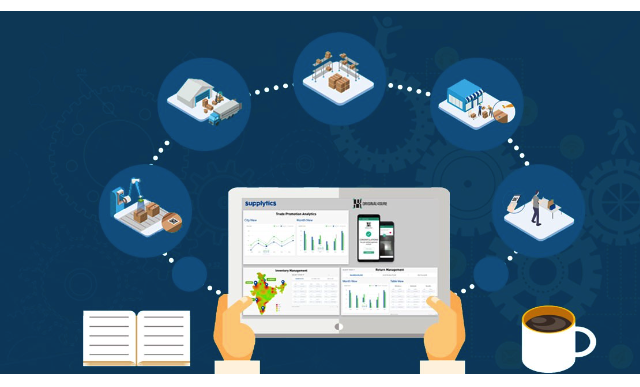

Supply Chain Analytics
Analytics Journey in Supply Chain PlanningIn the responses for SAPinsider research, Supply Chain Planning in The Cloud, advanced analytics emerged as a key technical requirement as well as a key technology . Lack of relevant and timely data and insights was identified as a major pain point with current planning solutions portfolio as well . Analytics plays a key role across the end-to-end supply chain planning process and can do so in non-technology aspects like collaboration and building trust as well. This article shares an stepwise journey of building analytics maturity in your supply chain planning process.
Supply Chain Planning Skills
Critical Skills for The Future of Supply Chain PlanningIn response to the survey for our upcoming research report, Supply Chain Planning in The Cloud, SAPinsiders highlighted advanced analytics capabilities as the top technology when the current state and immediate next steps timeframe are considered together, as shown in figure 1. As you can see from figure 1, SAPinsiders have indicated that they have started building capabilities in foundational aspects like advanced analytics, and those who have not done it yet, are actively evaluating it. This focus on analytics also brings attention to the importance of supply chain planning skills in the future. This article discusses what are the top key core skills that end-to-end supply chain planning professionals will need in the future.
analytics cloud
Key Insights using SAP Analytics CloudIn today’s world, data is becoming more valuable day by day. For any organization, it is necessary to analyze their data before making any critical decisions regarding business operations such as finance, sales, supply chain operations and more. For enterprises with large amounts of critical data, but under-analyzed data, SAP Analytics Cloud has simplified and expedited data analysis.
Warehouse Mobility
SAP and Apple Partnership will Transform Warehouse MobilityAs customer demand and expectations become complex, associated warehouse operations also become complex. Advances in computing and technology, specifically on the edge, allow organizations to leverage smart devices and mobile solutions in a tactical way to address warehousing operations challenges. Miniaturization, increased performance & energy efficiency, and lower production costs of smart devices, have all contributed to the adoption of smart mobile devices on warehouse floors. Smart sensor computing capabilities have improved significantly, allowing data processing and analysis to take place at or near the source (“edge computing”) and minimizing the quantity of data that must be transferred between the device and the platform. Large, complicated data sets are becoming easier to handle and store thanks to systems like Hadoop. AI and ML algorithms are being developed and tested all the time, increasing our ability to predict and prescribe actions more accurately. All these aspects create a ripe ground for the proliferation of mobility solutions. The recent partnership extension between Apple and SAP into SAP Warehouse Operator mobile app is a key step in the direction of accelerate warehouse mobility evolution. The readers of this article will learn: • Why partnerships are critical today and which aspects are important? • How has Apple leveraged partnerships to extend its market and penetrate enterprise digital transformation initiatives? • Why Warehouse mobility is a critical area and how this partnership will accelerate progress in this area?
Data Science Initiatives
Why Data Science Initiatives FailThe video explains stages of data science failures and identifies stages that may lead to the failure of a data science initiative.
Intelligent Automation
Digital Solutions Branding Evolution: Three Key StepsThis article discusses how old school digital solutions brands need to manage evolution and what are the three key steps for that process.
Automation analytics recession
Thriving in Recession With Analytics and AutomationIn this article we focus on how executives can leverage the competitive advantage levers of analytics and automation to manage their companies through this and future recessions.
Advanced Analytics Process Intelligence
Advanced Analytics and Process IntelligenceRole of Advanced Analytics in Process Intelligence In the latest SAPinsider process automation state of the market research, majority of SAPinsiders indicated that intelligent automation and process intelligence are key capabilities they are planning to build within next two years. Advanced analytics methodologies will play a key role in building intelligent automation solutions. In this article, […]
How to Automate Complex SAP Processes in SAP ECC and SAP S/4HANAA common question for businesses is how to effectively conquer slow and error prone process of managing complicated data with SAP. Even with advanced capabilities such as the HANA database and Fiori, the processes you use to run your business continue to present challenges and human error. One-way companies are overcoming these challenges is through […]
Payment Fraud
Intelligent Solutions for Payment Fraud Risk ManagementThe extensive nature of supply chain networks creates many points of risk. One of such risks, within the procure to pay space is supplier payment fraud. Some examples of procurement fraud are supplier spoofing, business email compromise and spoofing an officer of a company. Procurement fraud is not only becoming more prevalent but is also becoming more and more sophisticated. The fraud instances exploit weaknesses that are prevalent due to manual control processes that many organizations still leverage. The need of the hour is to employ smarter and automated solutions instead of manual controls. To discuss this critical topic, SAPinsider invited Akhilesh Agarwal, COO & EVP, Global Procure to Pay Solutions & Applied Technology at apexanalytix for a discussion.

Related Vendors