
3 minute read

Meet the Experts
Key Takeaways
What you need to know
The Australian SAP market is shifting from executing transformative changes to prioritizing which changes deliver the best ROI in a tightened budget environment.
AI advancements are reshaping SAP transformation strategies, making change faster and cheaper.
Basis Technologies' Klario helps organizations rank and manage SAP change requests based on business objectives, allowing teams to focus on delivering high-value changes efficiently.
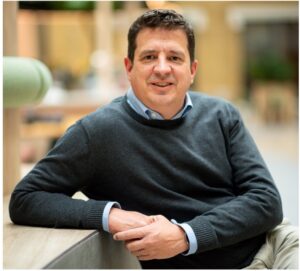
With Mastering SAP Collaborate, the SAP TechEd on Tour event, coming to Sydney, SAPinsider has been speaking with sponsors about what sets the Australian SAP market apart and how they are responding. In the latest of those conversations, David Lees, Chief Digital and Information Officer at Basis Technologies, and Lauren Colbeck, a Product Marketing Director, described a market where the hardest question is no longer how to deliver SAP change, but which change is worth delivering at all.
For Basis Technologies, the Sydney event is something of a homecoming. The company was founded in Melbourne in 1997 and will mark 30 years in 2027. For most of that time it has been known for ActiveControl, its tool for automating and governing change and release management across SAP environments. In 2026, with the general availability of Klario, it became a two-product company.
A Market That Must Choose
Previous conversations about the Australian market identify it as distinctly different from the Americas. In the US, many CIOs are pressing ahead with large transformation programs to ensure that they continue to run an ERP release that is under mainstream maintenance. In Australia, many organizations simply do not have the budget for that kind of program. Their question is more immediate: of the entirety of our backlog and requests, what can we get done in the next few months? And what will it return?
Explore related questions
Ask SAPi
Lees agreed the pressure is real but said it is not limited to one region or to customers who have yet to migrate. “That challenge is universal around what should I be working on? How should I be doing it?” he said, whether an organization is already on SAP S/4HANA or is kicking the can down the road. What differs is that customers on SAP ECC face different options from those on SAP S/4HANA or SAP Cloud ERP.
He also noted that the deadline is softer than it once looked. Customers who have not started can reach 2035 through a RISE with SAP commitment and specific product options, and returning from third-party support is less punitive than it was a few years ago. For many Australian organizations, that makes a measured approach viable and puts more weight on spending a fixed budget well.
SAP Change as an Investment Decision
Colbeck tied the shift to SAPinsider research from earlier this year, which found SAP’s AI announcements overtaking the 2027 maintenance deadline as a top driver of ERP strategy. AI is making SAP change faster and cheaper to build, but budgets, SAP expertise, and appetite for risk are not growing with it. “The cost of making the wrong decisions or building the wrong things is going to increase,” she said.
She illustrated the point with a scenario that included a backlog of 500 requests where the team can only deliver 100 over the next year. Some customers Basis Technologies have worked with say their backlogs run into the thousands, with divisions competing for the same capacity. SAPinsider’s Technology Leaders’ Strategic Agenda for 2026 found that 63% of SAP technology leaders expect pressure to reduce IT and SAP costs, with aligning IT and business on priorities among their leading challenges.
Basis Technologies’ own customer conversations surfaced three recurring problems. Requests arrive without enough detail, the value of a change is rarely captured, and the reasoning behind a change is lost by the time it goes live. One SAP technical manager at a specialist retailer summed it up: writing a request up properly can take longer than building it.
Doing the Right Change, and Doing Change Right
Klario, which started as a plugin for SAP Cloud ALM but has expanded in scope to a standalone offering, sits ahead of ActiveControl. It gathers demand from Jira, ServiceNow, SAP Cloud ALM, email and system events, groups requests into initiatives, and ranks them against the objectives they serve and what each change touches in the SAP system. It sets out design options, including clean core fit, and hands over build-ready requirements. Klario runs on SAP Business AI Platform and is listed on the SAP Store.
The ranking is not a black-box AI score. Using a weighted shortest job first approach, AI answers 43 fixed questions about each request, quoting the request text; fixed rules then set the priority band, and the team makes the final call. Klario does not set budgets. That stays in the portfolio tool, while Klario manages the order of work within it.
In Q1 2027, Basis plans to add integrations with SAP Signavio and SAP LeanIX, developed in conjunction with customers and SAP’s Business Transformation Management team, and to bring risk-and-impact analysis from ActiveDiscover into Klario. A decision trace follows each change through to release. Lees also described the capacity to reverse-engineer existing custom code to recover its original intent, so teams can ask how that requirement would best be met today. Colbeck added that for companies built through acquisitions, Klario can reveal that something similar was already built for another brand, acting like an extended development team.
The build itself happens however the customer chooses, from Joule for Developers, to partners, and AI agents, and release runs through ActiveControl or SAP Cloud ALM. Klario does not require ActiveControl. Lees put the pairing simply: ActiveControl is about doing change right, and Klario ensures that organizations are doing the right change. “You could, in theory, be executing perfectly on the wrong changes,” he said.
Early adopters report benefits like 45% fewer defects and less rework, and 50% less time on manual analysis each week. For 2027, Basis plans a “prove” stage that measures what each change delivered, wider Klario use across multi-division backlogs, ChaRM replacement as customers leave SAP Solution Manager, and support for air-gapped defense estates.
What This Means for SAPinsiders
Treat your backlog as a portfolio of investments. Faster, AI-assisted build will not help if the team builds the wrong things. Tie each request to a business objective, capture its expected value up front, and record why it was chosen, so the reasoning survives hand-off and can be checked after go-live.
Use the time your SAP ECC timeline gives you. If budget rules out a full transformation now, put that time into a disciplined pipeline of smaller, high-value changes. Review custom code for what is still needed, and plan how release controls will work once SAP Solution Manager and ChaRM are retired.
Connect with Basis Technologies at Mastering SAP Collaborate in Sydney. Bring a real slice of your backlog and ask the team to show how Klario ranks it, what the decision trace captures, and how changes move into production through ActiveControl or SAP Cloud ALM.
More Resources
See All Related Content
Digitus Tec Advances Mid-Market Growth With Multi-Platform ERP and Proprietary Scale ToolsDigitus Tec combines SAP Business One, Acumatica, and Odoo with proprietary industry platforms and a diagnosis-first methodology designed to help mid-market businesses choose and scale ERP around operational requirements.

Podcast: Reveal USA CEO Martin Rowan on Why SAP Success Still Depends on PeopleIn this podcast episode, SAPinsider award finalist and Reveal USA CEO Martin Rowan argues that SAP and other transformation programs succeed only when people, process, and technology are aligned, emphasizing that effective change management, curiosity-driven leadership, and supply chain agility are more important than relying on software alone.
1 minute read

Why One SAP Customer Paused Its SAP S/4HANA Transition Before Moving ForwardA consumer products company paused its SAP S/4HANA migration after early work showed the original brownfield plan no longer fit the business. Working with cbs Corporate Business Solutions, the company moved toward Selective Data Transition, showing how disciplined reassessment can reduce legacy complexity and support stronger outcomes.
4 minute read