articles
SAP GRC Embedded vs Hub Model: What Security & GRC Professionals must know

As organizations accelerate their digital transformation journeys with SAP S/4HANA, the question of how to architect Governance, Risk, and Compliance (GRC) becomes critical. Should you go with the Embedded GRC model or stick with the Hub (Standalone) model? Here’s a strategic breakdown to help IT Directors and SAP GRC leaders make informed decisions. What Are the Models? 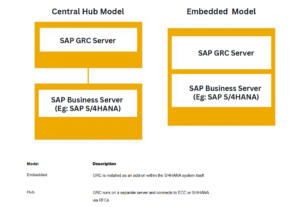
Benefits of the Embedded Model
- Lower TCO: No separate infrastructure, reducing hardware, licensing, and maintenance costs
- Real-Time Integration: Access data and risk analysis are native to the ERP system no replication needed
- Unified UX: Users access GRC features directly within S/4HANA, streamlining workflows
- Future-Proofing: SAP’s roadmap favors embedded GRC as part of its S/4HANA strategy
Considerations Before You Embed
- Downtime Dependency: GRC availability is tied to the ERP system’s uptime
- Performance Load: If multiple systems feed into one embedded GRC, it may impact ERP performance
- Audit Strategy: Historical data from standalone systems may need archiving or export for compliance
When Is Hub Still Relevant?
- Multi-System Landscapes: If you manage multiple SAP systems (ECC + S/4HANA), a hub model may offer centralized control
- Phased Migrations: For companies still transitioning from ECC, hub GRC allows continuity
- Heavy Customization: Some legacy GRC setups may be easier to maintain in a standalone environment
Vendors mentioned
Fill in the form on this page to read the full article.