articles
Digital transformation in finance: Examples & trends

Customers want financial services to be as accessible as other online services. To meet these expectations, firms must adopt digital transformation and embrace new technologies. But this requires a strategy and goes beyond upgrading systems.
Finance leaders have a key role in driving this digital transformation strategy. This is because they understand the organization’s finances and manage resources. They can highlight how technology can improve efficiency, employee productivity, and innovation.
This article will explain what digital transformation in finance means, the key drivers, top technologies shaping the industry, real-world examples of companies adopting these changes and future digital trends impacting finance.
What is digital transformation in finance?
Digital transformation in finance involves using digital tools and strategies to enhance operations and deliver personalized customer experiences.
To succeed, financial institutions must eliminate data silos and rethink their service models.
A strong digital transformation strategy should prioritize customer experience by analyzing data, engaging effectively, and understanding customer needs.
Key drivers accelerating digital transformation in finance
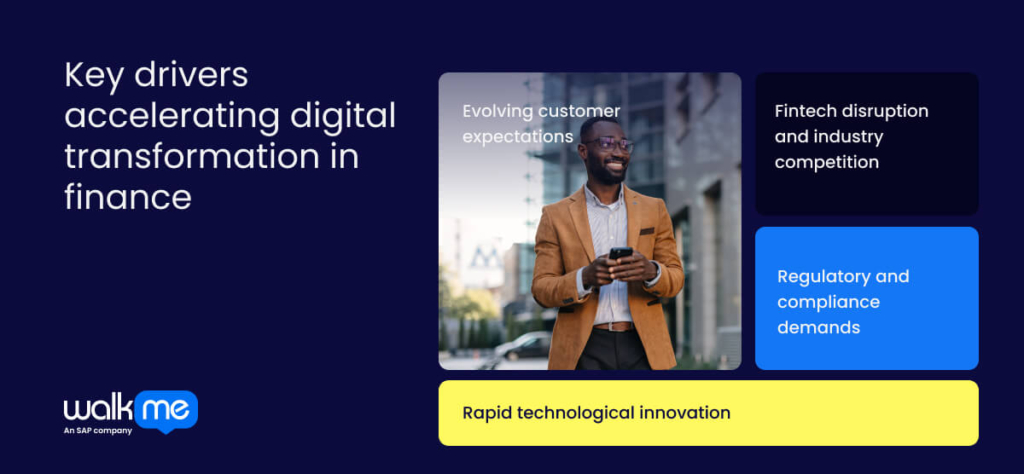
The primary drivers of digital transformation in finance are:
Evolving customer expectations
Customers want digital methods to manage their accounts. They seek personalized products, real-time access, transparency, and strong security. Mobile devices and the need to stay connected drive this demand.
To meet these needs, financial businesses must embrace digital transformation. This involves analyzing customer data to understand behavior. Then, you can offer products and services that fit their needs.
Fintech disruption and industry competition
Fintech companies are transforming the financial industry with innovative solutions. Unlike traditional banks, they create new services. They use technologies like blockchain, AI, and peer-to-peer (P2P) lending. This approach challenges existing financial systems and introduces fresh business models.
To stay relevant, traditional banks must embrace digital transformation. Expanding digital services and improving online security are essential steps. A seamless and convenient digital experience is now a key expectation for customers.
Regulatory and compliance demands
Businesses must adopt regulatory technologies (RegTech) to follow the rules on data collection, storage, and use. Laws like GDPR (General Data Protection Regulation) demand strict control over personal data. This pushes companies to use better data management and clear privacy policies.
Rules from the Dodd-Frank Act and Anti-Money Laundering (AML) laws need detailed monitoring and reporting of transactions. This leads companies to use big data analytics and automation tools.
Vendors mentioned
Fill in the form on this page to read the full article.